Continuing the Hebridean “virtual reality” theme, it may be worth noting that “island voices” might sometimes be realised instrumentally – rather than purely through the exercising of Adam’s Apple…
The Spring Chickens made a notable musical contribution to Island Voices at the 2011 multilingual midsummer party at Grogarry Lodge in South Uist. While the line-up may vary from time to time the core of the group remains, and can be seen and heard supporting many a local community cèilidh around Berneray and North Uist.
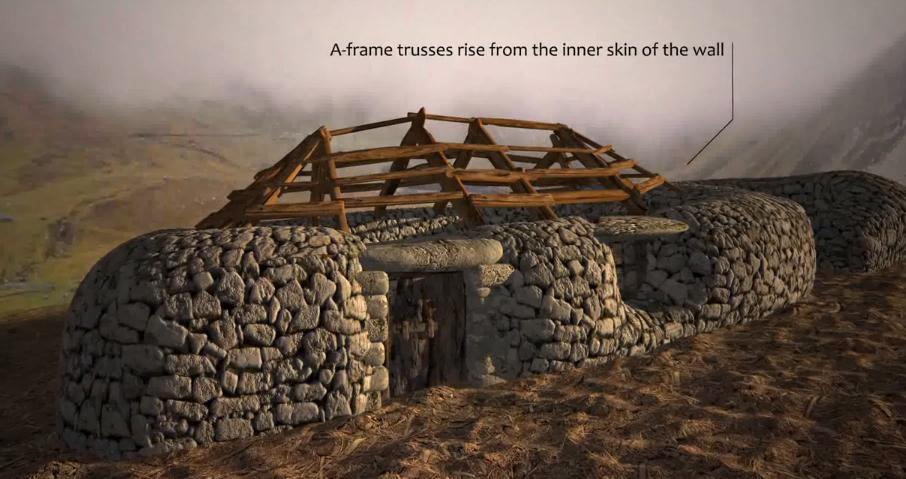
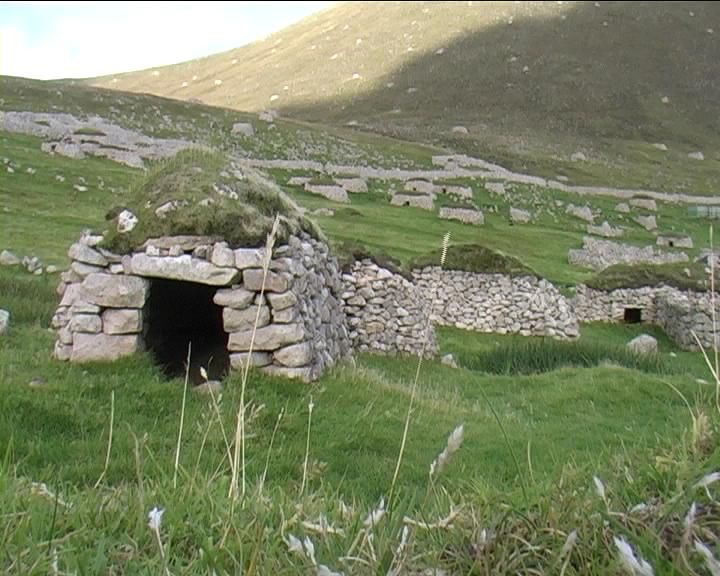
And here they are supplying some musical background for the Virtual St Kilda project, in this instance looking at the construction of a traditional blackhouse.
The Virtual St Kilda exhibition is up and running at Taigh Chearsabhagh, and the “mystery voice” is now revealed as that of regular Island Voices contributor, Archie Campbell, who also prepared the Gaelic version of the bilingual introduction. The project is headed up by the St Andrews University Open Virtual Worlds research group, working closely with local groups in Uist.
The exhibition gives you hands-on interaction, via an Xbox controller, with a digital re-creation of the St Kilda of the 1880s. You can walk around Village Bay (or fly over it!), exploring inside and outside various buildings. Clicking on various objects will take you to additional information, and the project is further enhanced by additional video work with island children offering imaginative interpretations of scenes and stories, ably facilitated by Mary Morrison – to whom Island Voices followers need no further introduction…
The film below was edited together by the St Andrews team. It integrates their own digital reconstruction and video work with stunning natural footage from UistFilm, as well as, flatteringly, some re-purposed shots from Island Voices’ own St Kilda documentaries in English and Gaelic. Archie’s voiceover is truly bilingual, alternating regularly and consistently from Gaelic to English. It’s a very interesting and still experimental format, so comments and suggestions are most welcome.
More sample videos are available on the Open Virtual Worlds group’s Vimeo channel, and you can read more about the group’s work here.
The Island Voices project originated with “Series One” in the 2005-2007 Leonardo-funded European project “POOLS”, and subsequently developed “a life of its own” after that. Technology and techniques have moved on since those early days, of course, but fundamental principles remain stable, and lessons can still be learned.
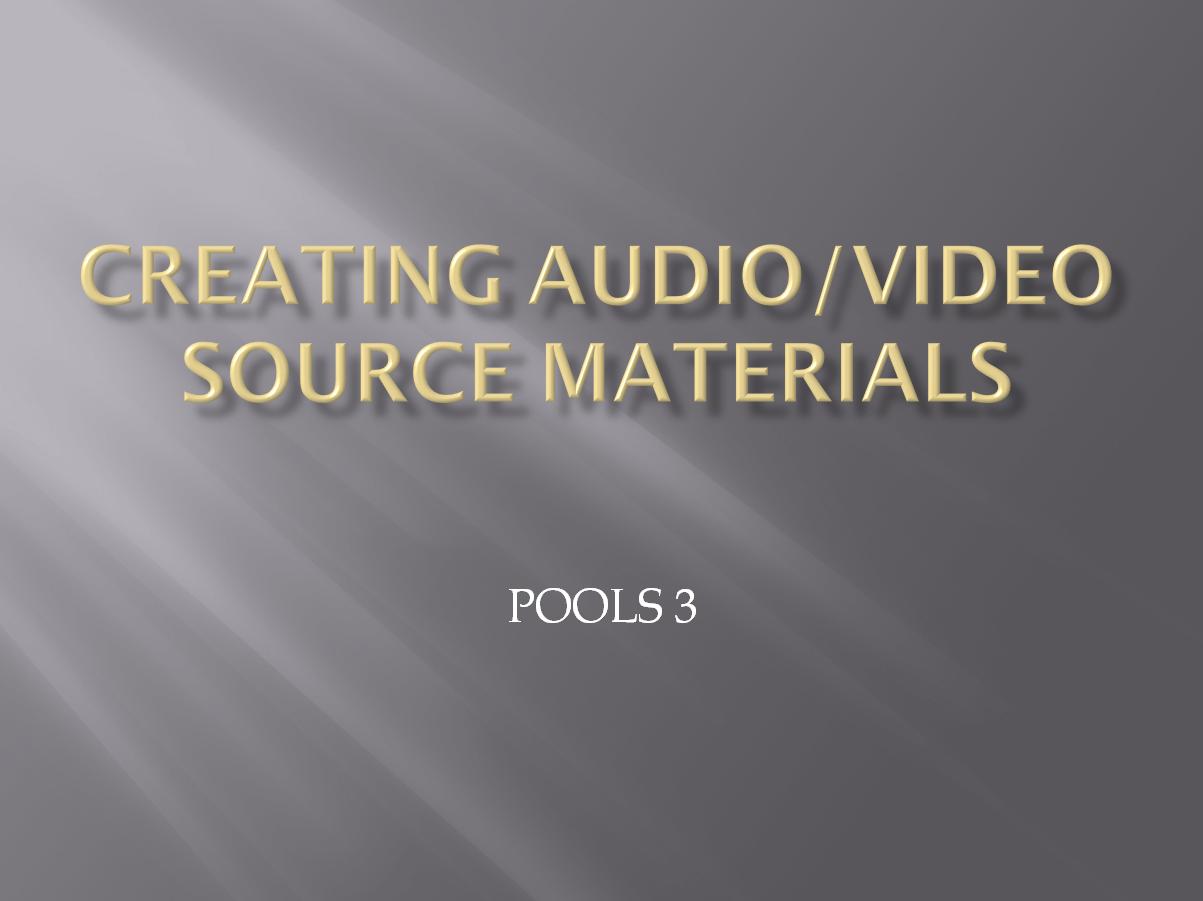
“POOLS-3” is a Transfer of Innovation project in which institutions involved in teaching Catalan, Czech, and Irish aim to replicate and develop some of the key outputs from the first POOLS project. At a recent meeting in Barcelona, Gordon Wells gave this brief presentation on approaches to media recording, based on his experiences with POOLS and Island Voices/Guthan nan Eilean.
Update (01/06/14): Stucom, our Catalan partners, have just placed online this video of Gordon’s presentation, delivered in their Smart Room. Gordon talks through the power point, simultaneously demonstrating how NOT to wear a lapel mike…
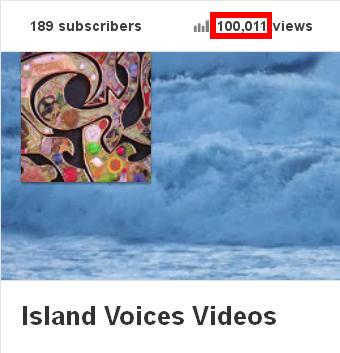
Another numerical milestone was passed on Friday 14th February, when the Guthan nan Eilean YouTube channel, “Island Voices Videos”, clocked up its 100,000th view – and added another eleven by the end of the day, “sharing the love” on Valentine’s Day. (Uncannily, we seem to time these moments to coincide with special days in the calendar year – we went through 50,000 on the night of Hallowe’en just over a year ago.)
The razor-fishing documentaries are still among the most viewed clips, but also trending now are the “Gaelic journey” films that recorded the project’s visit to Ireland around this time last year. And the geographical spread amongst our viewers is quite remarkable. The top five countries remain the same: United Kingdom, United States, Canada, Ireland, and Australia. But YouTube analytics also reveal that the channel has now been viewed in a total of 173 different countries around the world. Visitors are always welcome. Ceud Mìle Fàilte oirbh uile!
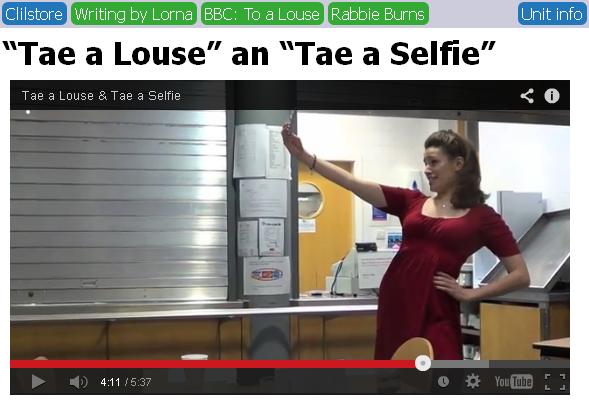
Burns night in Sabhal Mòr Ostaig was celebrated in some style a couple of nights ago. Student Sophie Stephenson offered something old and something new with the bard’s own “Tae a louse” followed swiftly by Lorna Wallace’s brand new “Tae a selfie”.
Both were caught on camera, and Clilstore creator Caoimhín Ó Donnaíle took no time at all in producing this new Clilstore unit, with links to a choice of online Scots dictionaries.
An interesting contrast with the Benbecula Burns night also given the Clilstore treatment a wee while back!
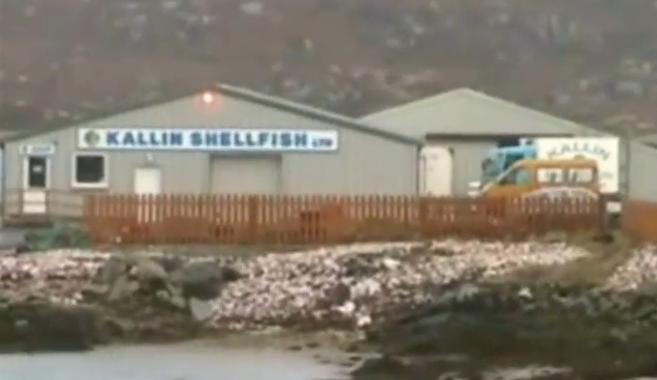
The Kallin Shellfish video, made by ESOL learners back in 2006, was among the first experiments with supporting UGC (User Generated Content) by the Island Voices project. It’s since been viewed with interest by many ESOL teachers around the world, and earned a special mention in the Island Voices chapter in this British Council book on innovations in English language teaching. The production standards are some way from broadcast quality, but its human qualities shine through still. It was planned, shot, edited, and scripted by the learners themselves. And now that script has been given the “Clilstore treatment” too, so you can listen and read at the same time. Follow this link.
Seo òran eile bhon chòmhlan “Bi Beò” – nach maireann… A-rithis chaidh a chur air Clilstore (aonad 1541) gus an tèid aig luchd-ionnsachaidh air na faclan a leughadh fhad ’s a tha iad ag èisteachd ris an òran.
Eu-coltach ri “Sgath Sgitheanach”, mar eisimpleir, chan e òran simplidh a tha seo. Chaidh a sgrìobhadh le Kevin de Las Casas an toiseach, ach chuir James McLetchie tionndadh Gàidhlig air san stoidhle aige fhèin. Tha e dèiligeadh le cuspairean caran doirbh dorcha, mar eilthireachd no fuadach. Mar sin, ged a bhiodh e mach às an àbhaist ann an aon dòigh, dh’fhaodadh tu ràdh gu bheil e fhathast gu math Gàidhealach ann an dòigh eile. Agus ’s ann air sgàth sin a chaidh dealbh à Hiort a thaghadh airson a dhol leis an òran.
Faodar ceòl an òrain a chluinntinn aig toiseach agus aig deireadh a’ bhidio aig Guthan nan Eilean air Greenspace an seo.
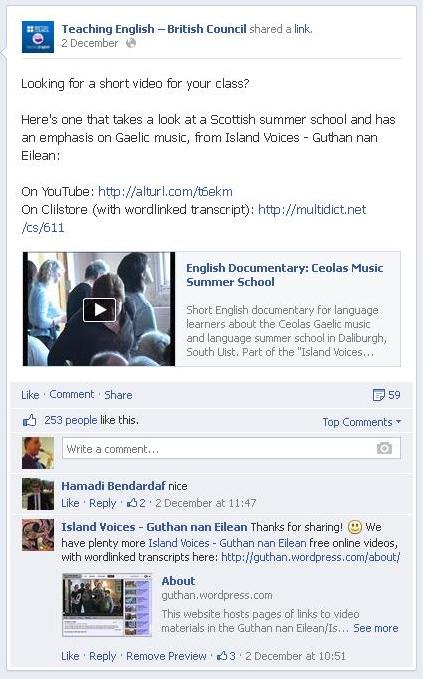
Tha 1.1 millean luchd-leantail aig duilleag Facebook na Comhairle Breatannaich airson luchd-teagaisg na Beurla:Teaching English – British Council.
Agus air an t-seachdain seo, chaidh fios a chur thuca mu thachartais chudromaich ann an saoghal na Gàidhlig ann an Uibhist a Deas nuair a chaidh post a sgaoileadh air an duilleag le ceangal ann dhan bhidio aig Guthan nan Eilean air Ceòlas. Chaidh ceangal a bharrachd a chur ann cuideachd dhan aonad ann an Clilstore a tha stèidhte air an aon bhidio.
Tha luchd-teagaisg agus luchd-ionnsachaidh na Beurla ann gu pailt air feadh an t-saoghail. Nach math gun deach a chur nan cuimhne nach e dùthaich dìreach aon-chànanach a th’ ann am Breatann fhèin!
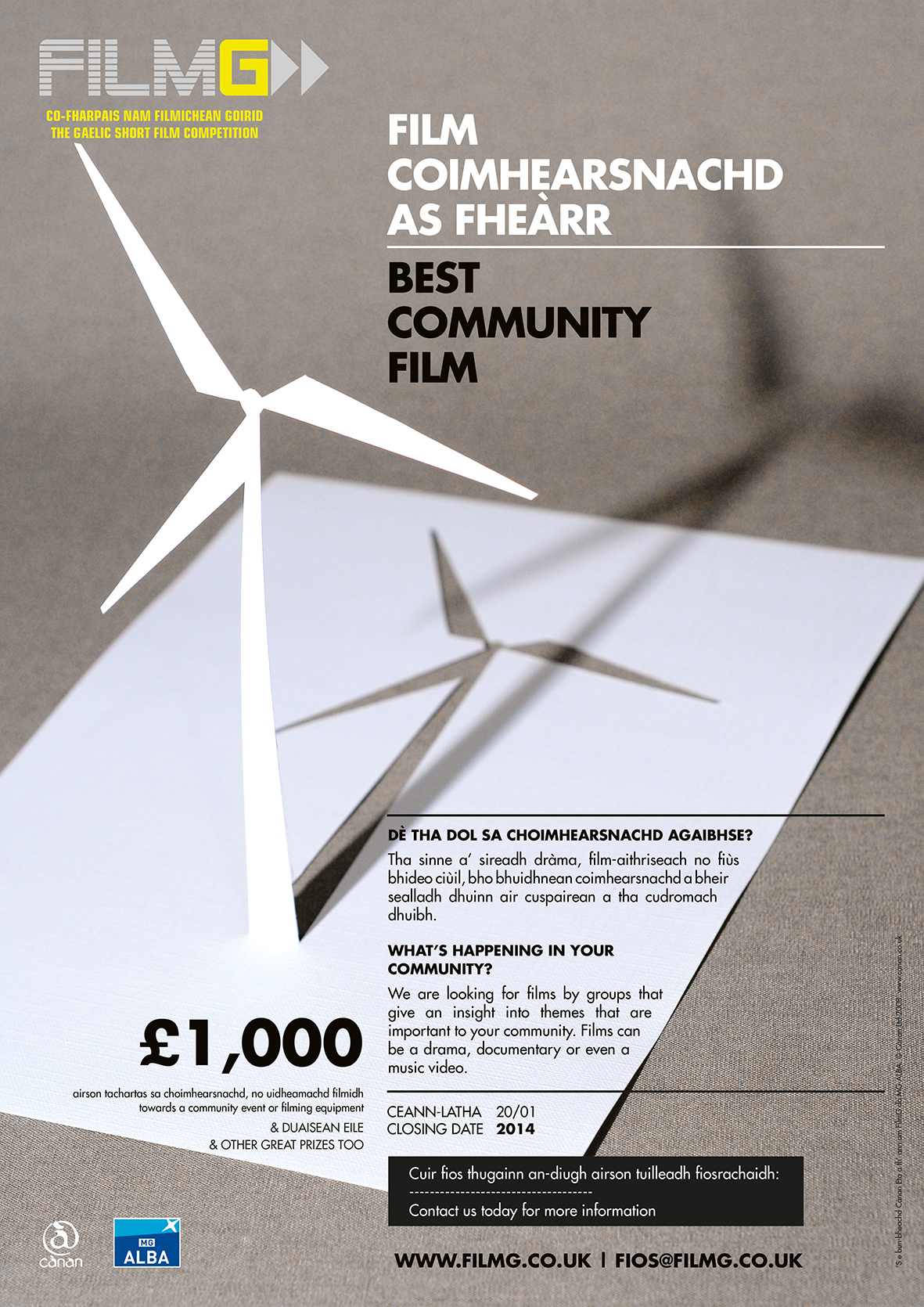
Floraidh Forrest from the FilmG film competition is keen to see plenty of entries in the community category.
“Whether it be a drama, documentary or even a music video, we want to see films by community groups which give insight into that community and/or explore themes important to it. Why not document a project or event that is taking place in your community? And, in communities everywhere there are significant people that have great stories to tell.”
“We are looking for 3-5 minute films that are original, entertaining and watchable. Don’t worry too much about production values as long as there is a steady picture and good quality sound. That’s all we’re looking for in this category.”
If any Uibhistich are interested in making a film for the community category, but feel they would like some support, they are welcome to get in touch with us here at Guthan nan Eilean/Island Voices to see how we might help. Call or text Gordon Wells on 07879 644984.
Island Voices/Guthan nan Eilean was born out of the original POOLS project – and the outward-looking European relationship continues… Gordon Wells has recently returned from Brussels where he was chairing the first meeting of “POOLS-3” in which new partners will be transferring POOLS innovations to the Catalan, Czech, and Irish languages. Do you want to see speakers of Czech and Catalan talking Irish? Watch this video…
 Continuing the Hebridean “virtual reality” theme, it may be worth noting that “island voices” might sometimes be realised instrumentally – rather than purely through the exercising of Adam’s Apple…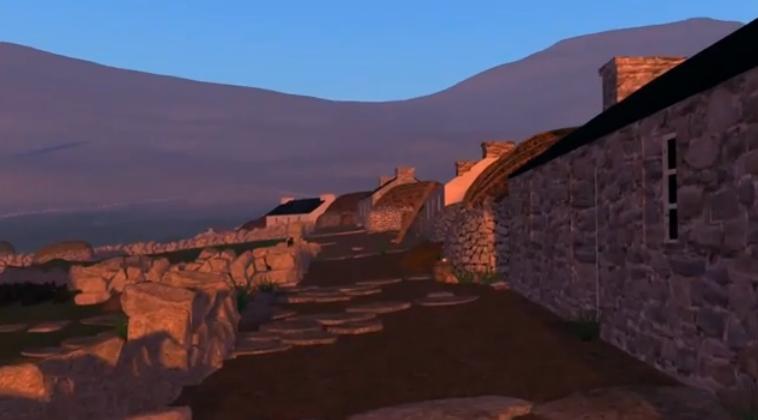
 Island Voices/Guthan nan Eilean was born out of the original POOLS project – and the outward-looking European relationship continues… Gordon Wells has recently returned from Brussels where he was chairing the first meeting of “POOLS-3” in which new partners will be transferring POOLS innovations to the Catalan, Czech, and Irish languages. Do you want to see speakers of Czech and Catalan talking Irish? Watch