CEUT Reflections 3

Here’s the third of our series of blogposts by Mary Morrison in which she reflects on the Aire Air Sunnd project led by Comann Eachdraidh Uibhist a Tuath. As with her previous posts comments are welcome!
Sgoil Chàirinis

Mary writes:

Ar n-àite. What role can CEUT play in the current funding desert?

Latha math a h-uile duine.

A disclaimer. The ideas I will try to put down here are my own and are biased, so please do not take this rant as reflecting the CEUT Board’s thinking in any way.

Why are some small charities on North Uist finding it so hard to get funding?  Although the island has been gifted generously for the new pier and the promised ferry, our island infrastructure and offer to visitors sorely needs further support, if North Uist is not to remain a one-day wonder, to be travelled through, with visitors missing the many ways they might explore our unique heritage and environment.  Are our several volunteer-run small, but excellent organisations to remain the Cinderellas at the ball? Comann Eachdraidh Uibhist a Tuath, despite our recent Levelling Up and Regeneration Fund setbacks, are more determined than ever to refurbish Sgoil Chàirinis and bring our collections home from Benbecula, however gradually!

CEUT’s vision for Sgoil Chàirinis is:

  • A welcoming space anchored in the community to meet the needs of old, young and isolated alike.
  • Learning from our heritage and island environment to move forward sustainably into the future using our tangible and intangible resources.
  • Supporting the roots of Gaelic language and expression in a community with Gaelic at its heart.

Maybe one reason for our apparent invisibility on the funding scene could be that CEUT has not featured or been included in any of the more centralised and prestigious schemes such as the Islands Fund, or the Great Place Scheme? In turn, could this invisibility also be due to the centralised perceptions so apparent in the Scottish Government’s Culture Strategy, (2020)? In this document heritage briefly appears almost as an afterthought, as an extra, a bit player, on the stage of Art? It appears to recognise ‘each community’s own local culture in generating a distinct sense of place, identity and confidence’ and states, ‘place, -community, landscape, language and geography – is important and reflects the creativity of the past and provides inspiration for the cultural expression today’. This definition seems to downplay the powerful and active connections that the unique lived experiences of the past and their representations offer to our communal learning, resilience and ‘ways of being’ today.

According to more recent National Heritage Lottery Fund guidelines, their emphasis has now shifted: promote inclusion and involve a wider range of people (a mandatory outcome), boost the local economy, encourage skills development and job creation, support wellbeing, create better places to live, work and visit and improve the resilience of organisations working in heritage. The economic inferences here are clear.

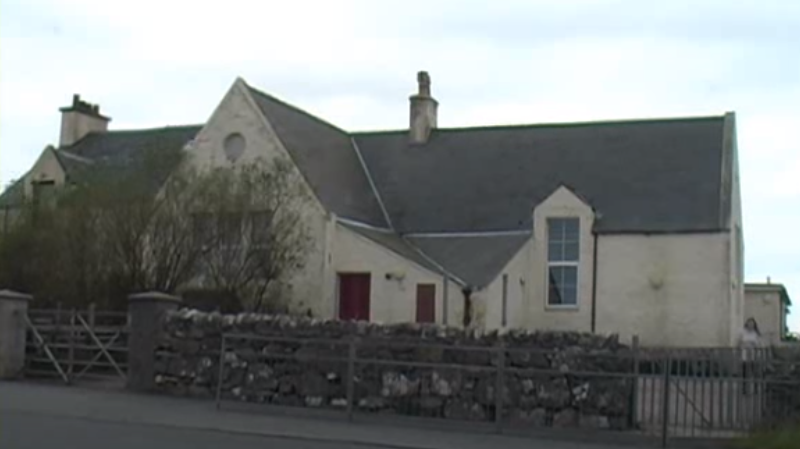
Sgoil Chàirinis is perfectly positioned on the main road, a natural stopping off and resting place on the Hebridean Way, close to Teampull na Trìonaid, and a natural gateway to North Uist and its tangible and intangible riches. The school, familiar and treasured by so many local people, promises to be a very useful staging post, linking well with Taigh Chearsabhagh and our Museum there. (CEUT’s purchase of the school was as a result of a planned extension beside the Museum, for which we were given Regeneration funding in 2015, being turned down at the planning stage because of the increasing flood risk.)

We have been continuously supported through our travails by Museums Galleries Scotland as an Accredited Museum. We are very grateful to them for keeping us afloat, especially recently with their Resilience Funding, which has helped us to hang on by our fingernails to keep Sgoil Chàirinis. Miraculous really. MGS have also been central in funding our digital archiving work. The Association of Independent Museums have supported our important links with Barbados Museum by funding research and our teenagers’ films where Feasgar Diluain have recorded storytellers and their seanchas.

A major funder recently has been the British Science Association and the Wellcome Trust through the Ideas Fund. This Fund is breaking exciting new ground by encouraging researchers to work collaboratively with communities on wellbeing projects which equally benefit both organisations. Our aims, in looking at what research can bring to  our practice, and analysing in what ways heritage promotes wellbeing are:

  • Learn how our current wellbeing activities can be improved by working with health partners through heritage – Aberdeen University
  • Discover how recent research into the community use of the Gaelic language can enrich our Gaelic activities – Language Sciences Institute, UHI
  • Explore how digital activities can contribute to our local sense of place, value, identity, and wellbeing. St Andrews University, (Phase 1)
  • Look at how the community can use these pilot studies to shape the development of Sgoil Chàrinis

In the New Year we are hoping to invite other small local charities to see what benefits we can all bring to each other by planning together how we can support each other, rather than by working in isolation. We are also planning to gather more evidence using the themes that emerged from our members’ survey this year, by holding a series of wellbeing reminiscence workshops, short interactive talks and open activities afternoons on Tuesdays, headed up and inspired by the very successful volunteer-led, monthly ‘Cupan’ sessions. Through February and March we will hold our family, pop-up Gaelic cafés on Saturday mornings, with a beginners’ table and other exciting Gaelic activities.

Ideas about who and what Museums were founded for are undergoing rapid changes – the premises on which the authoritative, ‘traditional’ museum, with its exhibits fossilised in glass cases within its walls, are being questioned.  Re-interpretation of what kinds of sites these should become, how they can widen their inclusivity and operations within their local environment and beyond, becoming sites of ‘social conscience’ is foremost in these discussions. bell hooks – deliberately spelt lowercase – wrote that ‘to be truly free, we must dare to create lives of sustained, optimal wellbeing and joy’. Let’s go for it?
CEUT Reflections 2

Here’s the second of our series of blogposts by Mary Morrison in which she reflects on the Aire Air Sunnd project led by Comann Eachdraidh Uibhist a Tuath. As with her previous post comments are welcome!

DunAnSticirPic

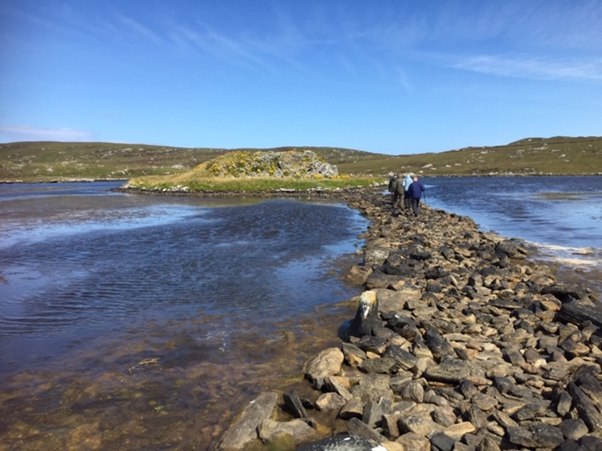
Picture – Vanessa Langley: Gaelic heritage walk to Dùn an Sticir

Mary writes:

Pool of scattered thoughts – The Feedback Imperative. 

The organiser’s bane, the participants’ nightmare and the funders’ staple diet.

When, however, that feedback comes in the form of a poem, reflecting on CEUT’s Gaelic heritage walks and summer festival, such creative ‘evaluation’ from a participant can be astonishing, rewarding and moving.

A BLESSING

A blessing to walk this green land
with its flowers,
yellow and purple.
To learn is history
ancient and old.

A blessing to hear tales from people
whose ancestors roamed here,
Interesting stories from a land
surrounded by white sands
and the wild waves of its light blue sea.

A blessing to learn the language
amid strawberries and cherries
biscuits and tea.
A language familiar
but also unfamiliar.

Meleri, thank you for your inspirational writing.

(By the way, the strawberries and cherries were not growing on the machair, but shop bought, to put on the tables at Sgoil Chàirinis during our wellbeing afternoons!)

We are always glad for Comann Eachdraidh Uibhist a Tuath to get any feedback about our funded activities, but a gift, such as this poem, is a lasting treasure for those darker moments in voluntary organisations.  Any volunteer feels some guilt and embarrassment when imposing the feedback chore on participants in their activities; it’s as if you are coercing guests at a meal to try out one more helping, one cake too many? And it’s always hard to know the best way to do this. Recently, because it was mostly too windy to hand out the prepared slips of paper, or to expect responses on the spot, we sent a ‘no pressure’ email after each of CEUT’s four Gaelic heritage walks, leaving it open for people to reply – a method that evoked only a few written responses. However those who did reply astonished us with their creative, thorough and honest reflections.

We  sent out fifty emails to those who had joined  one or more of our walks, as follows: If you have time, you might like to reflect on how you felt about the walk. Here are some prompts you can use:

  • What part or aspect of the walk did you enjoy most – and why?
  • Did you learn anything new on the walk?
  • How important  is it to use the Gaelic place names and related stories ?
  • Should CEUT provide more of these walks?
  • Do any special feelings on or after the walk come to mind?

If you have any photos, writing, or art work inspired by the walk please feel free to share these.

Many of you sent in your telling and expert photographs; we have archived these as your active testimonies to the walks. Taing mhòr.

One of the written reflections  came from an enterprising cyclist, Janey, who had come to the island from New Zealand on an international cyclists exchange scheme. (A scheme where you stay free with a host for six weeks, provided you work in the house or garden for four hours a day, and try not to use any public transport other than ferries or trains for longer journeys.)

We have learnt a lot from her detailed and constructive email – thank you Janey! Thanks too for your shock on another occasion. You pointed out that in New Zealand everyone brings her/his own cup to gatherings to conserve energy, time and the planet. Right now, at Sgoil Chàirinis, CEUT doesn’t make people bring their own cup with them, but your observation is timely – we do need to think about reducing waste and energy wherever possible!

You then alerted us to the ‘www.ebi’ method of getting feedback, ‘what worked well, even better if’ and pointed out that this wasn’t part of what we had asked for. It should have been; thank you – we will make sure we use this, and will be reminded of you, in future.

Under that heading you gave us some excellent pointers for the future:

  • a very brief round of everyone at the beginning before setting off – who/ from where/ historical connections to this area/ what, if anything, is your particular interest in the history of this area? This would have helped me connect more easily with others during the walk. 
  • I’d have enjoyed a very brief teaching of one (Gaelic) phrase, each time and be encouraged to practice this with others as we walk. This would bring the language alive for me and add an element of fun and connection with others. 
  • I’m curious if the locals’ stories that people share of their history get recorded anywhere. (Perhaps a ‘scribe’ could be appointed at each walk so that this information becomes part of the next newsletter?) The sharing and gathering of these local stories seems an important element in building this group. 
  • I would enjoy being offered the chance to bring a thermos and biscuits and take a 10 minute break half way through the walk shared with others – to me sharing food together builds community

Well, I immediately realised that one of the new features we had tried to build into the walks, (a QR code to scan, to provide an information sheet and a contact email for further details), didn’t seem to have worked very effectively. Was it the unfamiliarity of such technical methods, the poor connectivity on the islands, or had we not provided enough information on the posters? How can we do this better next time?

Weather permitting, the idea of ‘sharing’ a snack seems a great idea! We encourage everyone on the handouts, (that didn’t connect this time), to bring these, but marking out a ‘Janey’ spot will become a feature of these walks in future.

We must also try to be more aware of the ways in which we can build in further inclusiveness; firming up the pre-walk contacting, information and introductions will be essential next time.

Other responses to our questions may have suggested that we only wanted to hear about what worked well? Finding better ways of teasing out what we can do better, so as to guard against being too celebratory, inviting non-critical evaluation will shape our next steps. An area to explore further with our research  partners.

We will, however look at some of the celebratory vignettes, drawn from five emails, under the questions we posed for the meaning they convey:

  • What part or aspect of the walk did you enjoy most- and why?

– the part I enjoyed most about the walk was hearing different people’s stories adding and enhancing the basic history of each site – my sense this group could be reframed as a ‘History Club’ – that was how it came across to me – the informality, friendliness and shared contribution was welcome; I was expecting the stuffiness and hierarchical nature of a ‘society’! – North Uist itself is so full of the ruins of human habitation, you are literally tripping over them, and I started to see every mound and rock as something possibly archaeological!

  • Did you learn anything new on the walk?

I valued the chance to hear about local history from those with ‘lived experience’

I learnt so much more about the Teampull, its history over such a long period of time, the people that have stood on the same piece of earth I was standing on!

From Neolithic to the more modern (Vallay House), we can see that humans are transitory in the landscape but leave their mark, we are tiny and nature is so much bigger than us. Emphasises we are as humans the same, despite what age we live in.

  • How important is it to use the Gaelic place names and related stories?

I cannot stress enough the importance of using Gaelic names and related stories, after all that is what they are. I may not understand the language, but it means so much to me to get a full and complete picture to immerse myself in. It feels rounded and whole by being true to the Gaelic language.

I valued the Scots Gaelic being spoken and the way you introduced it as important for community.

Wonderful to learn and hear Gaelic spoken.

  • Should CEUT provide more of these walks?

What you are doing is so good, please keep on with walks/feedback as I think they are invaluable.

Thank you for organising these wonderful and interesting walks. So very glad I came across them.

  • Do any special feelings on or after the walk come to mind?

I felt joy in having knowledge of the (Priest’s) Stone to feedback to my host in Middlequarter as well as to other locals. None of them previously knew of the stone and its significance.

Afterwards I have been left thinking how everyday life would have been for those living within the place over all the centuries. How somewhere so quiet and beautiful was the setting of such a gruesome battle (Ditch of Blood) and the dichotomy of that. The graves, the oldest I found being hand carved and beautiful (so much effort and care), the most recent the war grave of 17 year old A Macauley (what a serene place for him to rest, so young, so sad).

p.s. I will follow on with more photos, can only do a few at a time!

The detail here is imaginative and expressive. These visitors captured eloquently, as the poem did, how allowing the Gaelic storytelling breaks, whilst exploring the sites we visited, gave walkers time to enter and reimagine our Gaelic past.

So we need from our researchers how best to turn these reflections into evidence for our funders? In what ways can we articulate how our Gaelic walks to heritage sites help community wellbeing? Do we really need to quantify experiences that seem to be unique to each walker for any evaluation to count as valid?

This blogging cailleach, in inviting these responses, was reminded to look up a quotation from her PGCE days, which had served her well, both to inspire writing in the classroom and, at times, to resolve conflicts within and without it:

Everyone sees a different moving picture of an event in which all are involved.

There are differences in interpretation and disagreement about what actually happened, but these are not necessarily right or wrong. The accounts differ because we all played a different part in the same ball game. Shipman, 1974.

Back Community Playlist

CEBac playlistComann Eachdraidh Sgìre Bhac have been busy recently, placing translatable subtitles on more of their videos. It’s only a year since the first one went up – A Tour of Upper Coll/Cuairt Chuil Uaraich – with Coinneach MacÌomhair and Maighread Stiùbhart.

Now, with the help of Comhairle nan Eilean Siar and the Western Isles Development Trust, student placement Ellie MacDonald has added another 8 videos to the subtitled archive. That’s a substantial piece of work which deserves hearty congratulations!

You can now view the “box set” in this dedicated playlist:

There are hours of fascinating discussion and reminiscence there. And learners or non-speakers of Gaelic can also follow the conversations with the help of the subtitles, not to mention the option of slowing down the speed of the video to help you catch what’s being said, using the YouTube Settings wheel.

Mealaibh ur naidheachd, a chàirdean!

North Uist Place-names Seminar

AASPlacenames2
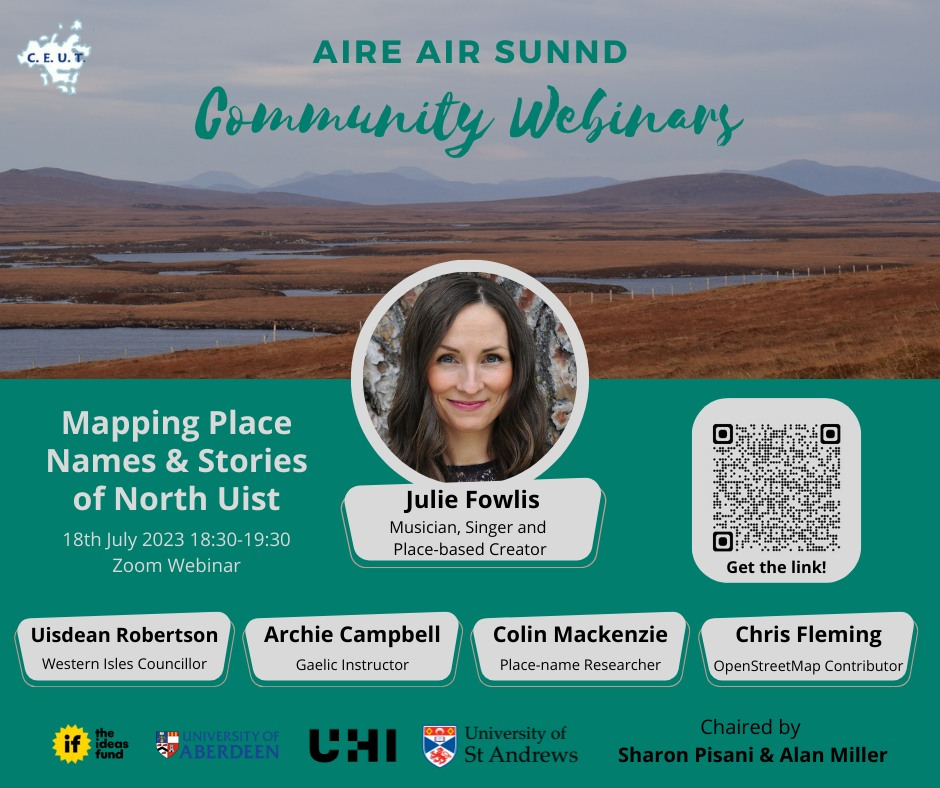
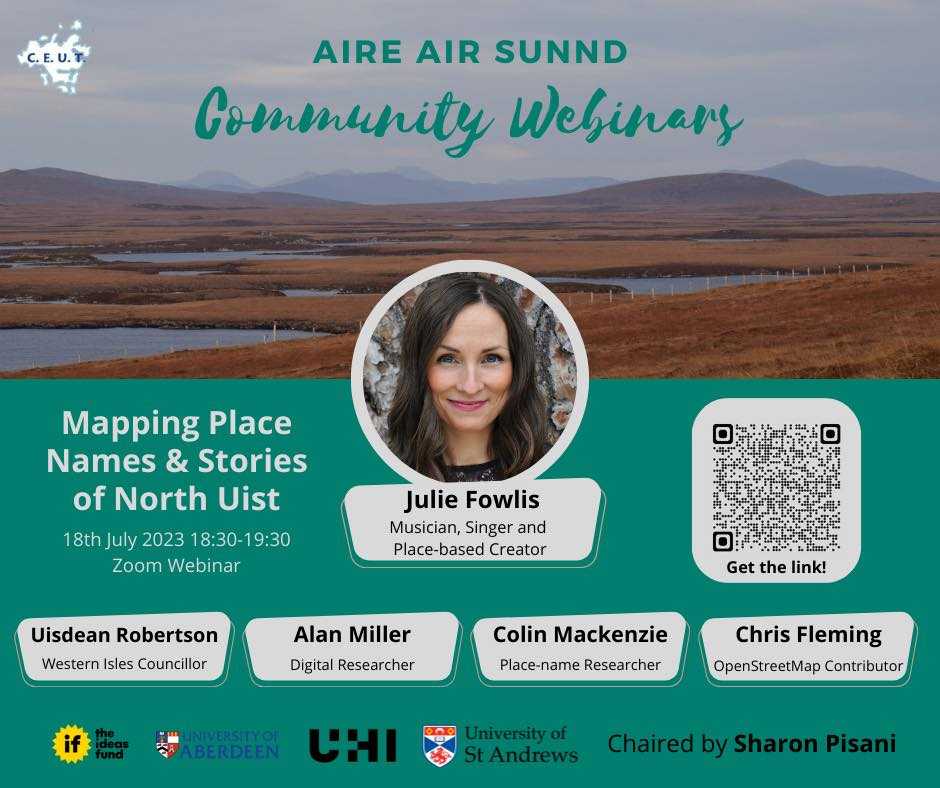
Comann Eachdraidh Uibhist a Tuath have announced the panellists for the upcoming Place-Names webinar on Tuesday, July 18th, who will share their insights and knowledge on Gaelic place names, culture, and community mapping.
The Panellists:
🔹 Julie Fowlis: Hebridean Musician, Singer, and Place-based Creator
🔹 Uisdean Robertson: Western Isles Councillor
🔹 Archie Campbell: Gaelic Tutor
🔹 Colin Mackenzie: Place-name Researcher
🔹 Chris Fleming: OpenStreetMap Contributor
CEUT also invite community members to submit questions related to Gaelic Place-names. This is your chance to have your queries answered by their expert panel. Drop your questions on the CEUT Facebook notice or in the comments below, and Island Voices will pass them on.

Book your ticket on Eventbrite to receive the Zoom link:
https://www.eventbrite.com/e/669312641127

Save the date and time: Tuesday, July 18th, 6.30 to 7.30pm.

Recording Community Conversations

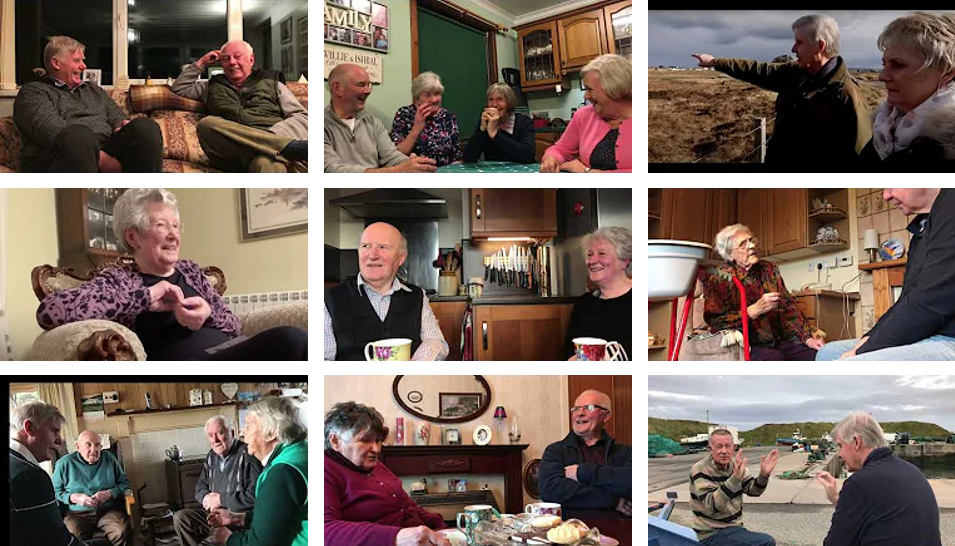
AASReviewImageFollowing on from the North Uist “Wellbeing” survey, Gordon Wells this week reviewed the Island Voices contribution to the Aire air Sunnd project led by Comann Eachdraidh Uibhist a Tuath.

Adopting a slightly different format to Jess Wood’s presentations last week, Gordon speaks to camera on Zoom while screen-sharing key content from the Island Voices Aire air Sunnd webpage. Speaking in Gaelic he reinforces the point that using this language does not exclude non-speakers or early learners, given the multilingual technical resources that are now available online.

His video recaps the various recordings that have been created for the project in the past year or so, including the “Gaelic Crisis” presentation, and the Progress Report, as well as the recording sessions with community members covering storytelling, artefact description, and environmental issues. In so doing, it also shows how the YouTube subtitling and auto-translation functions can be put to effective use, and includes a quick demonstration of the Clilstore platform too, while emphasising the alternative effectiveness of recorded speech in a world where written communication is often taken for granted as the default norm.

Summing up, Gordon stresses the untapped value of various recording collections (in addition to Island Voices’ own), noting in particular how open resources such as Tobar an Dualchais have the potential to bring present and past communities together in a new manner to support North Uist cultural wellbeing, offering innovative ways of forward-looking engagement with the island’s Gaelic heritage so positively valued by all. At the same time, it needs to be recognised that community-wide engagement in such activity is dependent on community-wide comfort with the new digital tools that enable it. This is probably an area of work that needs closer attention.

Here’s Gordon’s talk on YouTube:

You can get a wordlinked transcript, with the video embedded, in this Clilstore unit: https://clilstore.eu/cs/11436

Wellbeing – and the place of Gaelic

The results of the Aire Air Sunnd community survey in North Uist are going online!

Jess Wood from the University of Aberdeen kicked off on Monday 19th June with an overview, split between two videos on a dedicated CEUT YouTube playlist, both of which are well worth watching to get a sense of the breadth and depth of the project. It’s been an ambitious collaborative exercise, turning out interesting and challenging findings for anyone interested in taking a rooted and holistic approach to community wellbeing across the board.

For those with a particular interest in Gaelic, Jess has devoted quite a bit of time in the first video to analysis of responses on this topic. We’ve picked out some headlines below.

The overall sample of 79 respondents divided themselves up roughly equally between Fluent Speakers, Learners, and Non-speakers of Gaelic.

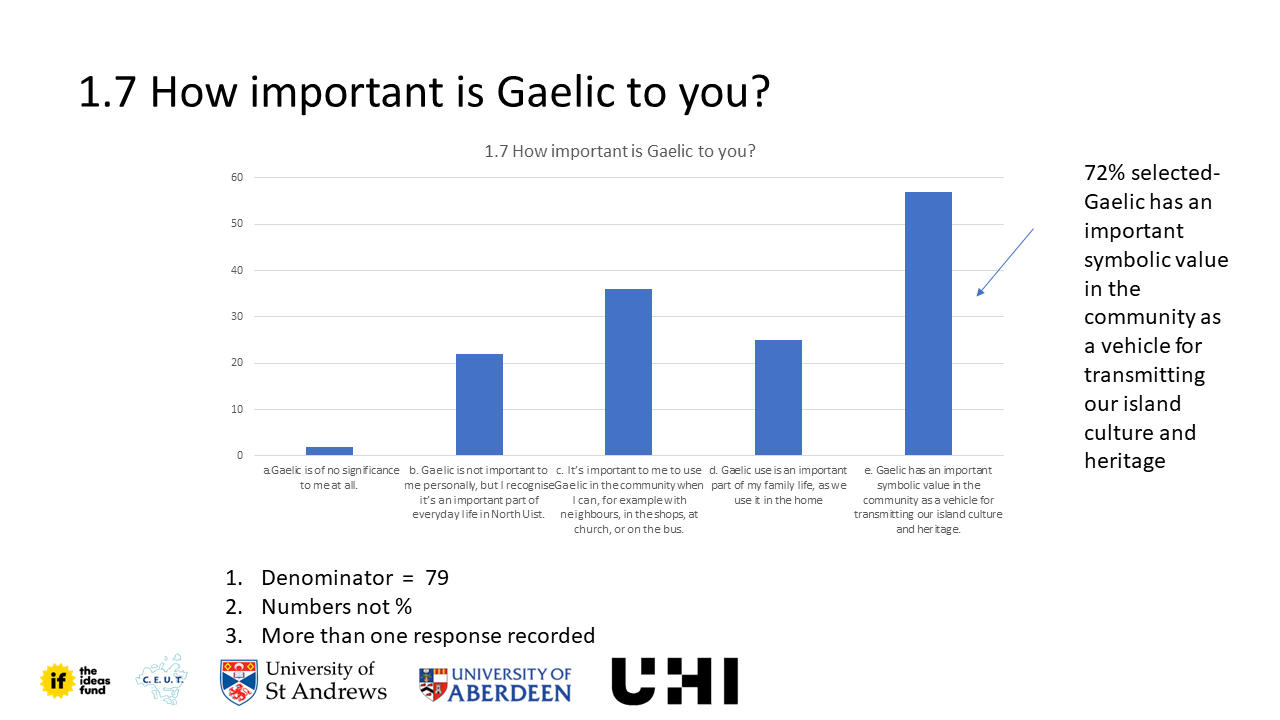
The slide below shows a really strong level of agreement in the group overall with the notion that “Gaelic has an important symbolic value in the community as a vehicle for transmitting our island culture and heritage”.

Aire Air Sunnd, Wellbeing survey methods results_15. 06.23_part 1_finalHowImportant

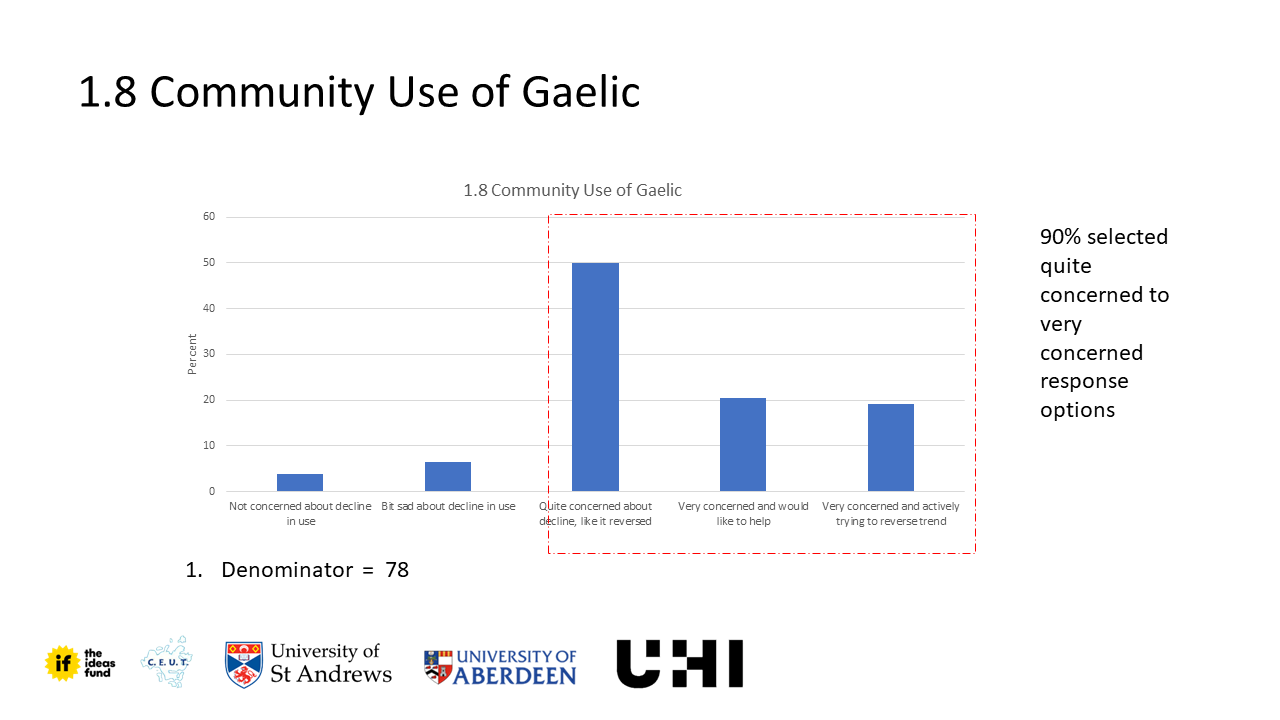
Another immediately striking statistic is the 90% figure for those expressing concern over the declining trend in use of Gaelic, as shown in this slide:

Aire Air Sunnd, Wellbeing survey methods results_15. 06.23_part 1_finalninetyOverallconcern

And what may be particularly interesting about this figure is the way that similar sentiment is shared across all three groups – Fluent Speakers, Learners, and Non-speakers – with even 58% of those who have no Gaelic expressing concern about it.

While Jess is duly cautious in her presentation, a topic eliciting a 90% level of concern might well be considered a community wellbeing issue worthy of further investigation…

If these figures pique your interest do take a look at the online presentation to find out more. The project also plans to run another face-to-face event in August at which Gaelic and other questions arising from the survey will be further discussed and developed. You can find full details and keep abreast of other events leading up to it on the CEUT Facebook page.

Here’s Part 1 of Jess’s presentation, in which she provides an update on the findings of Section 1 of the survey (including the questions on Gaelic):

In Part 2, Jess talks about the key findings of Section 2 – Use of the School, and Section 3 – Personal Wellbeing:

And coming soon, keep an eye out for an Island Voices video follow-up from Gordon Wells on “Recording Community Conversations”, to be followed shortly after by more detail on Digital Use and Activities with Alan Miller and Sharon Pisani from St Andrews University.

Eighteen Years of Island Voices

New Island Voices compositePNGcrop

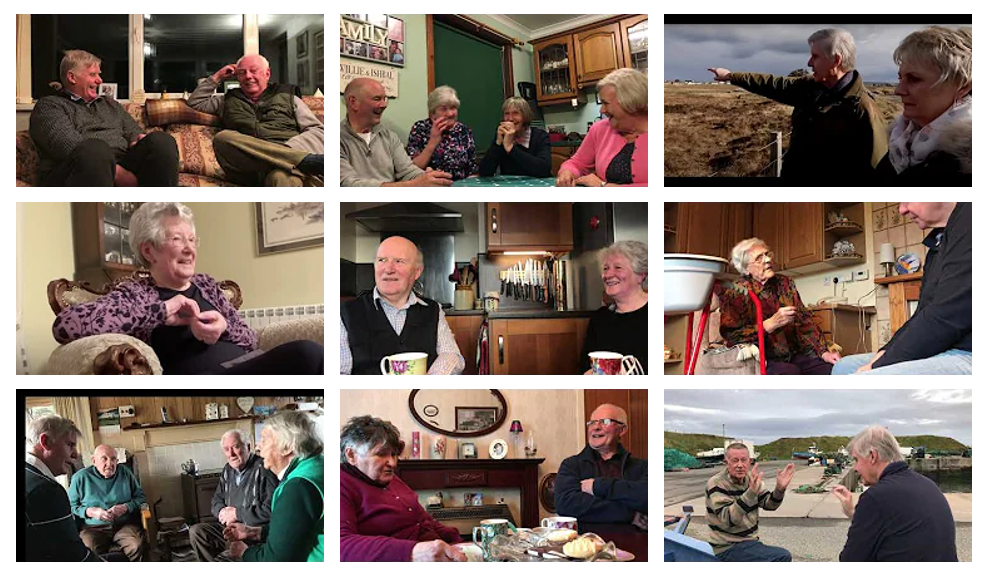
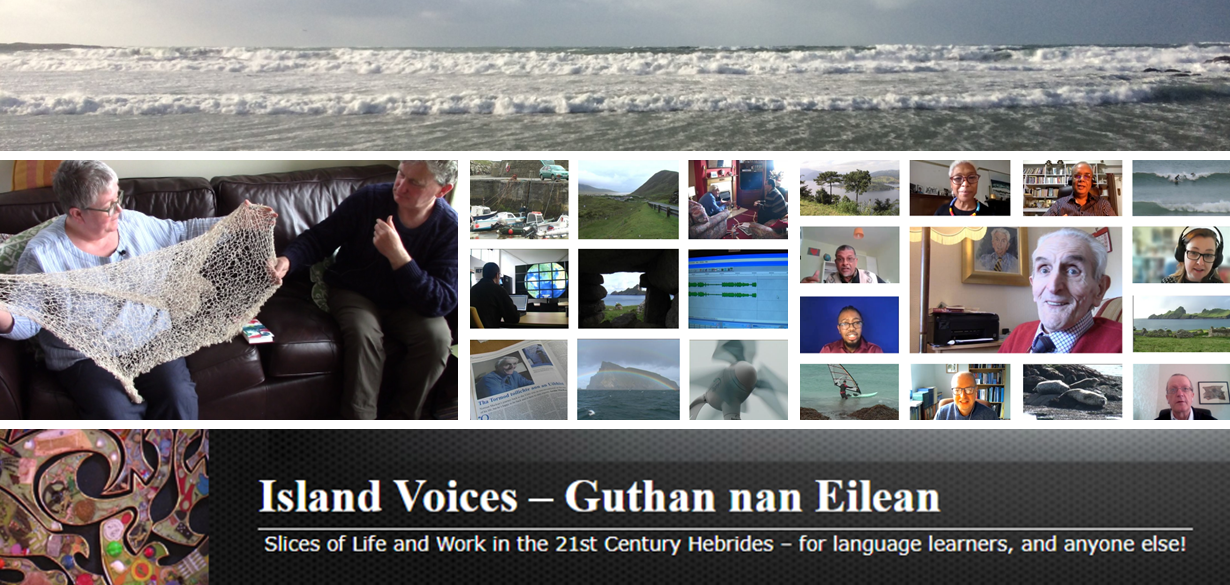
The beginnings of the Island Voices/Guthan nan Eilean project can be traced back to 2005 and the original European POOLS project in which Sabhal Mòr Ostaig (SMO) played a key co-ordinating role, with Gordon Wells appointed as Project Officer. It’s been a fascinating journey ever since, from the bilingual English and Gaelic recording of the first Craigard documentary video onward, in an ever growing and diversifying collection of “slices of  life and work in the 21st Century Hebrides” combined with thoughts and reflections from both community members and interested observers.

Now in its eighteenth year, and fully independent of SMO, the project may be said to be “coming of age”, so Gordon has compiled a detailed report on its history and content to give an account of progress so far: “Island Voices – Guthan nan Eilean: Hebridean Language Capture and Curation, 2005-2023”.

From the summary:

“This article provides a comprehensive description of the Island Voices/Guthan nan Eilean language capture and curation project as it stood in Spring 2023. The introduction presents information on its main features and aims, the linguistic rationale focussing on the primacy of speech and the salience of bilingualism, and the Hebridean community context in which the project operates. This is followed by a detailed account of the project contents and chronology, divided into four separate sections or phases: Staff-led Production; Participatory Production; Multilingual Diversification; and Research Alignment. In conclusion, connections to further research and development projects and opportunities are sketched out, and some final reflections question a polarising juxtaposition of local versus global interests, while pointing towards responsibilities alongside the opportunities this kind of work entails.

Describing a primarily oral project through written text presents a challenge. Copious footnotes point to online samples of the materials discussed, and readers are encouraged to engage through screen as well as page in order to extract full benefit. The article is bookended by a preamble and postscript which offer written exemplification from short, transcribed extracts.”

And from the conclusion:

“There may be a lesson here for applied and socio-linguistic professionals. In a meaningfully socially aware mission, the development and display of academic and linguistic prowess should surely show and serve a genuine community connection and purpose. Such, at least, are the principles which the Island Voices project aspires to uphold. The project trajectory, while linguistically guided, thus aims at inclusiveness in content organisation and presentation, remains open to new inputs, and has an undefined end-point still over the horizon.”

Watch this space, a chàirdean! Agus cumaibh cluas ri claisneachd…

Còmhradh air crìonadh nan cladaichean

TeaandScones

In our second community recording for Aire air Sunnd there are two new features. Firstly we’re very grateful to the Tobar an Dualchais project, and of course to the next-of-kin, for making a recording of Ruairidh na Càrnaich available for discussion in the same manner we used for “Còmhradh air Blàr Chàirinis“. This was a suggestion and request that came from the Comann Eachdraidh Uibhist a Tuath Gaelic group themselves, to which Flòraidh Forrest at Tobar an Dualchais responded immediately and most helpfully, going the “extra mile” to additionally commission a transcription of the recording, which has also been a great help in creating a Clilstore unit for the full YouTube clip. It was Ùisdean’s idea to pick this particular clip, in which Ruairidh talks about historical coastal erosion in North Uist, in a recording made in 1958. With climate change now such a “hot topic” it makes particularly interesting listening to hear how it was thought about and discussed in times gone by.

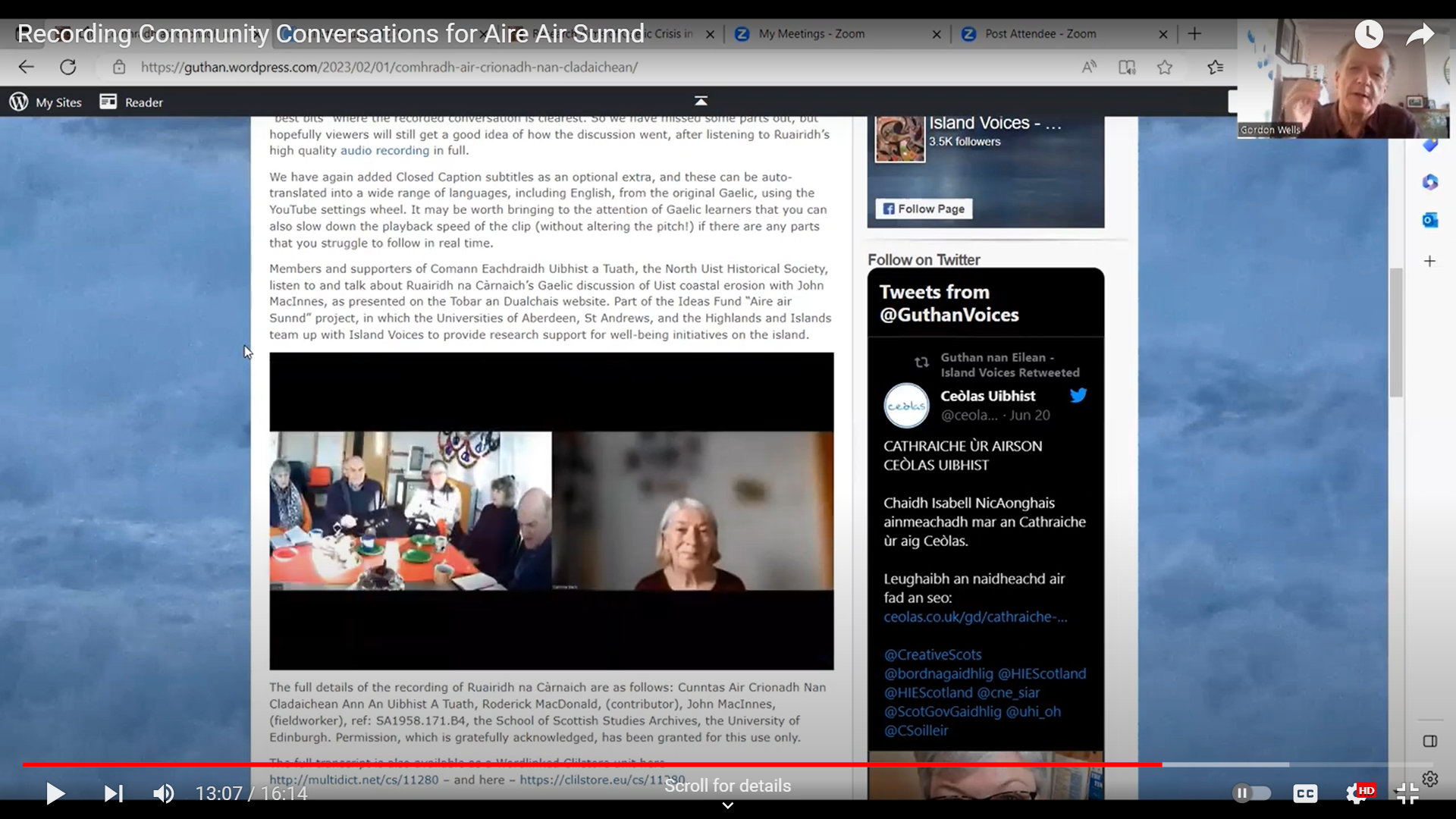
Secondly, we also experimented with a “hybrid” format for the meeting, with most of the participants meeting together in Sgoil Chàirinis, while a couple of others joined in on Zoom. Obviously, it’s easier to hold a conversation with people all in the same room together, though that does pose recording challenges, particularly when folk are quite naturally more likely to all talk at once, and you’re trying to use the ordinary everyday recording equipment we all now have to hand in our phones or laptop computers. So it was interesting to see how that would work with some people also joining in remotely. We’ve done some editing with the final recording to select “best bits” where the recorded conversation is clearest. So we have missed some parts out, but hopefully viewers will still get a good idea of how the discussion went, after listening to Ruairidh’s high quality audio recording in full.

We have again added Closed Caption subtitles as an optional extra, and these can be auto-translated into a wide range of languages, including English, from the original Gaelic, using the YouTube settings wheel. It may be worth bringing to the attention of Gaelic learners that you can also slow down the playback speed of the clip (without altering the pitch!) if there are any parts that you struggle to follow in real time.

Members and supporters of Comann Eachdraidh Uibhist a Tuath, the North Uist Historical Society, listen to and talk about Ruairidh na Càrnaich’s Gaelic discussion of Uist coastal erosion with John MacInnes, as presented on the Tobar an Dualchais website. Part of the Ideas Fund “Aire air Sunnd” project, in which the Universities of Aberdeen, St Andrews, and the Highlands and Islands team up with Island Voices to provide research support for well-being initiatives on the island.

The full details of the recording of Ruairidh na Càrnaich are as follows: Cunntas Air Crionadh Nan Cladaichean Ann An Uibhist A Tuath, Roderick MacDonald, (contributor), John MacInnes, (fieldworker), ref: SA1958.171.B4, the School of Scottish Studies Archives, the University of Edinburgh. Permission, which is gratefully acknowledged, has been granted for this use only.

The full transcript is also available as a Wordlinked Clilstore unit here – http://multidict.net/cs/11280 – and here – https://clilstore.eu/cs/11280.

Aire air Sunnd: Artefacts & Stories

ArtefactsVidPic

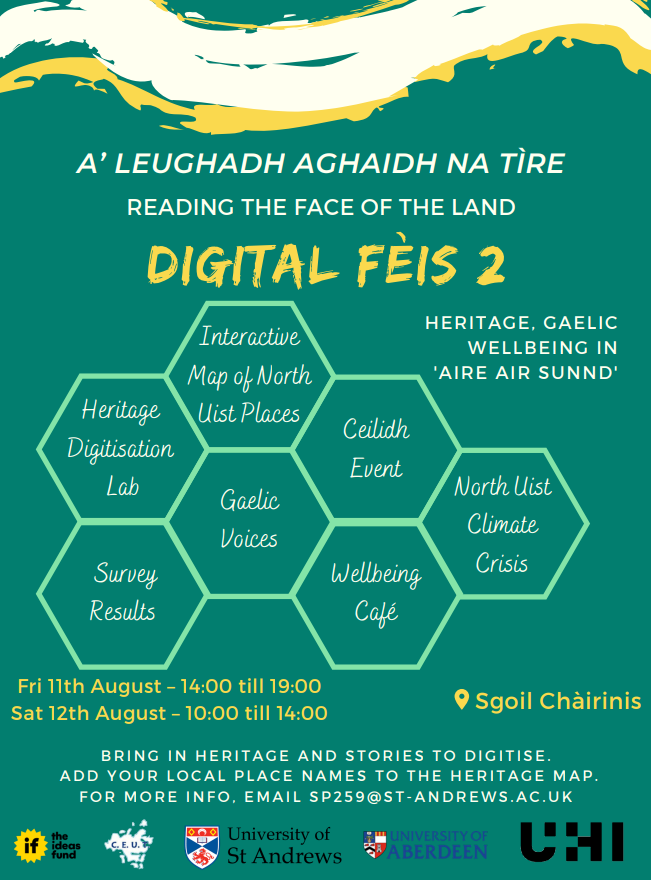
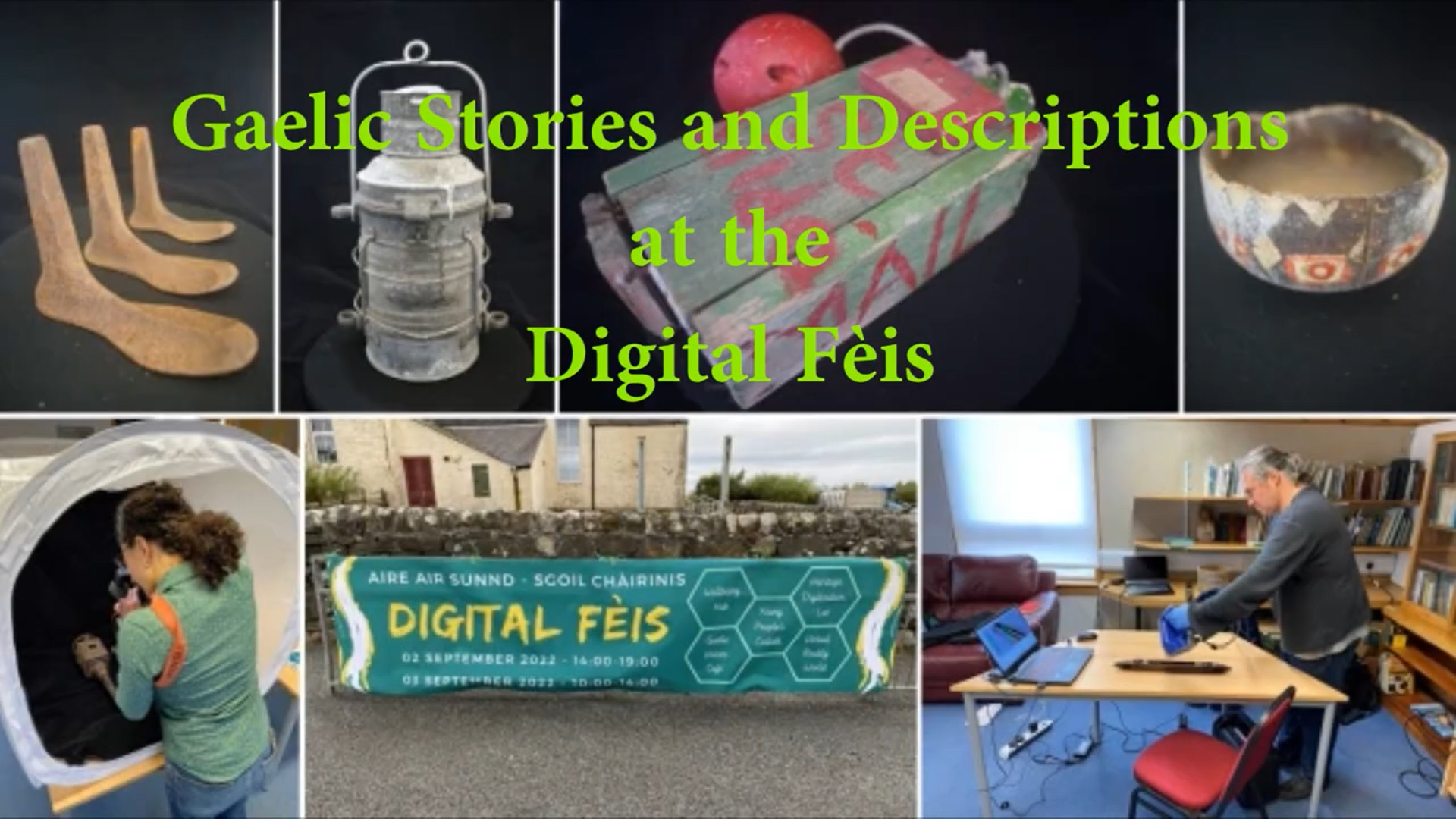
The Aire air Sunnd Digital Fèis was a celebration of community heritage spread over two days in September 2022, held at the old Carinish School, now headquarters for Comann Eachdraidh Uibhist a Tuath, the North Uist Historical Society. Digital activities involved digitising artefacts from the community, recording stories, listening to Gaelic voices, and exploring heritage places through virtual reality. A cèilidh was also held with music and drama from young people of North Uist.

The fèis was held as part of the Ideas Fund “Aire air Sunnd” project, in which the Universities of Aberdeen, St Andrews, and the Highlands and Islands team up with Island Voices to provide research support for well-being initiatives on the island. The recordings in the video below were made by the St Andrews digitisation team, and can be viewed as separate items alongside several clips in English on the CEUT site.

This selection of Gaelic videos has been brought together in a single clip on the Island Voices YouTube channel to enable optional auto-translatable subtitling. This means that even if you have little or no Gaelic you can still listen to the original spoken descriptions while reading the subtitles – whether in Gaelic, or English, or another language – at the same time.

Another alternative for conscious learners of Gaelic who don’t want to use subtitles is to try this Clilstore unit, where video and scrollable transcript are available on the same page, with one-click access to dictionary translation of individual words: http://multidict.net/cs/11235 or https://clilstore.eu/cs/11235.