Scottish Studies goes fully online

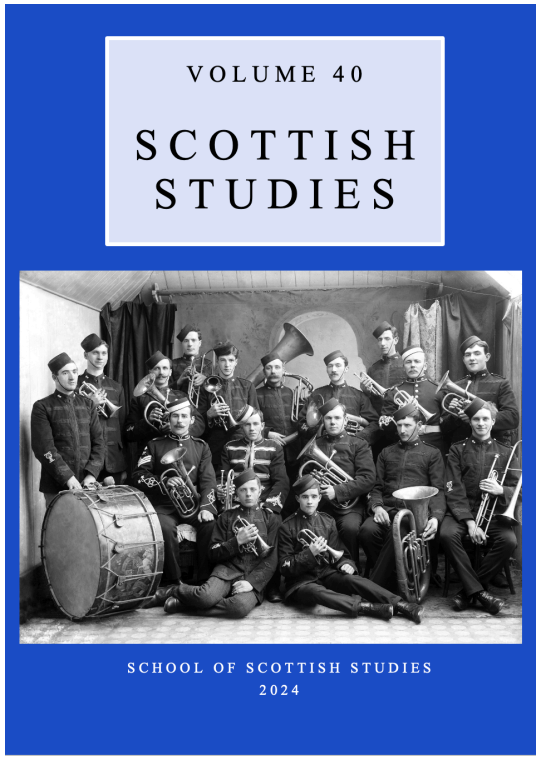
Scottish Studies coverThere are numerous points of interest in the newly published Volume 40 – the 2024 issue – of “Scottish Studies”. Notably, this open access journal of the School of Scottish Studies at the University of Edinburgh has now gone fully online. Virginia Blankenhorn, the editor, gives a good account of the various reasons why this makes sense: 

“In addition to saving trees, there are considerable advantages to online publication which we believe more than compensate for the lack of a printed volume. First and foremost, reduced costs will make it possible to publish more frequently – at least once every eighteen months to start with. Second, digital publication will allow easy access from the content of an article to other online resources. An author writing about song, for example, will be able to supply hyperlinks to sung performances available online, thereby allowing readers to hear the songs themselves – a gift to readers unable to read musical notation, and an added benefit to those who do, but who understand how much information such notation typically leaves out. Finally – and, as editor, I deeply appreciate this feature – digital publication will allow errors to be easily and silently corrected as soon as eagle-eyed readers point them out.”

From the Island Voices standpoint, the point about the multimedia affordances of online publication makes particularly good sense, supporting our consistent stance on the primacy of speech. The notation of language, as with music, is an often inadequate and only approximate substitute for the real thing!

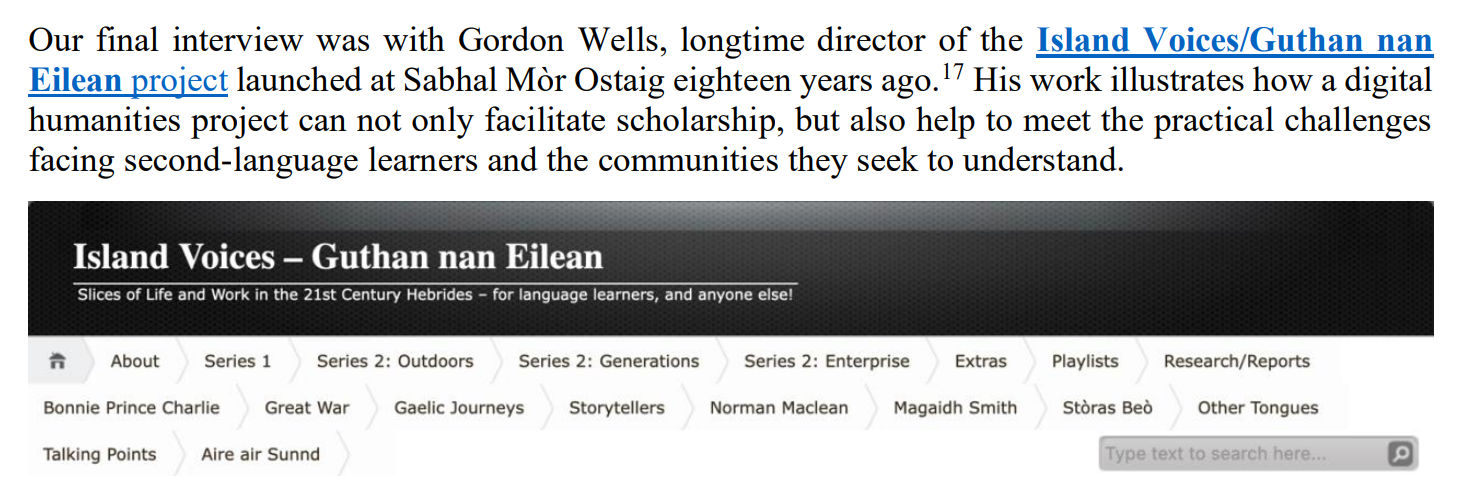
So we are, of course, doubly delighted that Virginia also found space for an interview with Gordon Wells about the Island Voices project in a piece on “Digital Developments in Scottish Studies“, alongside parallel contributions from Will Lamb (Edinburgh) and Natasha Sumner (Harvard). Okay, it’s presented here in written format – but with plenty of live links and URLs in the footnotes. Ceum air cheum…!

Scottish Studies Intro shot 2

Our hearty thanks are due to the journal and its editor for finding a space for Guthan nan Eilean in the world of Scottish Studies!

Talk on Minority Language Protection

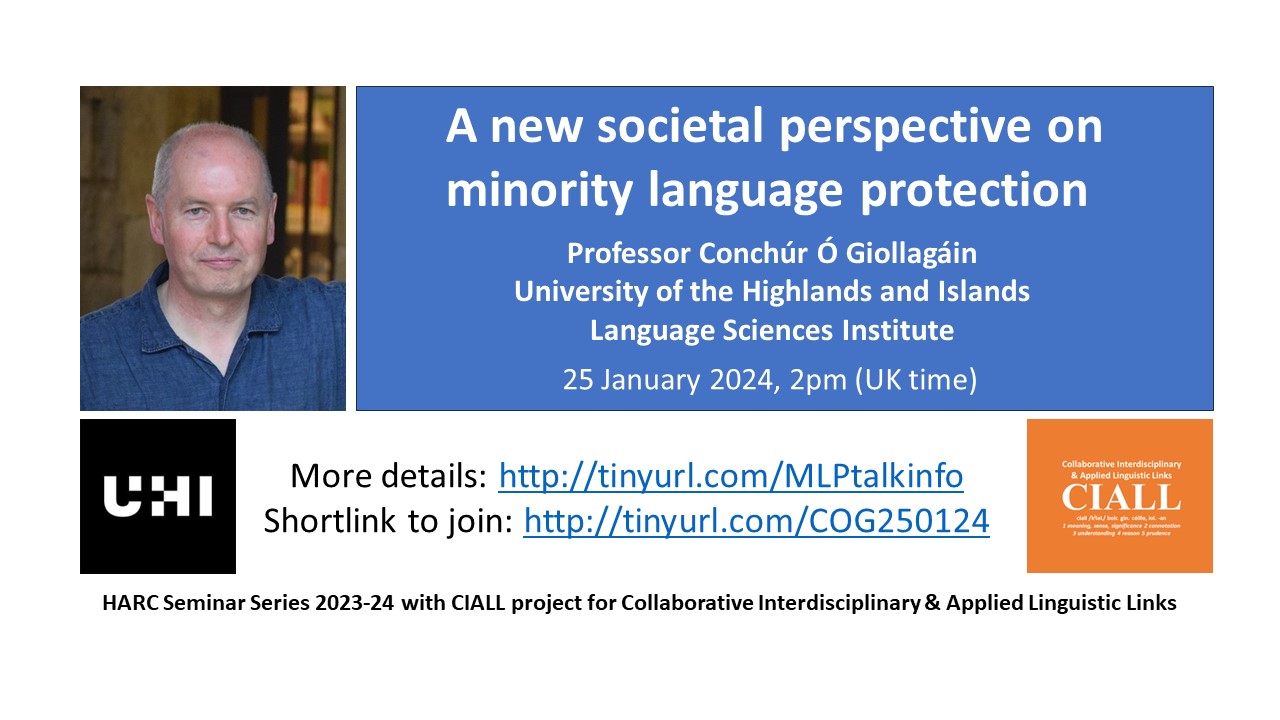
Poster for CÓG talk for HARC and CIALL“Coherent language protection and promotion initiatives are of vital relevance to minority-language survival. Whilst economic, geographic, demographic, and socio-political factors are crucial to successful language protection and promotion at a macro level, positive factors influencing the primary aspects of language vitality, i.e., acquisition, socialisation, ethnolinguistic identity, and praxis, are crucial at a micro level.

This paper aims to present a new conceptual framework by which we can interpret the various social elements contributing to minority-language social dynamics. Four phases of socialisation (primary, secondary, civic reinforcement, and processes of collective coherence) are indicated in the social dynamic, and the influence and interaction of key groups of social participants (identified as minority; majoritarian; tangential and neo-cultures) on the outplay of the dynamic in society are demonstrated. The analysis underlying this new conceptualisation examines: a) the implications of minority-language promotion with insufficient language protection, and b) the influence of the minority-language policy and planning framework on the social dynamics of the minority group. It is contended in the paper that minority language protection is more likely to be successful when it adequately aligns and addresses the core aspects of the actual reality of minority social dynamics.”

You can click on the poster above to find live links for this talk by the Director of the UHI Language Sciences institute, or join here.

UPDATE: The recording of the talk is now available via the news page of the Language Sciences Institute: Talk on Minority Language Protection.

Retro Retrieval

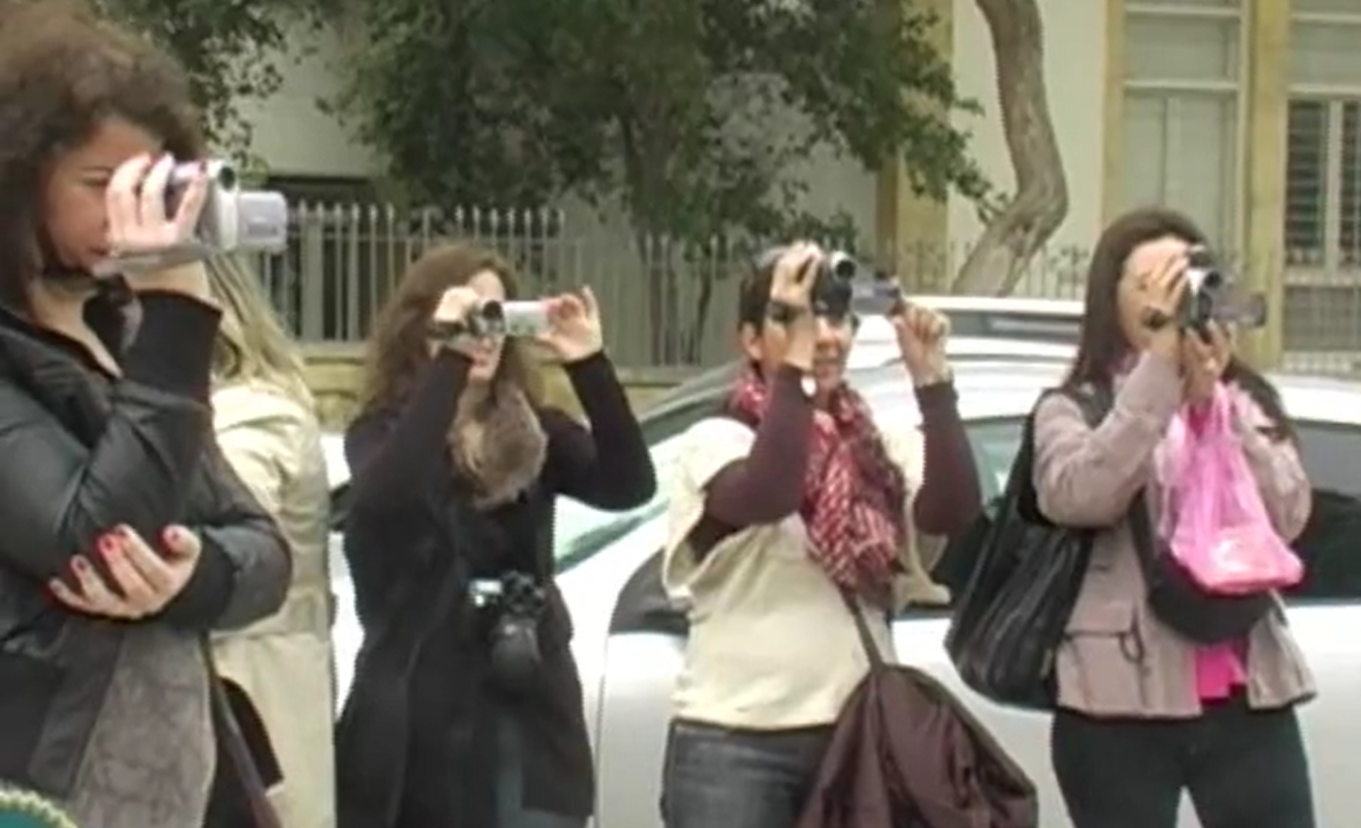
Nicosia video makers

We’ll continue our review of previous Gaelic recordings into the winter months, given the popularity of our autumn social media season. But we’re going to start the New Year with something a little bit different – and warmer – while sticking with the Gaelic unifying theme. We’ll kick off with some earlier films made “in the style of” or “about” Island Voices, before returning to more classics from the original series.

Island Voices in fact owes its inception to the stimulus provided by the EU’s Leonardo funded POOLS project of 2005-2007. It was through that successful partnership that the Guthan nan Eilean idea came into being – and won the 2007 European Language Label. POOLS turned out to be just the first of many follow-up projects that built on the original theme, with Island Voices linked to many of them.

POOLS-2 (2009-2011) was an early example, again with a video production element included, which enabled us to link with other European islands like Cyprus and Malta. In these demo clips from a 2010 video workshop in Nicosia, the fundamental learning point is made that serviceable video-making need not be the exclusive preserve of industry professionals. And in language teaching terms, it can be a highly productive process, with multilingual knock-on benefits potentially within reach in return for the initial creative input.

These videos were put together as a demo for language teachers interested in the use of ICT in language teaching. Participants spent a morning taking pictures. The following day, after pooling their resources, they each edited together their own short film, using this demo as an exemplar.

They were recently “rediscovered”, and the Gaelic version has now been additionally equipped with the learning assisting enhancements that have since become available – including the now standard Clilstore transcript (Unit 11794), plus optional YouTube subtitles (that can further be auto-translated through the Settings Wheel).

A bheil Portagailis agad, neo am bu toil leat beagan ionnsachadh?!

Tionndadh Gàidhlig:

English version:

We’ll place direct YouTube links to more Gaelic films on a similar outward-looking and multilingual theme on Facebook and Twitter in days to come…

Island Voices “make sense”

CIALL banner logo

As we move from 2023 to 2024, Island Voices’ “coming of age” since the project was first mooted 18 years ago in 2005 has already been marked. Followers on Facebook or Twitter will also have noticed our recent “autumn season” of retrospective re-postings of some of our earlier videos from the original Series One and Two. It’s been heartening to see the sudden bursts in YouTube metrics as we re-draw attention to examples of our earliest work, peaking with close to 1200 hits in one single day in November.

A quick analysis of Facebook “likes” (including other positive reactions) may also be instructive, for example in comparing the sixteen videos that form the Gaelic section of Series Two Outdoors, as each was separately highlighted from 2nd November into early December. With overall positive reactions just on our own page totalling over 1,000 during this period – averaging about 63 per video – there was an interesting split between the introductory “teacher talk” documentaries and the “authentic speech” interviews with community members. The documentaries averaged 35 “likes” whereas the interviews pulled in over a mean 79 per video, with the top three scoring 253, 197, and 97 positive reactions respectively, all with senior community members who, sadly, have now passed on since making their recordings.

In a previous (2020) post on “Gaelic virality” we compared hit rates on WordPress, following Facebook shares, between local Hebridean and more widely dispersed Gaelic interest groups (including learners). But this time we simply posted directly on our own Facebook page and shared just with the Scottish Gaelic Duolingo page in each case. It’s a matter of some interest, even with this narrower sharing strategy, that the top three most actively liked interviews were with older generation speakers, who themselves received relatively little schooling but acquired their Gaelic through community transmission. This comparative popularity makes perfect sense when aligned with academic findings which favour a “retro-vernacular” model for language analysis and indeed teaching purposes.

So, moving into 2024 the project remains firmly committed to its strong Gaelic community focus. And, while the former link to Sabhal Mòr Ostaig is now dissolved, following the closure of Soillse, we maintain academic relationships, particularly with the UHI Language Sciences Institute, through co-operation with its CIALL project (Collaborative, Interdisciplinary & Applied Linguistic Links). This will enable us to keep on supporting existing Gaelic-related work at community level (such as the Aire air Sunnd wellbeing project with Comann Eachdraidh Uibhist a Tuath) and explore new recording avenues too (for example in relation to Taighean Tughaidh with Cnoc Soilleir and UHI archaeological colleagues).
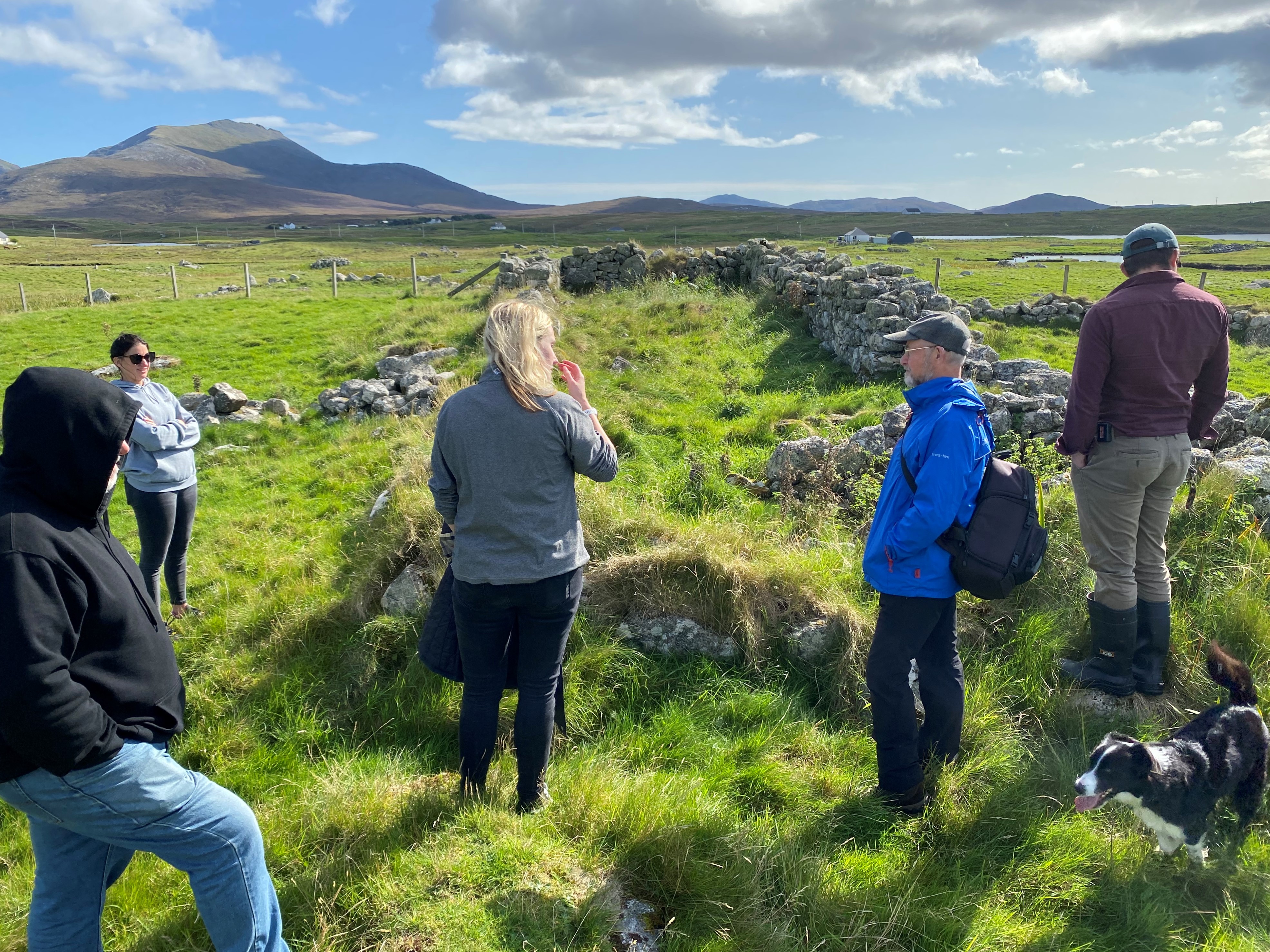
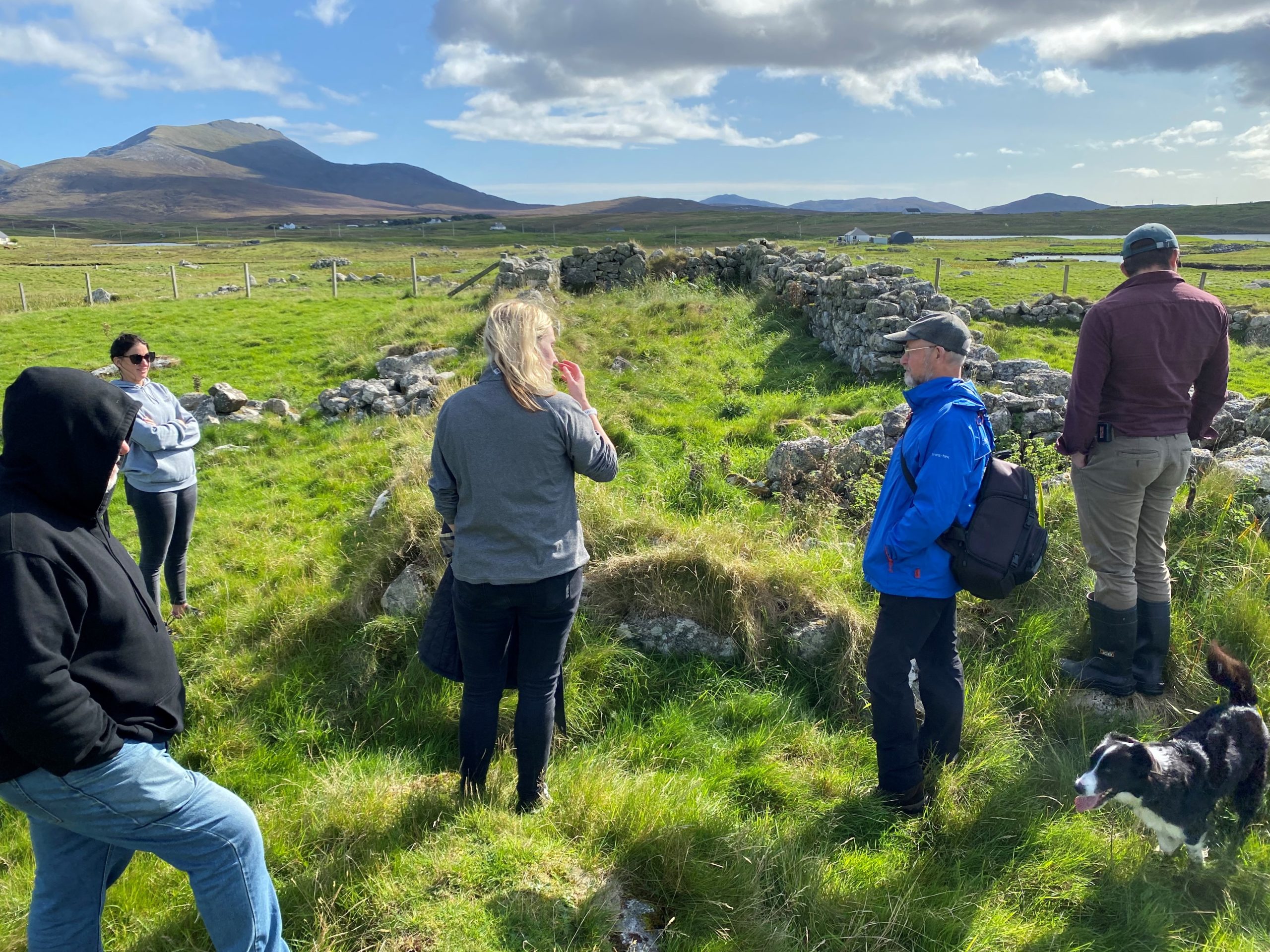
Taigh Nèill

Tommy Macdonald (centre-right) shows the ruin of Neil Maceachan’s house to UHI researchers

At the same time, we look forward to further developing our wider mutually supportive links with Other Tongues beyond our Hebridean shores, for example in other Scottish island chains, or indeed in other maritime areas, whether Mediterranean or Caribbean… Watch this space!

Back in 2005 Island Voices started off with a specific language teaching focus which later widened out. CIALL, by contrast, set out a broader vision from the start when developing its working rationale in 2023, stressing the importance of language use outside formal learning contexts. Here’s a key section:

‘The reality of the ever-growing global Language Shift phenomenon is that speakers of a threatened language switch to another one for societally conditioned reasons other than declining linguistic competence alone. It follows that responses which focus on formal, largely ab initio language learning without addressing broader issues around constricted language use outside the classroom cannot by themselves adequately slow the impetus towards continued and eventually completed shift. A holed bucket, if not repaired, will always empty, no matter how much fresh water is poured in.

As a “language capture and curation” project Island Voices has always sought to present the snatches of speech it records in a firmly grounded social and community context. We certainly don’t claim to supply all the necessary patches to properly staunch the ongoing decline in the use of Gaelic, or any other language, but the CIALL critique above sits nicely with the Island Voices mission and points to a shared agenda – for 2024 and beyond – that can contribute to that cause.

To borrow a phrase: “Tha sin a’ dèanamh ciall!”

Gur math a thèid leinn uile sa bhliadhn’ ùr.
Eighteen Years of Island Voices

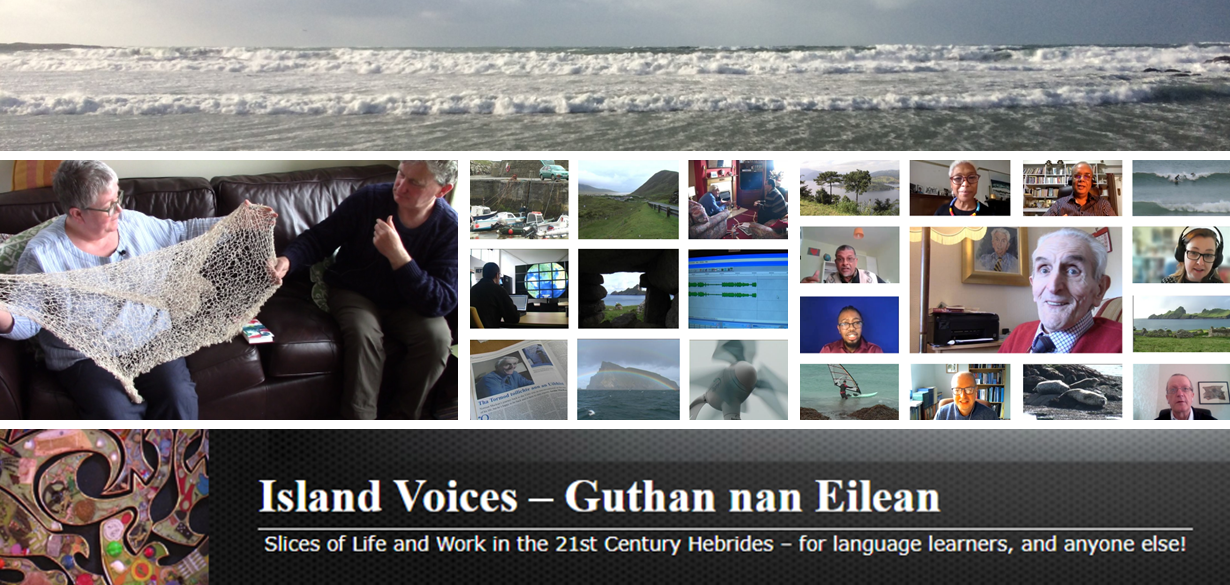
New Island Voices compositePNGcrop

The beginnings of the Island Voices/Guthan nan Eilean project can be traced back to 2005 and the original European POOLS project in which Sabhal Mòr Ostaig (SMO) played a key co-ordinating role, with Gordon Wells appointed as Project Officer. It’s been a fascinating journey ever since, from the bilingual English and Gaelic recording of the first Craigard documentary video onward, in an ever growing and diversifying collection of “slices of  life and work in the 21st Century Hebrides” combined with thoughts and reflections from both community members and interested observers.

Now in its eighteenth year, and fully independent of SMO, the project may be said to be “coming of age”, so Gordon has compiled a detailed report on its history and content to give an account of progress so far: “Island Voices – Guthan nan Eilean: Hebridean Language Capture and Curation, 2005-2023”.

From the summary:

“This article provides a comprehensive description of the Island Voices/Guthan nan Eilean language capture and curation project as it stood in Spring 2023. The introduction presents information on its main features and aims, the linguistic rationale focussing on the primacy of speech and the salience of bilingualism, and the Hebridean community context in which the project operates. This is followed by a detailed account of the project contents and chronology, divided into four separate sections or phases: Staff-led Production; Participatory Production; Multilingual Diversification; and Research Alignment. In conclusion, connections to further research and development projects and opportunities are sketched out, and some final reflections question a polarising juxtaposition of local versus global interests, while pointing towards responsibilities alongside the opportunities this kind of work entails.

Describing a primarily oral project through written text presents a challenge. Copious footnotes point to online samples of the materials discussed, and readers are encouraged to engage through screen as well as page in order to extract full benefit. The article is bookended by a preamble and postscript which offer written exemplification from short, transcribed extracts.”

And from the conclusion:

“There may be a lesson here for applied and socio-linguistic professionals. In a meaningfully socially aware mission, the development and display of academic and linguistic prowess should surely show and serve a genuine community connection and purpose. Such, at least, are the principles which the Island Voices project aspires to uphold. The project trajectory, while linguistically guided, thus aims at inclusiveness in content organisation and presentation, remains open to new inputs, and has an undefined end-point still over the horizon.”

Watch this space, a chàirdean! Agus cumaibh cluas ri claisneachd…

Beryl Bailey Symposium

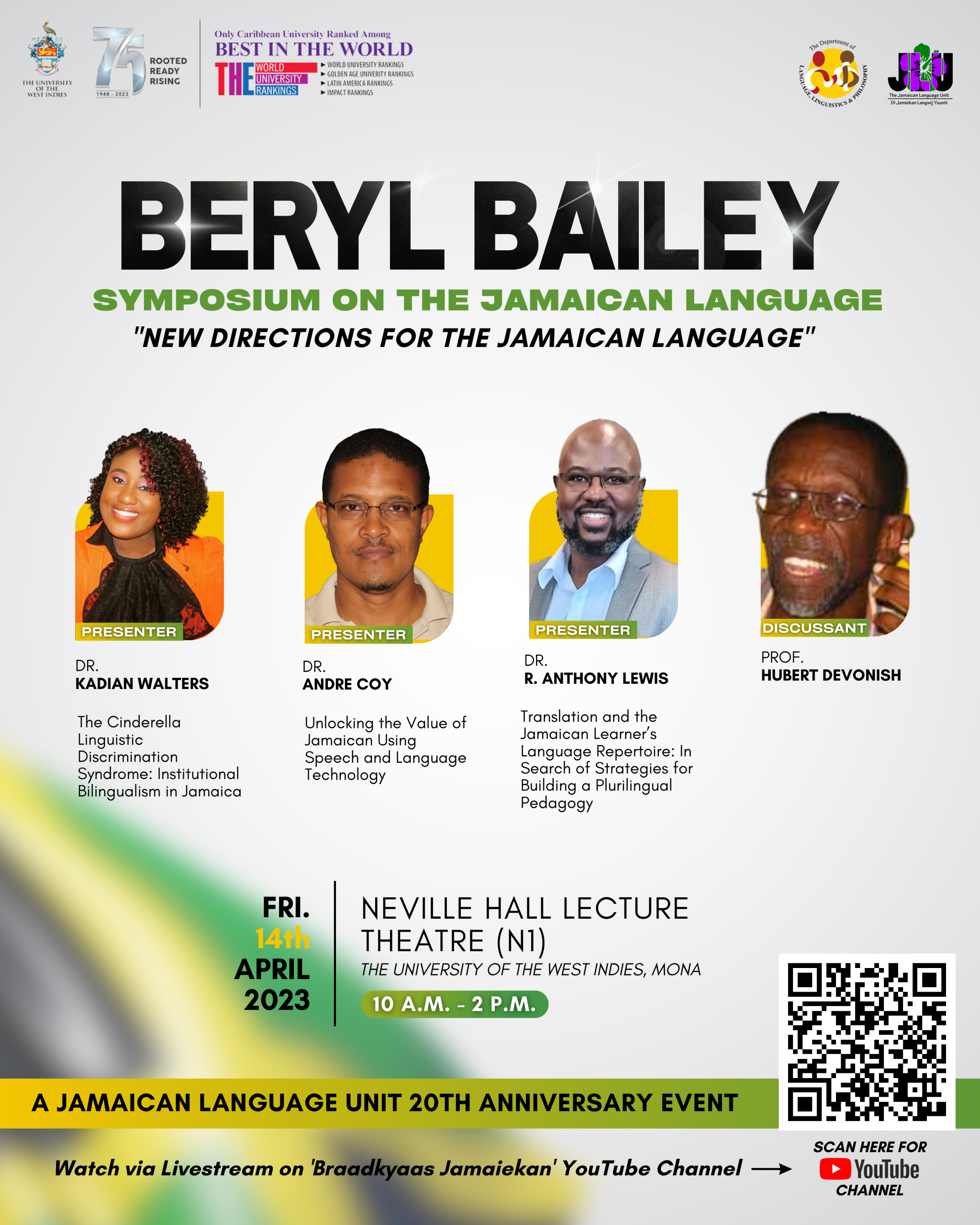
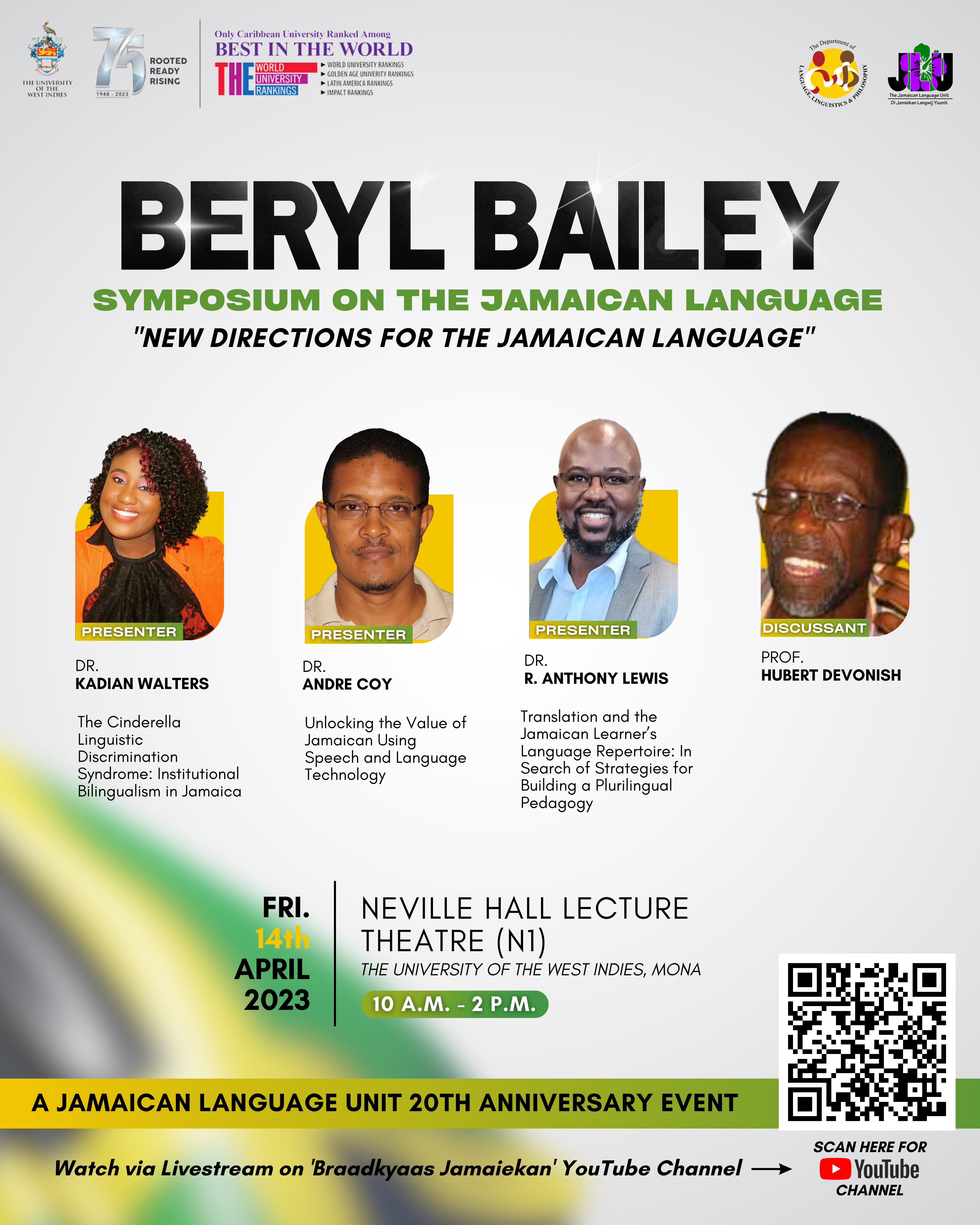
Here’s welcome news of an exciting event celebrating the 20th anniversary of the Jamaican Language Unit (JLU) at the University of the West Indies, with whom the University of the Highlands and Islands recently signed a Memorandum of Understanding on the back of joint work on Mediating Multilingualism with the Language Sciences Institute (LSI).

BBS (1) (1) (1)

This symposium is livestreamed on the Braadkyaas Jamiekan YouTube channel – the JLU’s media platform which provides a community-facing link for speakers of Jamaican, in much the same way as Island Voices has aimed to bridge gaps between academic linguists and vernacular Gaelic speakers in the Hebrides.

Any successful language revitalisation or normalisation strategy or plan will not be developed in isolation from the real world around it. That is surely a truism, yet worth repeating in a context where the detailed and demanding practical work entailed requires careful, even microscopic, attention to the actual “facts on the ground”. For best results in a highly challenging task the critical linguistic gaze must surely still be both inward and outward. Insofar as Island Voices can contribute to a wider appreciation and re-valuing of the Gaelic language in hopeful anticipation of renewed community use, that is why this project, alongside its local Hebridean capture and curation work, has from the start been multilingual in orientation, and actively seized any opportunity to build links with other language communities who might find their own continuity or development under similar threat.

The applied linguistic collaboration between the JLU and the LSI has included the creation of Jamaican versions of various Island Voices films alongside other foundational media and corpus work, in the hope that this Hebridean-Caribbean language link can be further developed going forward. Creole linguistics and the languages of the Caribbean tell an illuminating story, which pioneering Jamaican linguist Beryl Bailey helped uncover. It contrasts interestingly with that of Scottish Gaelic. Nevertheless fruitful links, perhaps particularly in relation to oral and bilingual skills and resources, are there to be seen, explored, and developed. This event is open to all comers. Happy 20th Birthday, JLU!