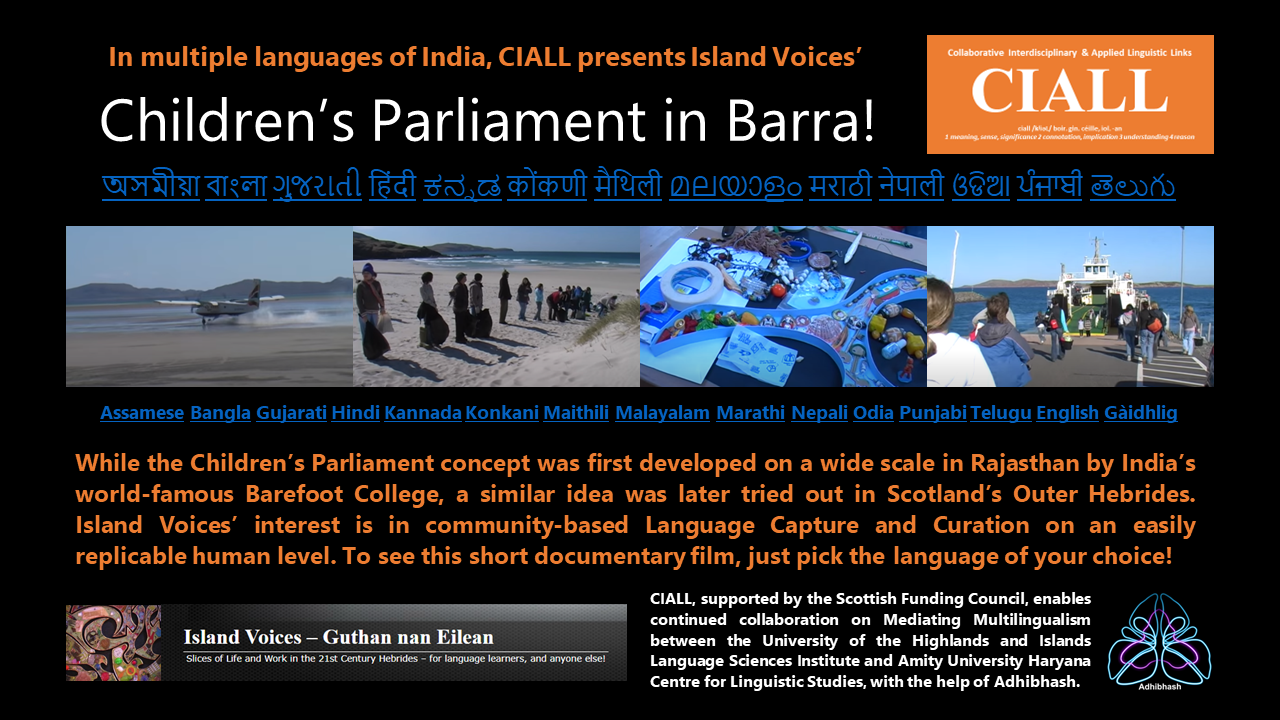
Tradizzjonijiet tal-Milied f’Malta

“Christmas Traditions in Malta” is a new and seasonal contribution by Sharon Pisani, from the St Andrews University Open Virtual Worlds group, to the Island Voices “Extensions” initiative!
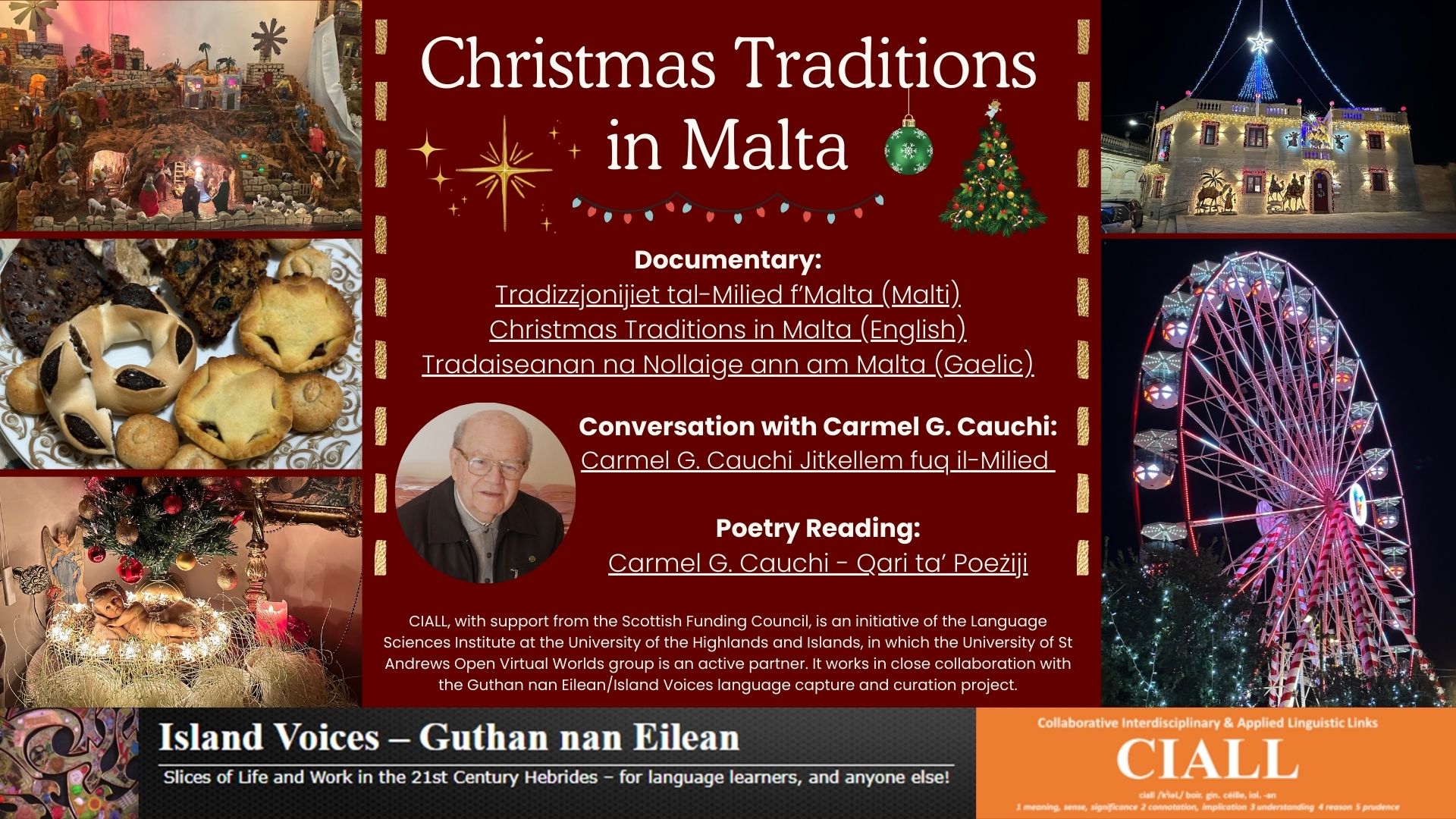
Landscape Traditions DocSelect any video clip in this landscape format, or use the phone-friendly portrait layout.

“Il-Milied f’Malta huwa ċelebrazzjoni kbira, b’tradizzjonijiet antiki u oħrajn ġodda. Minn drawwiet reliġjużi sa ikel u xorb, insibu ħafna affarijiet li jagħqdu lill-poplu. Ara dan id-dokumentarju qasir biex issir taf iktar fuq il-Milied f’Malta.” (Christmas in Malta is a major celebration, with old and new traditions. From religious customs to food and drink, there are many things that bring people together. Watch this short documentary to learn more.)

Sharon writes:

“Christmas is a celebration that holds a special place in my heart. Since moving from Malta to Scotland, I’ve sought to bring the light and joy of Maltese traditions into Scotland’s short, dark December days. When I was back home planning and filming the documentary, I looked into Malta’s unique customs and discovered others that have faded over time, such as the use of capon as the traditional Christmas lunch meat. My goal was to capture the essence of the Christmasses I cherish —through food, decorations, and the sense of community.

In today’s era of content creation, documenting this felt natural, but it was also deeply meaningful to explore Malta’s festive roots and to interview Carmel Cauchi, an author whose books shaped my childhood. The poetry readings selected by Cauchi reflect a contemporary world, where harsh realities co-exist with the jovial celebrations of Christmas. Just as Christmas traditions and lifestyles evolve, so too does language and the way we produce and consume content in that language. This is especially true for Maltese – and other island languages – in this digital age.

I hope this collection of videos, which can be explored in Maltese, English, and Gaelic, alongside other languages through YouTube’s translation tools, resonates with you.”

Sharon had already given us a Maltese version of our St Kilda film, but we’re delighted to add this new cluster of videos in the new Extensions style, featuring natural unscripted speech and carefully crafted verse from the poet Carmel Cauchi alongside Sharon’s documentary narrative – which, of course, allows ready translation into other languages, such as English or Gaelic, and maybe more to come(?). The videos are subtitled on YouTube in their original language – which also enables auto-translation into a wide range of other languages through the settings wheel. To access any of these videos just click on the live links in either of these landscape or portrait formats.

As an added bonus, we’ve also been able to create three new Clilstore units in Maltese, so you can read the transcript while watching the embedded video and just click on any unfamiliar word to get a dictionary translation into the language of your choice. Christmas is coming early!

Documentary: Tradizzjonijiet tal-Milied f’Malta
Poetry: Carmel G. Cauchi – Qari ta’ Poeżiji
Conversation: Carmel G. Cauchi Jitkellem fuq il-Milied

The Island Voices Extensions initiative is supported by the CIALL project.
Clilstore: Nyuu Jamiekan Yuunit

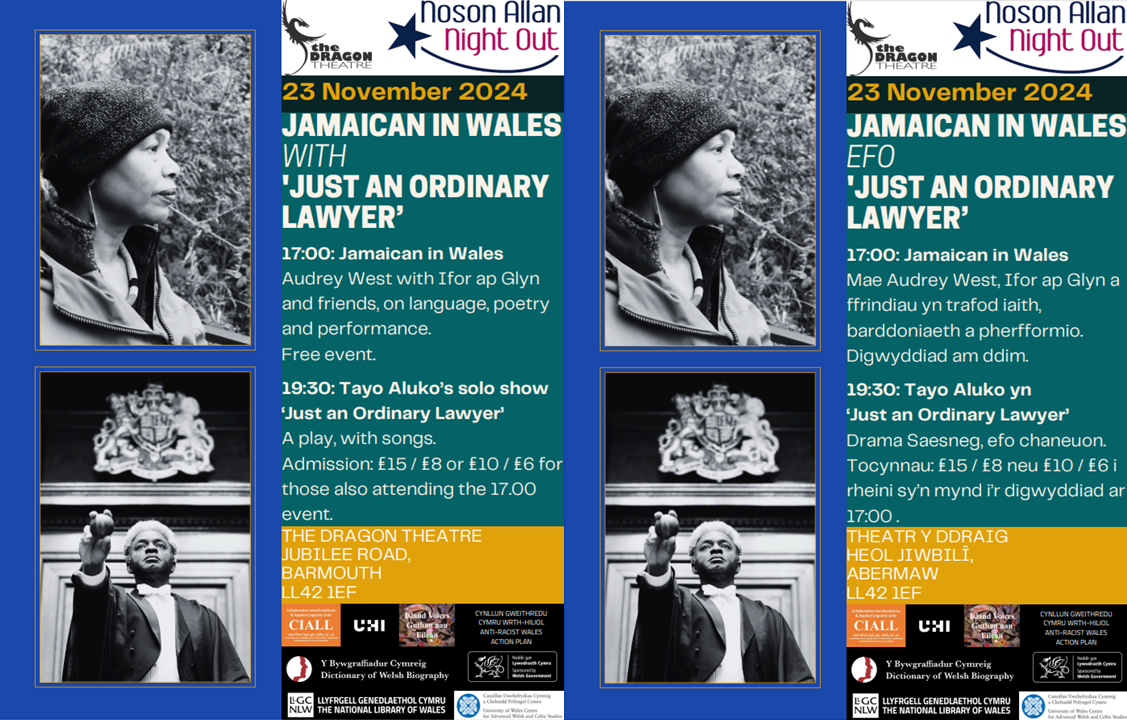
Island Voices’ “Jamiekan in a Wielz” gets a multilingual public launch in Wales at the weekend, with Gordon Wells among Audrey’s friends for the panel discussion on language, poetry and performance. Any Welsh friends of Island Voices are most welcome to come along!

DragonTheatre

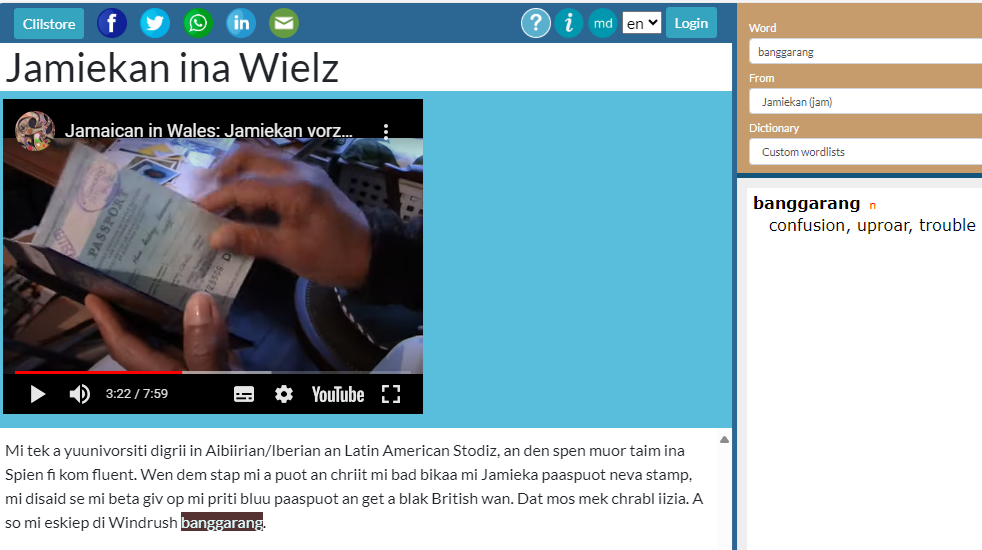
Thanks to work by our partners in the Jamaican Language Unit at the University of the West Indies in putting together a wordlist and glossary in the standardised “Cassidy-JLU” orthography, we’re pleased to mark the occasion with a new Clilstore unit, displaying all the standard features of embedded video, word-for-word transcript, plus one-click dictionary look-up.

This is made possible through Caoimhín Ó Donnaíle’s work on enabling the creation of “custom wordlists” in Clilstore for languages which may currently lack fully comprehensive online dictionaries. Taing mhòr, Chaoimhín!

COOLJamSCRN

Find the online Clilstore unit here: https://multidict.net/cs/12176

Or here: https://clilstore.eu/cs/12176

Also, check Ifor’s Welsh version here! https://multidict.net/cs/11888

Island Poets through Portuguese

Audrey and Christie

Our collaborator, Marina Yazbek Dias Peres, has excelled herself in her mission to bring Island Voices documentaries to Portuguese speakers around the world, this time re-rendering two of our most recent productions from our Extensions page! Lovely work, Marina!

“Jamaicana no País de Gales” offers a documentary slice of Jamaican life in Wales, featuring Audrey West, poet, artist, and community worker.

And “Shetlandês em Glasgow” gives us a parallel treatment of Shetland poet Christie Williamson’s life in Glasgow.

Clilstore units have also been created for each of these films. You can simultaneously view the films and read the transcripts for Audrey here, and for Christie here.

AAS: Wellbeing, Stories, and Gaelic

AASYouTubemontage1

Gordon Wells talks about his view of the importance of stories and the place for Gaelic to the Wellbeing group in the Aire air Sunnd project led by Comann Eachdraidh Uibhist a Tuath (North Uist Historical Society). He has recorded English and Gaelic versions of this talk. Click on any link below to get to the YouTube video.

Wellbeing, stories & Gaelic (in English) – full talk
Wellbeing, stories & Gaelic (in Gaelic) – full talk

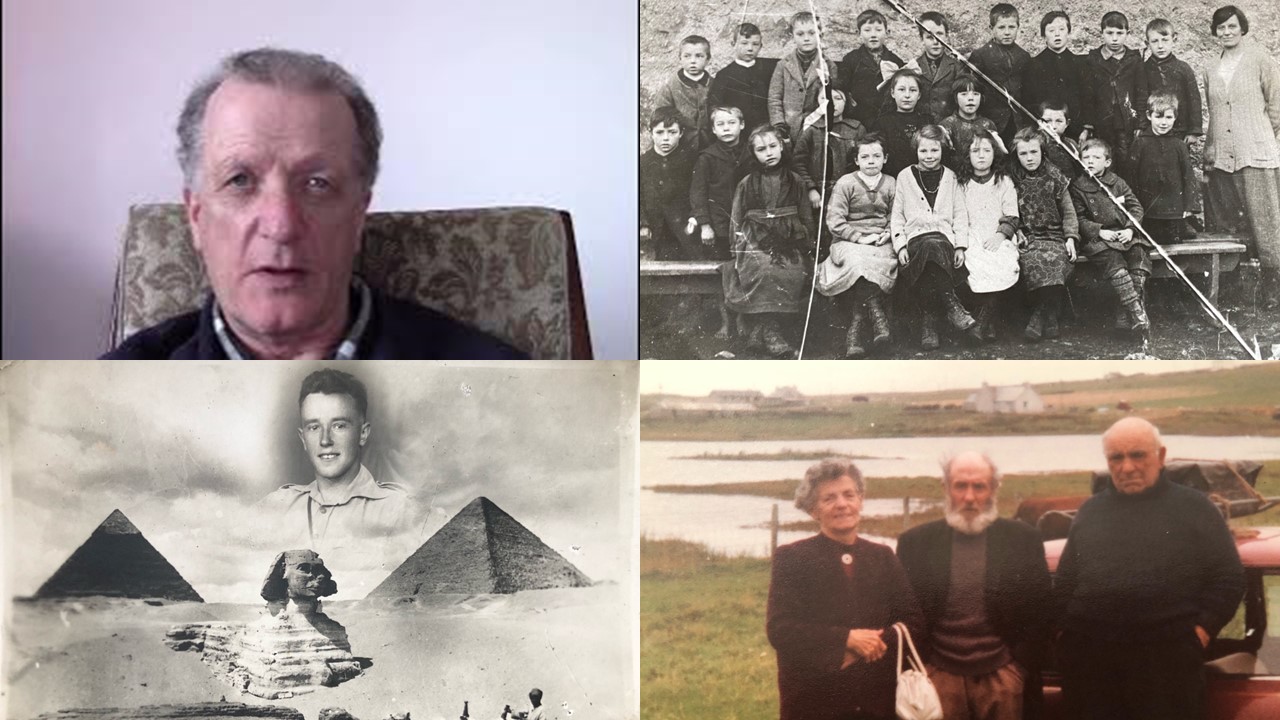
Both English and Gaelic talks can also be viewed in two parts each. In part 1 Gordon recounts a story about his uncle, Norman Maclellan, supplemented with some family photos. In part 2 he offers some general thoughts and reflections, particularly in relation to language, arising from this family story. The Gaelic parts are accompanied by optional YouTube subtitles, which can further be auto-translated into the language of your choice through the YouTube settings wheel.

Wellbeing, stories & Gaelic (in English) – Part 1
Wellbeing, stories & Gaelic (in English) – Part 2
Wellbeing, stories & Gaelic (in Gaelic) – Part 1 (subtitled)
Wellbeing, stories & Gaelic (in Gaelic) – Part 2 (subtitled)

The original Gaelic version of Anna Sheonaidh’s article in An t-Uibhisteach, referred to in the first part of Gordon’s talk, and an English translation are available here: https://gordonwellsuist.wordpress.com/2011/04/09/ban-uibhisteach-ann-an-india/

Access to the articles referred to in the second part of Gordon’s talk is freely available here: hhttps://www.northpost.co.uk/uhi/research/

More information on the Island Voices contribution to Aire air Sunnd is available here: hhttps://www.northpost.co.uk/uhi/aire-air-sunnd/

This series of videos for the Aire air Sunnd Wellbeing group is cumulatively collected on the dedicated Phase 2 Videos page.

Half a Million Hits & Other News

Six months after our “Island Voices make sense” Hogmanay post we can now note a midsummer milestone and a couple of other updates!

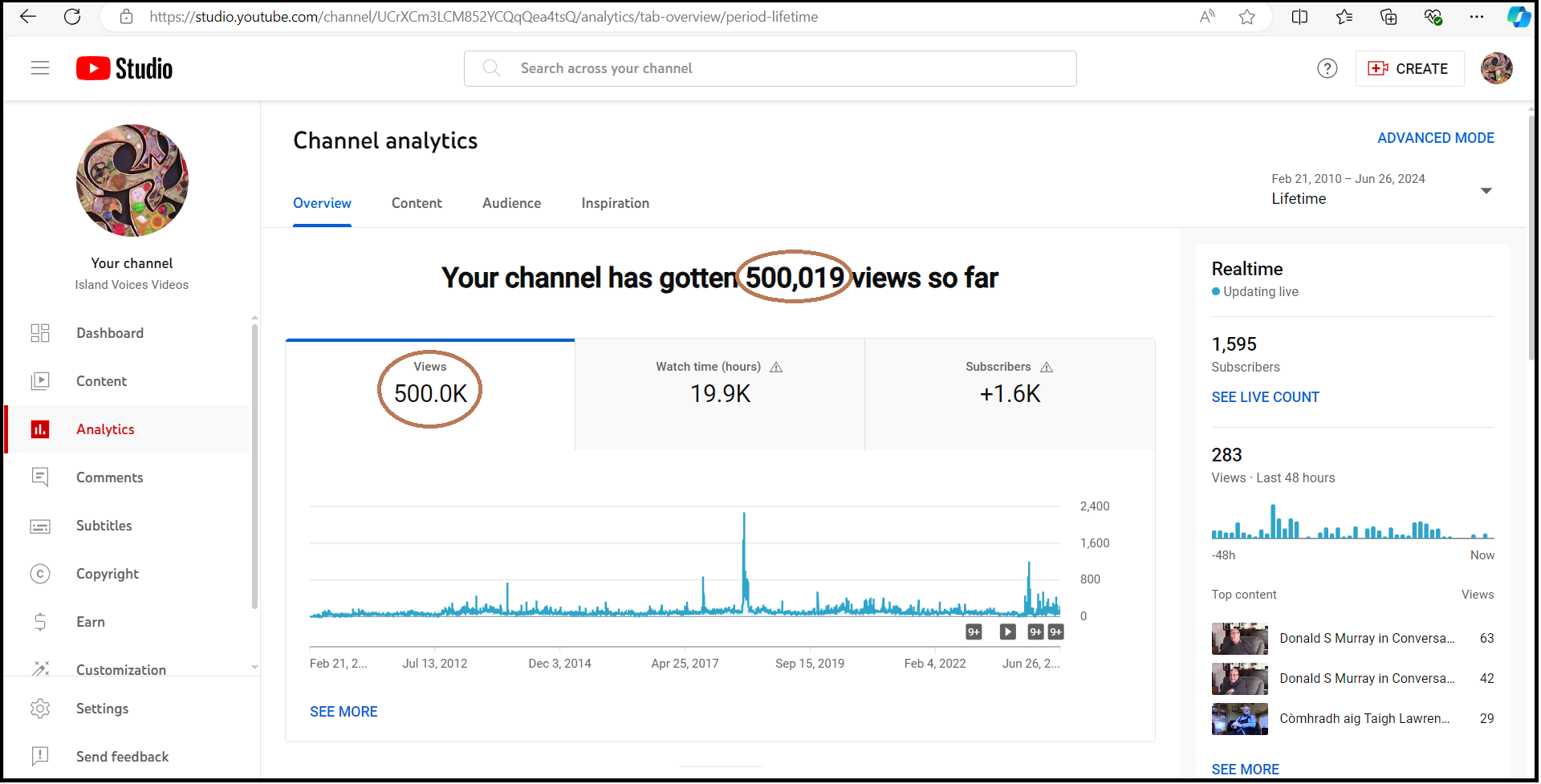
Firstly, we passed the half-million mark of hits on the YouTube channel on June 26th:

HalfMillionViewsCropPlusEdged

Not bad for a “minority language” channel! Many thanks to all our contributors over the years!

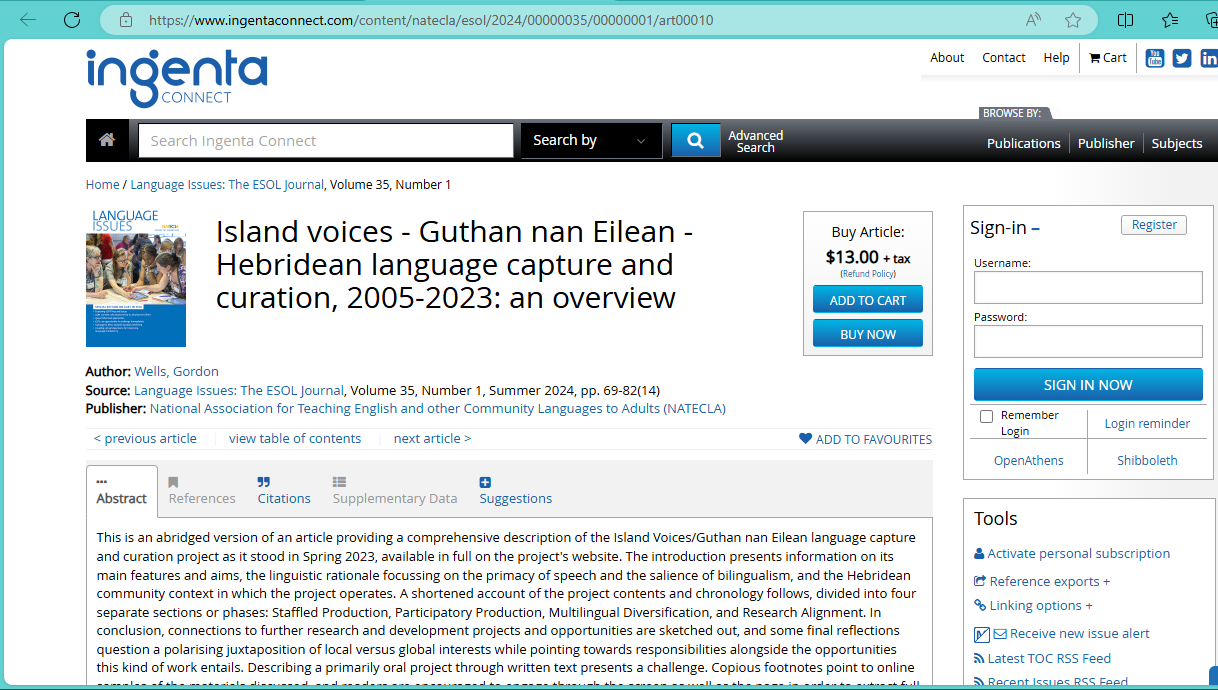
And after extended “18th anniversary” celebrations, we’ll be taking a bit of a social media breather over the summer break, but not before also noting the June publication of an abridged version of the comprehensive account of the Island Voices project in Language Issues, the NATECLA journal: “Island voices ‐ Guthan nan Eilean ‐ Hebridean language capture and curation, 2005‐2023: an overview”

IngentaArticleScrncrop
Abstract:

This is an abridged version of an article providing a comprehensive description of the Island Voices/Guthan nan Eilean language capture and curation project as it stood in Spring 2023, available in full on the project’s website. The introduction presents information on its main features and aims, the linguistic rationale focussing on the primacy of speech and the salience of bilingualism, and the Hebridean community context in which the project operates. A shortened account of the project contents and chronology follows, divided into four separate sections or phases: Staff-led Production, Participatory Production, Multilingual Diversification, and Research Alignment. In conclusion, connections to further research and development projects and opportunities are sketched out, and some final reflections question a polarising juxtaposition of local versus global interests while pointing towards responsibilities alongside the opportunities this kind of work entails. Describing a primarily oral project through written text presents a challenge. Copious footnotes point to online samples of the materials discussed, and readers are encouraged to engage through the screen as well as the page in order to extract full benefit. The original article is bookended by a preamble and postscript, which offer written exemplification from short, transcribed extracts. It can be accessed through the following link: hhttps://www.northpost.co.uk/uhi/2023/06/01/eighteen-years-of-island-voices/

(NB. It may be worth noting that, while it is of course great that Language Issues readers now get a chance to learn about the project through their own journal, the original – and full – article is still freely available on our research/reports page.)

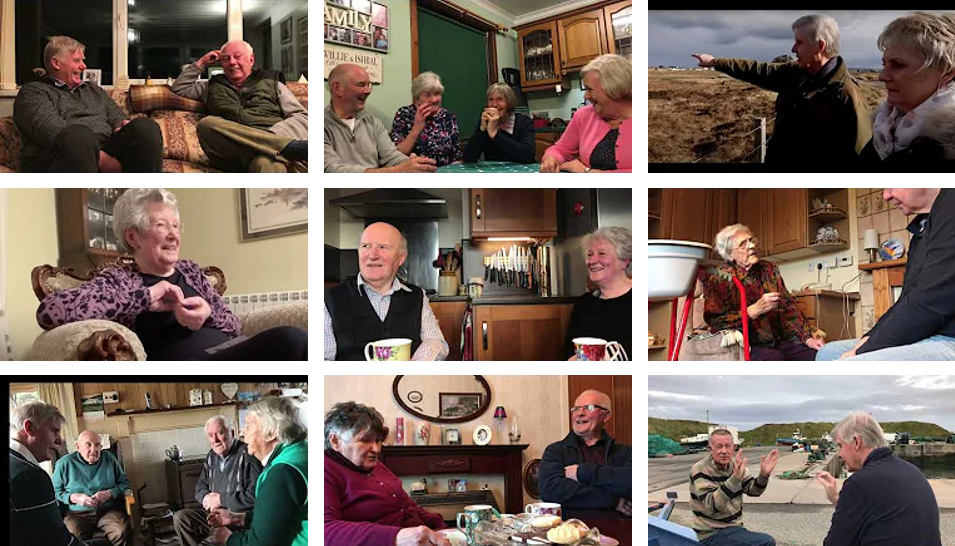
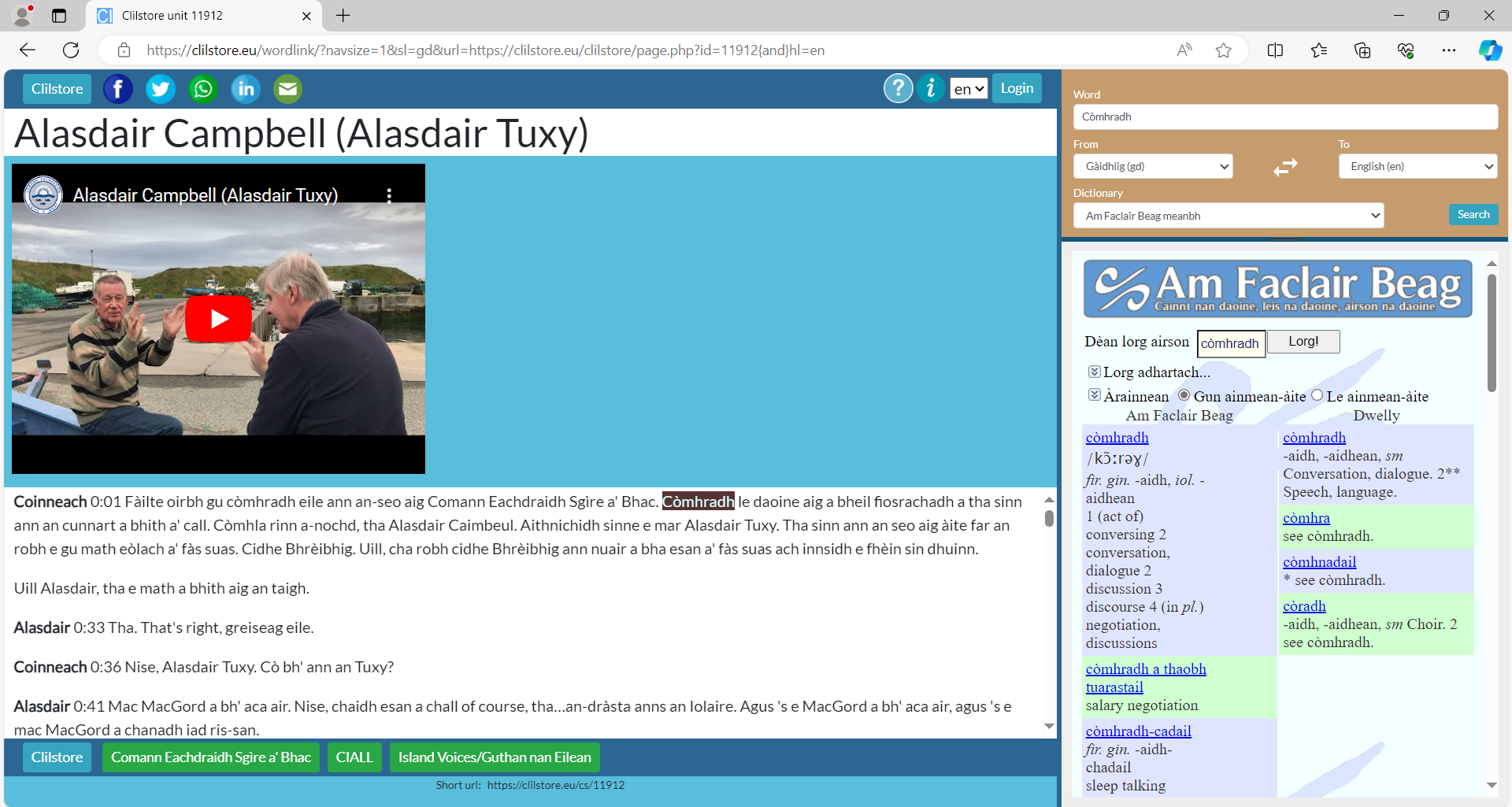
CEBacplaylist1Lastly for now, we were also pleased in mid-June to add the ninth and final film in the Comann Eachdraidh Sgìre a’ Bhac playlist of excellent community-made and subtitled videos to our Clilstore collection, with CIALL support. This is foundational work which, quite apart from its Gaelic learning support function, provides standardised transcriptions of authentic speech which can be used in a number of other important applications as well. We’ve now gathered together all nine clips with their Clilstore transcripts on a single dedicated Sgìre a’ Bhac page. Thanks and congratulations to the Comann Eachdraidh!
We look forward to coming back after the summer with more exciting developments…

Gaelic in Shetland

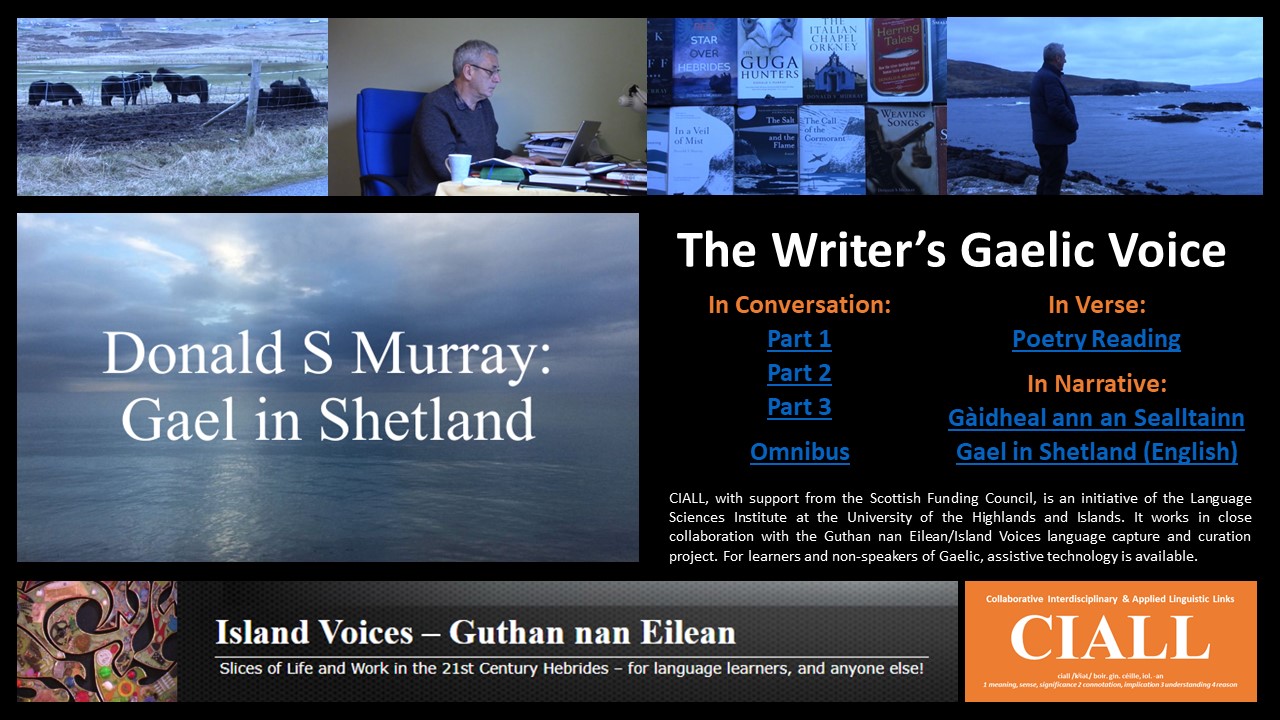
DS Murray poster pictureSelect any video clip in this landscape format, or use the phone-friendly portrait layout.

Lewis-man Donald S Murray is a Shetland resident. As an established writer, mostly in English, how does he keep his Gaelic going while living away from the Ness community where he acquired it?

Following on from our recent “Jamaican in Wales” feature, that’s a key question underlying this second small collection of videos in our Island Voices extension series looking at language use in an “exile” context. Again, we have added poetic recitation to the standard documentary plus interviews format in our Language Capture and Curation model, with the narrative documentary also being reduplicated in English. All films in the collection can be accessed through the above poster in either landscape or phone-friendly portrait layout.*

As Donald freely acknowledges, he mostly uses his Gaelic for talking rather than writing, and we’ve duly given greater weight in this package to his conversational voice, though we’re pleased to also platform some of his less well-known Gaelic poetry. While he obviously has many Gaelic speakers in his ever-widening readership, there will also be many non-speakers of Gaelic who, up until now, will only know his “voice” through the written English page. Here he speaks openly and frankly in what he accounts his native language, establishing direct unfiltered contact with his home community in Lewis. At the same time, YouTube subtitling allows others to read his words as he speaks, with the on-off choice of auto-translation into a wide range of other languages, English among them. (Click the Settings Wheel to view the full range and select your own preference.)

The conversation component has additionally been split into three parts, for the benefit of learners or non-speakers of Gaelic, each equipped with optional closed caption subtitles. The “omnibus” edition is intended for those with no need for such assistance.

In Part 1 Donald talks about his family background and upbringing, first in East Kilbride and then in Ness, Isle of Lewis. He also talks about community and school influences and how they affected his acquisition of Gaelic. A spell of work and then university studies followed on the mainland, before he returned to the Western Isles to teach, first in Lewis, and then Benbecula. He also refers to challenges he had to overcome during these stages of his life.

In Part 2 Donald talks about life as a Gaelic speaker in Shetland, noting how he maintains his speaking skills through long-distance conversations and frequent radio interviews. He points out the relative infrequency of his writing in the language as a common feature amongst fluent Gaelic speakers who normally practise their literacy through English, so his writing about his home community is often a process of translation from Gaelic in his head to English on the page. He regrets the lack of theatre-based literary work in the Western Isles, and highlights the value of the short story format in an island community setting. One advantage of living away from Lewis is the greater freedom he now feels to express critical opinion freely.

In Part 3 Donald talks in some detail about the difficulties he encountered in first writing his novel, As the Women Lay Dreaming, and then in talking about it afterwards, often in relation to dealing with varying experiences of trauma at personal as well as community levels. The theme returns in a very different community context in The Salt and the Flame, exploring urban American tensions through Gaelic emigrant eyes. He is thankful for his father’s encouragement of his wide reading interests as a young boy in Ness, which are reflected in the book alongside the wider research he conducted as part of the writing process.

*September 2025 update

Since original publication three new versions of the documentary have been added to the collection in Welsh, Jamaican, and Catalan, with accompanying transcripts and background information.

Jamiekan ina Wielz

Jamiekan yuus puoster pikcha lanskiep faainalSelect any video clip named in this landscape poster, or use the phone-friendly portrait layout.

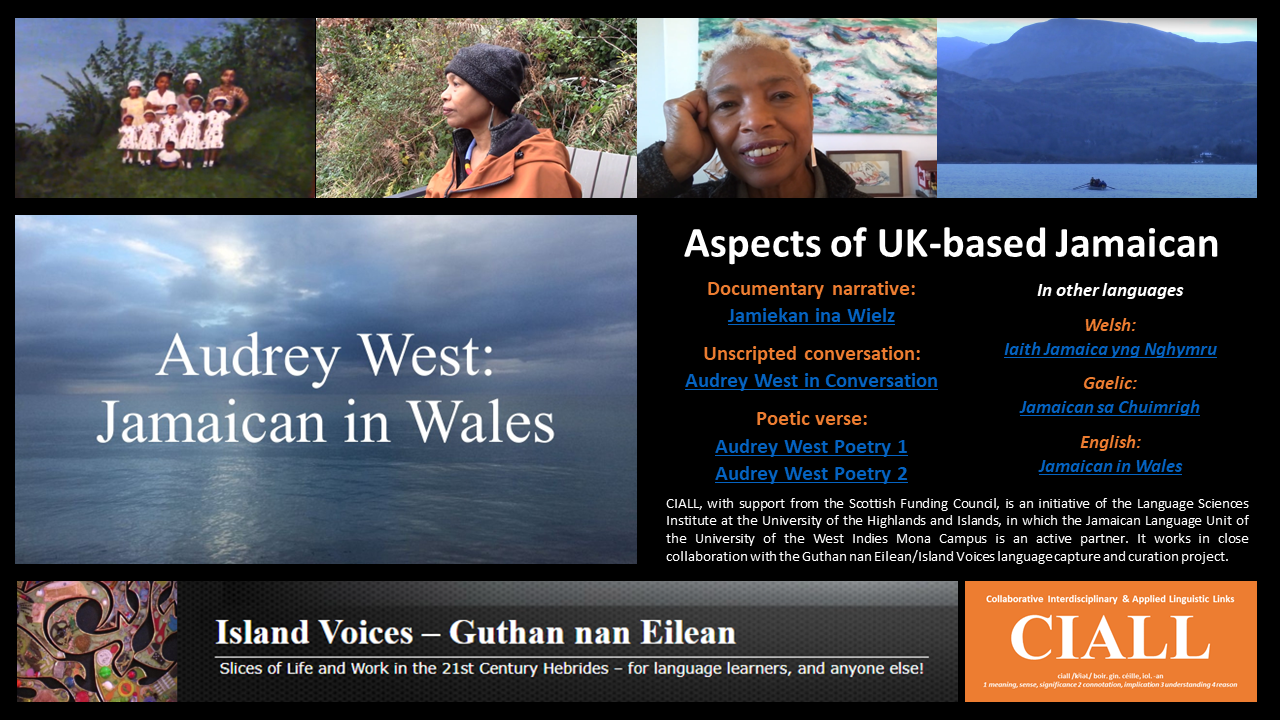
Island Voices is extending its “language capture and curation” model, with CIALL support, to new contexts, new genres, and new languages, including the recording of aspects of UK-based Jamaican language use. Gaelic enthusiasts can rest assured this development does not represent a move away from our key linguistic interest in the Outer Hebrides! Far from it, as we engage with other language communities near and far, new opportunities are created for fresh spoken material in video format in Gaelic (and English – and other languages).

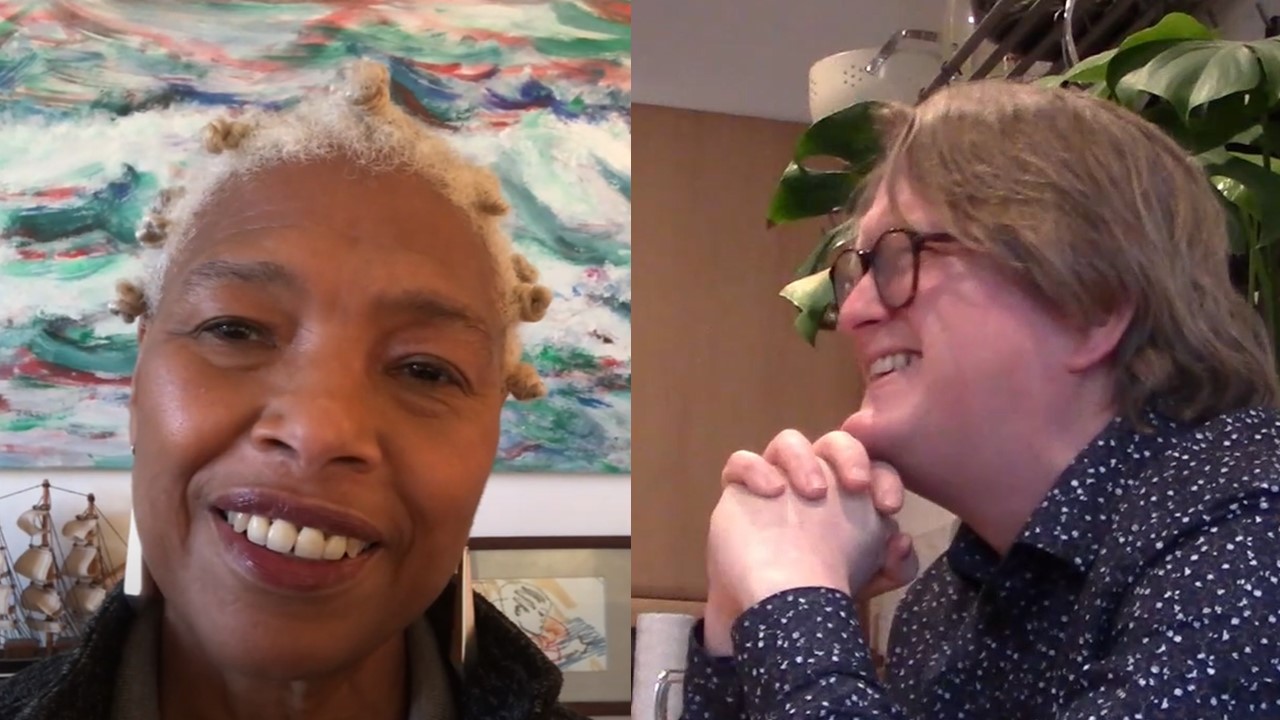
We recently filmed Jamaica-born, but London-raised, artist and poet Audrey West at her home in Wales. (Keen followers may well recognise Audrey from her previous contribution to our “Talking Points with Norman Maclean” debates.) We have now created Island Voices-style short video clips in the familiar “documentary” and “interview” formats, while adding a third category of “recitation”, newly included to capture Audrey’s poetry. These films are all listed in the poster above. You can click for either landscape or portrait versions to access live links to any and all of the videos created.* 

We’re also indebted to Dr Joseph Farquharson from the University of the West Indies Jamaican Language Unit (another Talking Points contributor!), for overseeing the creation of the documentary script in the institutionally approved Cassidy-JLU orthography. Joseph and the JLU team have been extremely busy recently, also providing expert advice to Kingsley Ben-Adir and other cast and production team members for the “Bob Marley: One Love” biopic. As one commenter(!) put it, this YouTube discussion provides “really interesting insights into how skilled linguistic, particularly phonetic, analysis and description can percolate beyond academia and deliver practical applied impact. Bravo JLU!”

This system has enabled regularised subtitling of the clip on sound linguistic principles. Ironically, as YouTube/Google Translate does not recognise Jamaican as a language, we have paradoxically been forced to label the language used in the Jamaican documentary as “English” in order to be able to add the proper Cassidy-JLU subtitles which underline its separate status! We can confidently predict that the YouTube auto-translate function, which we normally commend, is going to struggle with this!

Our aim, in due course, will be to also create a Clilstore transcript incorporating the new Custom Dictionary tool, along similar lines to previous contributions from the Jamaican Language Unit.

We have been demonstrating for some time through “Other Tongues” that the re-purposing in different languages of documentary work in our local community context can be accomplished relatively easily and simply. And we most recently illustrated this at scale with the Children’s Parliament in Barra film. The wider point is that this can be a 2-way street, or perhaps a multi-lane spaghetti junction! With Audrey’s documentary we’ve started with a film made originally in Jamaican and, in a reversal of previous examples, worked up a Gaelic version from it. Not only that, we’ve got Welsh and English versions too!

As hinted in our Duncan Ban MacIntyre piece, “Jamaican in Wales” is just the first of a short series of collections in similar style that explore new fields for Island Voices, including poetic expression, and in “displaced” or “exile” contexts. This is work in progress, with more to come from other island geographies.

Di stuori stil a gwaan. Jos laik Bob Marley se, “Wi faawad in dis jenarieshun chrayomfantli!”

*September 2025 update

Since original publication two new versions of the documentary have been added to the collection in Catalan and Portuguese, with accompanying transcripts and background information. 

Island Voices through Indian Languages

Indian Languages Poster Picture FinalSelect any language in this landscape poster, or use the phone-friendly portrait layout.

The Children’s Parliament concept was first developed to scale in Rajasthan by India’s world-famous Barefoot College. UNESCO documented some of this fascinating history-in-the-making in video form. A similar idea was later tried out in the Outer Hebrides by the Scottish Children’s Parliament organisation, which continues to work across the country to this day.

Around the time of the Children’s Parliament in Uist and Barra project, Island Voices was already developing its interest in community-based Language Capture and Curation on a shareable human scale, so recording this meeting of the Children’s Parliament in Barra (as well as the follow-up in Benbecula) was a natural step to take, with versions in both Gaelic and English included under the Series 2 Generations theme.

Following years of grounded Hebridean growth and developing partnerships, Island Voices came to Indian linguistic attention through the Mediating Multilingualism collaboration between the UHI Language Sciences Institute and AUH Centre for Linguistic Studies, serviced initially through the Soillse network and continued now by CIALL. This work has been generously supported by the Scottish Funding Council, and publicised through their EDI blog.

This brings us up to the present day, and this testing at scale of the notion that short documentary films with a focus on localised linguistic communities can be both easily and usefully re-purposed in other languages in which similar issues around contact, use, and sustainability may also be pertinent. We’ve been doing it off and on in ones and twos for a while through our Other Tongues theme. Moving in one go from two versions of one film to fifteen is a significant step-change!

The image at the top of this post, available in landscape or portrait layout, supplies live links to the film in each of the languages listed, as well as to relevant websites of the partners mentioned. Alternatively, you can just click on any of the language names in the top row of the tables below to get straight through to the YouTube version of your choice.

অসমীয়া বাংলা ગુજરાતી हिंदी ಕನ್ನಡ
Assamese Bangla Gujarati Hindi Kannada
कोंकणी मैथिली മലയാളം मराठी नेपाली
Konkani Maithili Malayalam Marathi Nepali
ଓଡିଆ ਪੰਜਾਬੀ తెలుగు English Gàidhlig
Odia Punjabi Telugu English Gaelic

(The English name of the language in the second row is a live link you can click to get to the Clilstore unit, in which the online transcript – with the video embedded – enables one-click access to an online dictionary for any words you don’t know.)

We are particularly indebted to Adhibhash for their vital work in recruiting and co-ordinating a wonderful team of translators and narrators who worked at pace to deliver these great new recordings!

The primary aim for Mediating Multilingualism was to deliver innovative and collaborative work of genuine value for partners outside Scotland. We have continued in that spirit, while recognising also the mutual benefit derived. It will not have escaped local notice that several of the languages listed above, notably Punjabi, as well as Bangla and Gujarati, are widely spoken (and taught to some degree) in “diaspora” communities here, while Hindi (or Urdu) may still serve as a link between speakers of different South Asian languages in the UK.

And as we, in Scotland, continue to struggle at community level to develop an equitable working relationship between English and Gaelic which would enable both to be fruitfully used, we might do well to remind ourselves that other countries appear to handle regional linguistic variation of far greater complexity. India has 22 scheduled languages written in to its constitution, including all those on our list above, mostly associated with different regions or states. It’s a longstanding example of differential recognition of, and official support for, local languages across multiple regions within one overall polity, as well as some which cross international boundaries. If there’s truly a mind for it, is it really beyond Scotland’s wit to meaningfully recognise “Areas of Linguistic Significance” for Gaelic within its own borders?

Returning to the Indian context and the Barefoot College, they had their own 50th anniversary celebrations in 2022. If you follow this video news report, at 11.36 you can find an interesting alternative take on literacy and education from founder Bunker Roy, in terms that again chime nicely with the Island Voices focus on the Primacy of Speech:

“Illiteracy is not a barrier for anyone to become a barefoot engineer, communicator, designer, architect… We have learnt that there’s a big difference between literacy and education. Literacy is what you learn to read and write. Education is what you get from your family environment, and your community. So our stress at the Barefoot College has always been on education. Literacy may be there, but it’s incidental for me. What is more important is the human being behind – the person who is working with us. Has he or she got the compassion, patience, tolerance, simplicity? All these are Gandhian values, which we think should set an example for anyone working in the college…”

This may be considered a simple statement of fundamental principles. But it is also perhaps another reason, alongside the recently cited example of Duncan Ban MacIntyre, to recognise anew the importance of natural speech in a community setting as the crucial ingredient in any attempt at creating a definitive recipe for promoting genuinely communicative use of any language, no matter what its circumstances. That said, none of the newly added languages here could be considered at risk of disuse in the way Gaelic is, except perhaps in diaspora contexts. But if the Island Voices home-grown and “haund-knitted” (may we call it “barefoot”?) capture and curation model works for these, could it not also be applied with other indigenous and endangered languages, whether in India, Scotland, or elsewhere?

Back School Memories

SchoolMemories

We’ve previously drawn attention to some of the fascinating YouTube videos coming out of Comann Eachdraidh Sgìre Bhac, and to the fact that a number of the Gaelic ones have now been enhanced with optional same language subtitling (which can also be auto-translated into numerous other languages, including English).

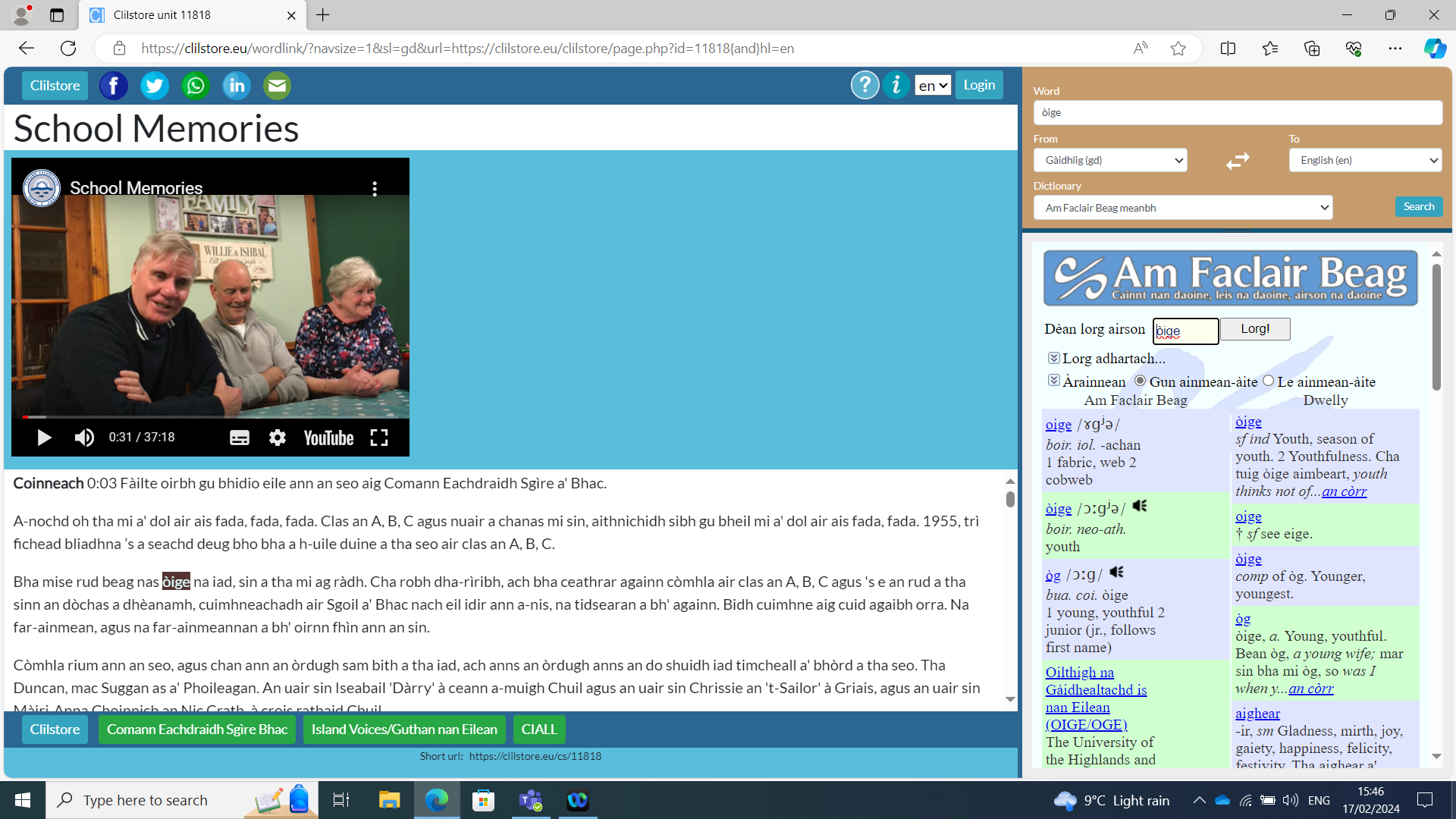
Of course, once the subtitling has been done, that also forms a base on which other platforms can be built – such as a learner-friendly “Clilstore” unit. This is an online tool which creates a new webpage with the video embedded alongside a scrollable text, so you can look at and listen to the video while at the same time following the transcript in real time. Plus, there’s a special trick which allows learners to click on any word they don’t know and immediately gain access to a dictionary translation of it.

So here, with support from the University of the Highlands and Islands’ “CIALL” initiative, is another example of the Clilstore software being put to use with a community-produced recording about School Memories from Sgoil a’ Bhac, with Coinneach MacÌomhair in conversation with some of his former classmates.

Clilstore Unit 11818 – “School Memories”: https://clilstore.eu/cs/11818