Scots First: Kist o Riches

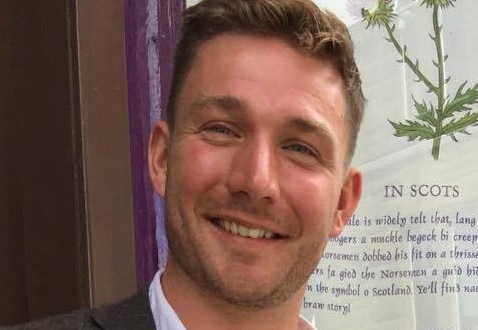
Alistair Heather is the first to take up the latest “Sharing Gaelic Voices” challenge, as Scots becomes the ninth addition to our “Mother Tongues and Other Tongues” collection of languages!

It started with a recent post to the Scots Language Forum on Facebook to see what interest there might be in recording Scots voiceovers to Island Voices documentaries. Alistair was the first to respond, and chose to rescript (and update) the popular clip about Tobar an Dualchais.

As usual, we’ve also created a Clilstore unit (5904) to accompany the video, so you can check any unknown Scots words in an online dictionary.

This is our first video in Scots. It may not be our last. Many thanks to Alistair for starting the ball rolling. Watch this space!
Alistair Heather is the Scots Editor at Bella Caledonia.

Originally fae a wee village in Angus he’s bade aa owre, fae Burgheid tae Leith, ayewis wi his lugs tuned in tae the Scots tongues aroon aboot him.

He’s in his final year o an MA in History at Aiberdeen Uni.
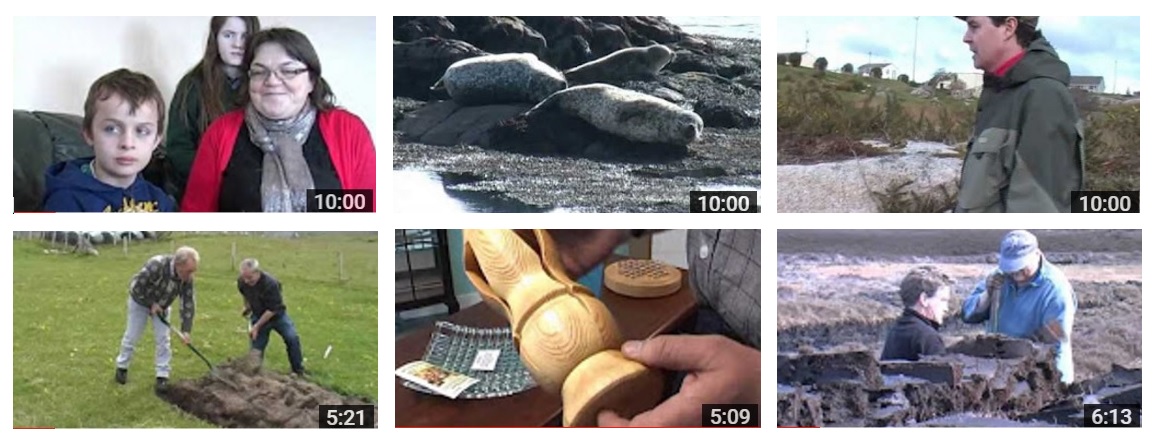
Mother Tongues and Other Tongues

From the beginning Guthan nan Eilean/Island Voices has been a “more than monolingual” project. In the early days the balance between English and Gaelic video production was deliberately kept strictly equal in terms of numbers. Naturally enough, that approach would not necessarily protect the project from criticism from either side of any partisan argument which presented language competence (or language resourcing) from a “zero-sum” perspective, in which anything that “Paul” may gain must be marked down as a loss for “Peter”. But that was neither our philosophy nor experience. We found technical “economies of scale” in putting together single picture sequences which could be used interchangeably between the two languages. Also, and perhaps more significantly from a language support point of view, in circumstances where contributors might be underconfident in speaking on camera in one of their languages, it was often the case that a run-through first in the other might be all the encouragement they needed to then repeat the exercise in their supposedly “weaker” tongue.

In later years, as community members and groups began to engage more proactively with the project and with less of a need for “prompting”, the division between English and Gaelic materials (audio and video) undoubtedly swung over markedly to the Gaelic side. In a context of creeping English language dominance in all aspects of community life, this may be viewed as an entirely understandable and justified attempt, by those with a local interest in “mother tongue maintenance”, at some kind of counterbalancing support for the “weakening” language.

All the while, the research/reports page has been accumulating a series of reports and articles that document the developing context in which the project has been operating, and/or describe how the project has responded to that context. The term “bilingualism” can cover many different meanings, and certainly deserves close interrogation whenever it is invoked in support of particular social approaches or policy proposals to do with language use or learning. That being said, this project has consistently maintained a positive stance on the potential benefits of engaging with more than one language. The 2012 British Council book chapter (p153) and 2016 Language Issues article, in particular, explore the development of this approach over the duration of the project in some detail.

In the broadest terms it means recognising the interrelatedness and interdependence of seemingly separate languages and communities, and seeking judiciously to strengthen or exploit these for mutual benefit. It is in this context that the “Sharing Gaelic Voices” theme has emerged over the past year or so, to the extent that a new page for “Other Tongues” has now been created on this site, where our videos in languages other than English and Gaelic, voiced by contributors near and far, are gathered in one place. No doubt, there are powerful forces at work and complex issues at stake wherever languages are in contact, and the production of a few extra videos may have little material impact of itself on a tangled web of interlocking competences, loyalties, and social and economic pressures. But even if we are just reminded for a moment that one person’s “mother tongue” will be somebody else’s “other tongue”, and vice-versa, then we may be contributing in some way to the development of a more open mindset and a willingness to question previously narrower, maybe even “monolingual”, lines of thinking, whether that be at policy-making or community level, or indeed within ourselves.

Worthwhile activity, then. But also fun! Any other budding voiceover artists out there?

Taith drwy’r Aeleg


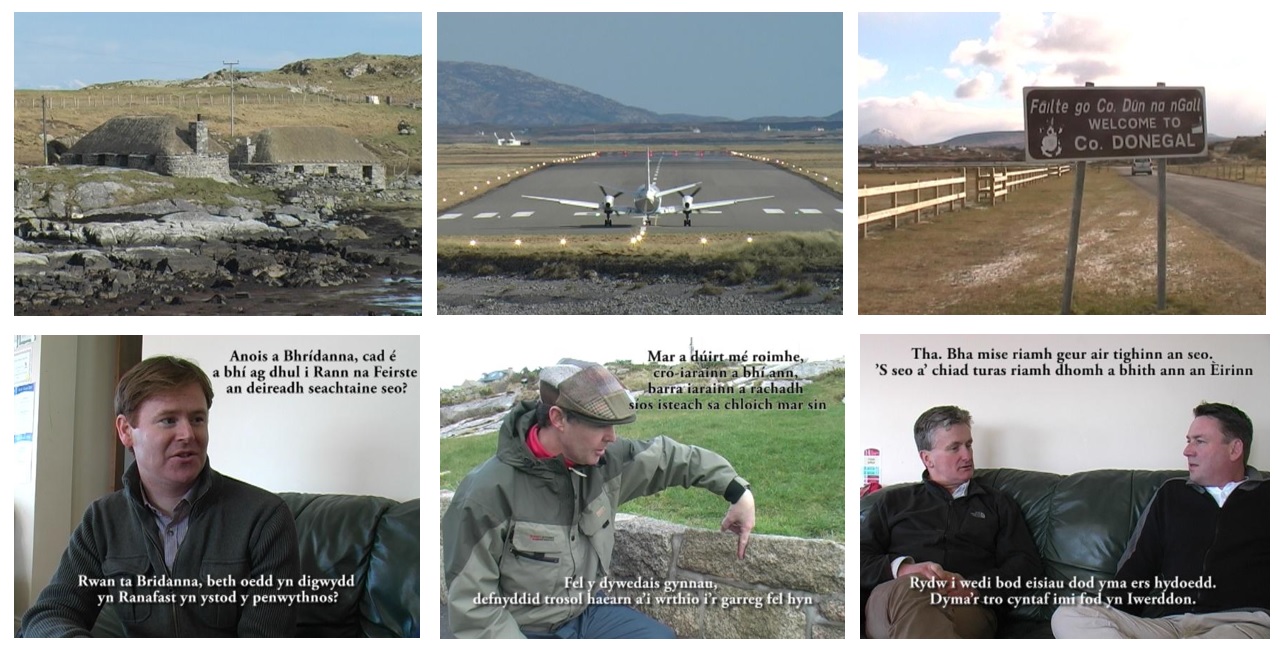
Prosiect ‘Lleisiau’r Ynysoedd’ (Guthan nan Eilean) yn ymweld ag Iwerddon. Ffilm ddogfen gyda sylwebaeth yn Gymraeg. Gellir clywed rhai sgyrsiau Gwyddeleg a Gaeleg yr Alban gydag isdeitlau yn y ddwy iaith.

Cuairt Ghàidhealach ann an Cuimris a-nis. Tha an ùidh anns na tha sinn a’ dèanamh an seo a’ fàs…

Sharing Gaelic Voices again – this time in the Welsh language. For the full wordlinked transcript check this unit (5834) on Clilstore. Many thanks to Richard Glyn Roberts for the translation and voiceover! The Gaelic Journey is the gift that keeps on giving…

Jurnaa Gaelagh

We’re “sharing Gaelic voices” again, this time quite literally!

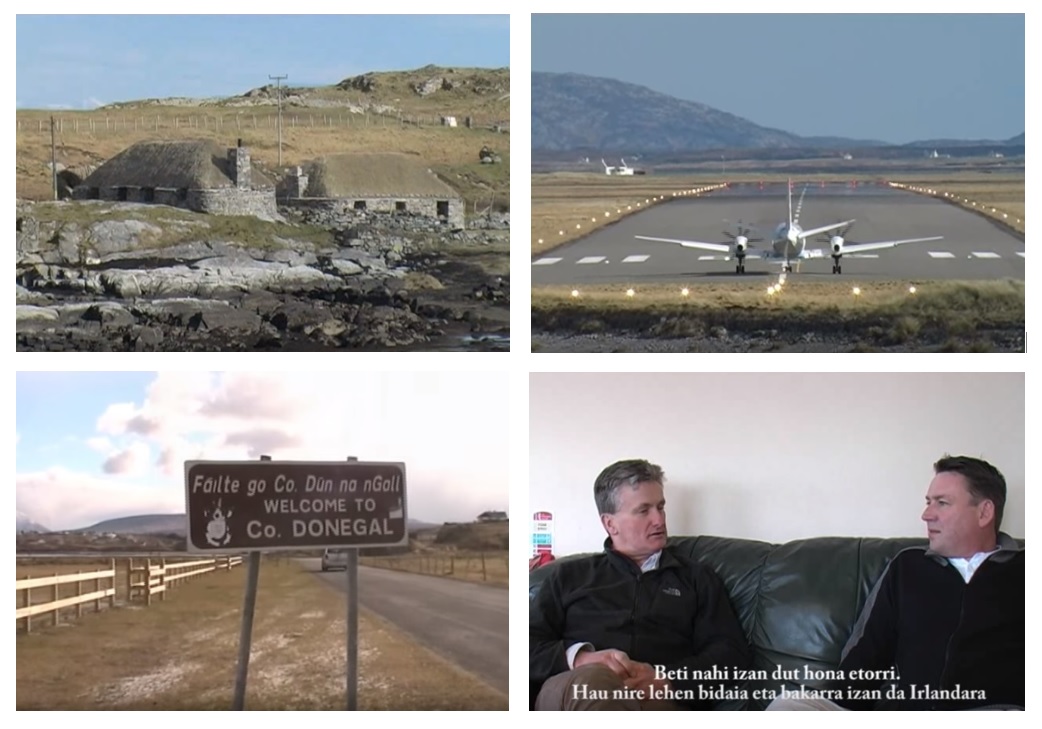
Thanks to Culture Vannin and the fine narrative tones of James Harrison, Guthan nan Eilean now offers you the previously missing Manx version of “A Gaelic Journey – from Benbecula to Ranafast”, the story of a Hebridean trip to Donegal with Archie and Neil Campbell, focussed on capturing Gaelic voices. (We already have versions in other languages on our Gaelic Journeys page.)

This one short 10-minute film gives you the opportunity to hear all three Gaelics, as they are spoken now in the twenty-first century. The narration is in Manx, but there are also conversations in both Irish and Scottish Gaelic with onscreen dual language subtitling in Manx and Irish or Scottish Gaelic. You can also access the full transcript on Clilstore (with online dictionary linkage) in this unit – http://multidict.net/cs/5562.

Enjoy this pan-Gaelic production, propitiously launched on Latha Buidhe Bealltainn!

(And if that’s whetted your appetite for multilingualism, try the same film here again – in Basque!)

Dziewięćset dziewięćdziesiąt dziewięć!

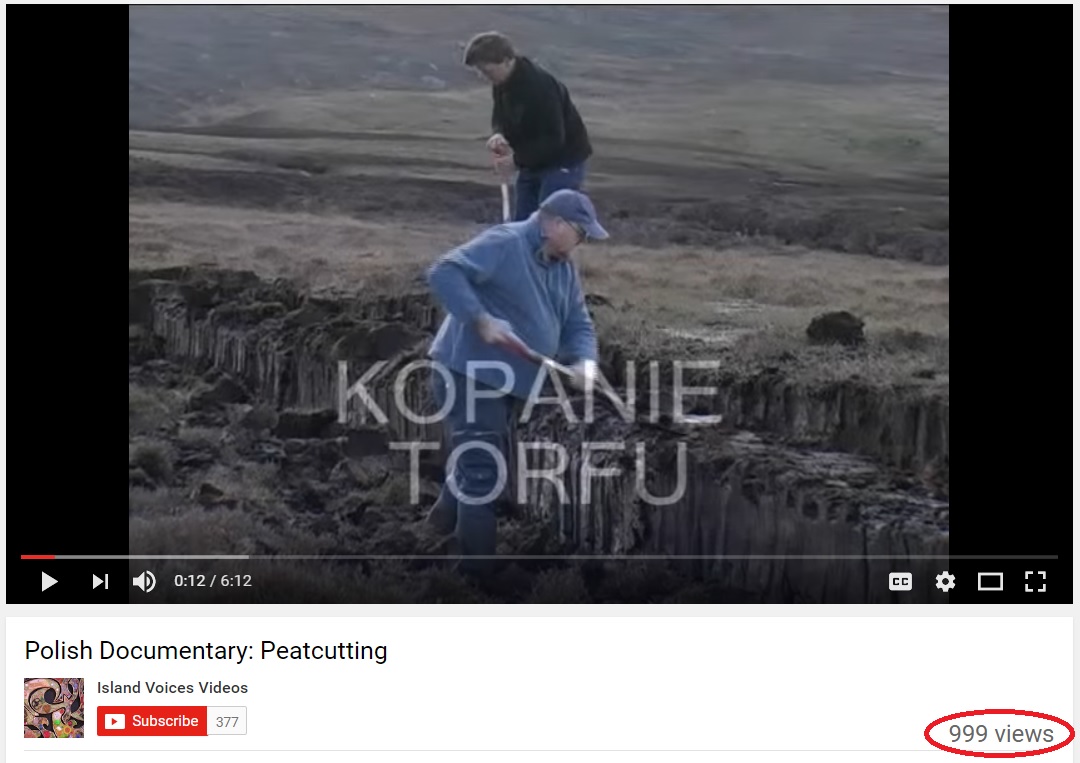
kopanie1Kopanie torfu”, our first production in the recently started “Sharing Gaelic Voices” theme is approaching a significant milestone. At “dziewięćset dziewięćdziesiąt dziewięć” we are one away from 1,000 views on YouTube of our Polish documentary on peatcutting!

YouTube analytics show that in the past couple of months this has become one of our most frequently watched videos.

Who will be the one thousandth viewer?

Surfing: سرفنگ – Urdu Documentary

سکاٹ لینڈ میں شمالی یوئسٹ کے خوبصورت ساحلوں میں سرفنگ کے متعلق مختصر ڈاکومنٹری

Film aithriseach goirid ann an Urdu airson luchd-ionnsachaidh air surfadh ann an Uibhist a Tuath

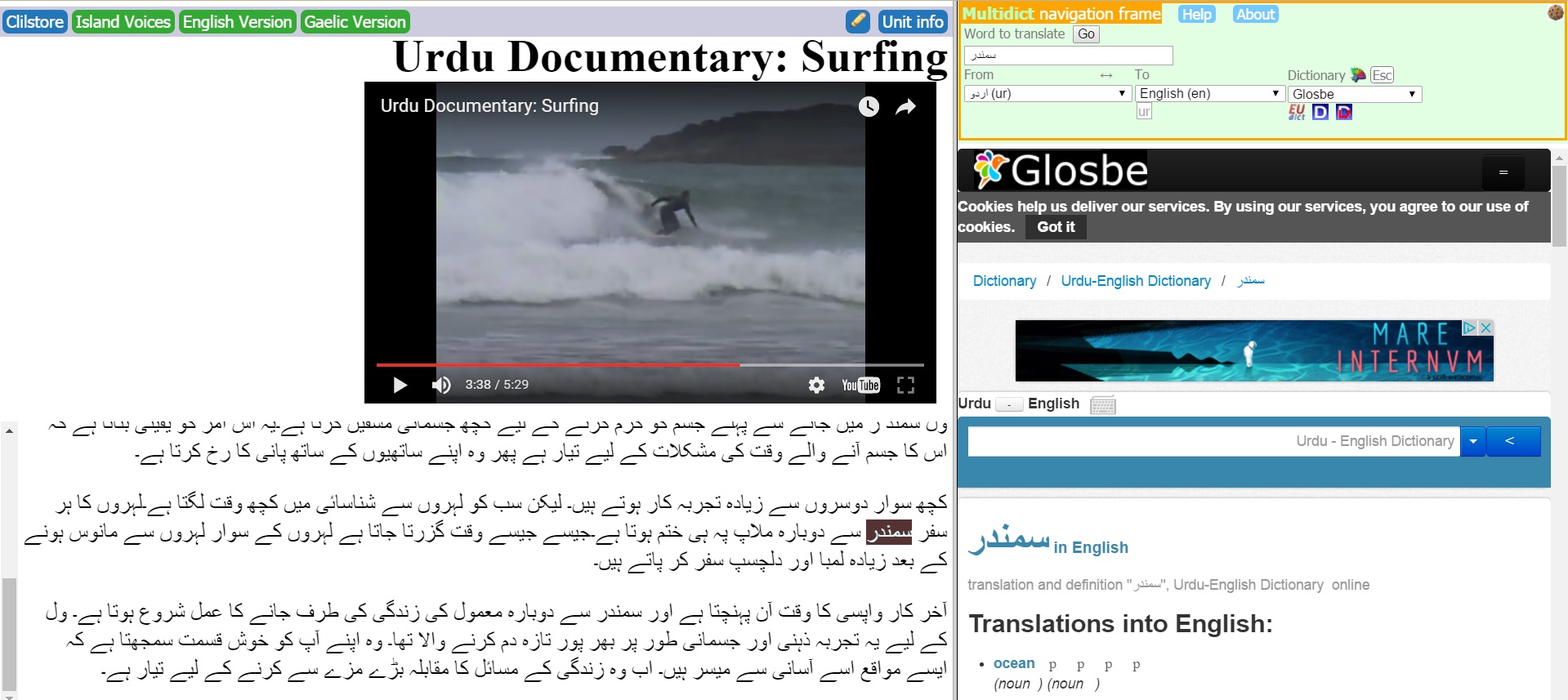
Short Urdu documentary for language learners about surfing in North Uist

The “Island Voice” of Javed Ishaq is heard again, all the way from Multan! Following on from his Restore Project film, he now introduces Urdu learners and speakers to the joys of surfing. There are no borders when it comes to “Sharing Gaelic Voices“…

Island Voices is again pleased to make a wordlinked transcript to this film available through Clilstore. Please check Unit 4642!

urduclilstoresurfing

Gaelic voices are also heard in the backing music, singing along to North Uist’s answer to the Beach Boys, the now “defunked” Bi Beò. Here’s the rolling refrain to Dannsa a’ Phortain (The Crab Dance):

O thì, hug oro fail ill o horo
Thì, hug oro fail i horo
Thì, hug oro fail ill o horo
Fail ill o hug oro eile

Untranslatable!

Norman Maclean – if he turns up!

normansblogThere’s a treat in store for anyone who’s seen and liked Norman Maclean‘s work on Island Voices (or elsewhere). Norman is starting his own blog – “If he turns up” – and is inviting readers to give it a shot. It will consist of slices from his newest title, not yet published – “A Half-Breed Looks Back”.

“I’ll do this on Mondays, Wednesdays and Fridays until I have evidence, one way or another, that there is measurable demand for my stuff. Please share with anyone who may be turned on by my ramblings about slum life in 50s Glasgow, undergraduate lowlights and a veteran entertainer’s return to the Hebrides.”

Here’s his first post – Ready, Steady, Go!

Nach sgaoil sibh an naidheachd seo, a chàirdean!

Re-Store Project: بحالی منصوبہ – Urdu documentary

urduclilstore

زبان سیکھنے والوں کے لئے مختصر اردو ڈاکومنٹری جس میں اسکاٹ لینڈ کے علاقے جنوبی یوئیسٹ میں بارنش نامی گاؤں کا بحالی منصوبہ دکھایا گیا ہے

Film aithriseach goirid ann an Urdu airson luchd-ionnsachaidh air an obair aig Pròiseact Re-Store ann am Bòrnais, Uibhist a Deas.

Short Urdu documentary for language learners showing the work of the Re-Store Project at Bornish, South Uist.

Another welcome contribution, this time from Javed Ishaq, to our “Sharing Gaelic Voices” theme, though certainly not the first time the Urdu language will have been heard in a Hebridean context. From the mid-twentieth century and earlier a steady stream of intrepid South Asian traders plied their wares here, many fondly remembered by their local customers in the different islands, while some settled and established thriving businesses. This is a re-working of one of the original Series One videos. The Re-Store Project has gone from strength to strength since then. Read more about it here.

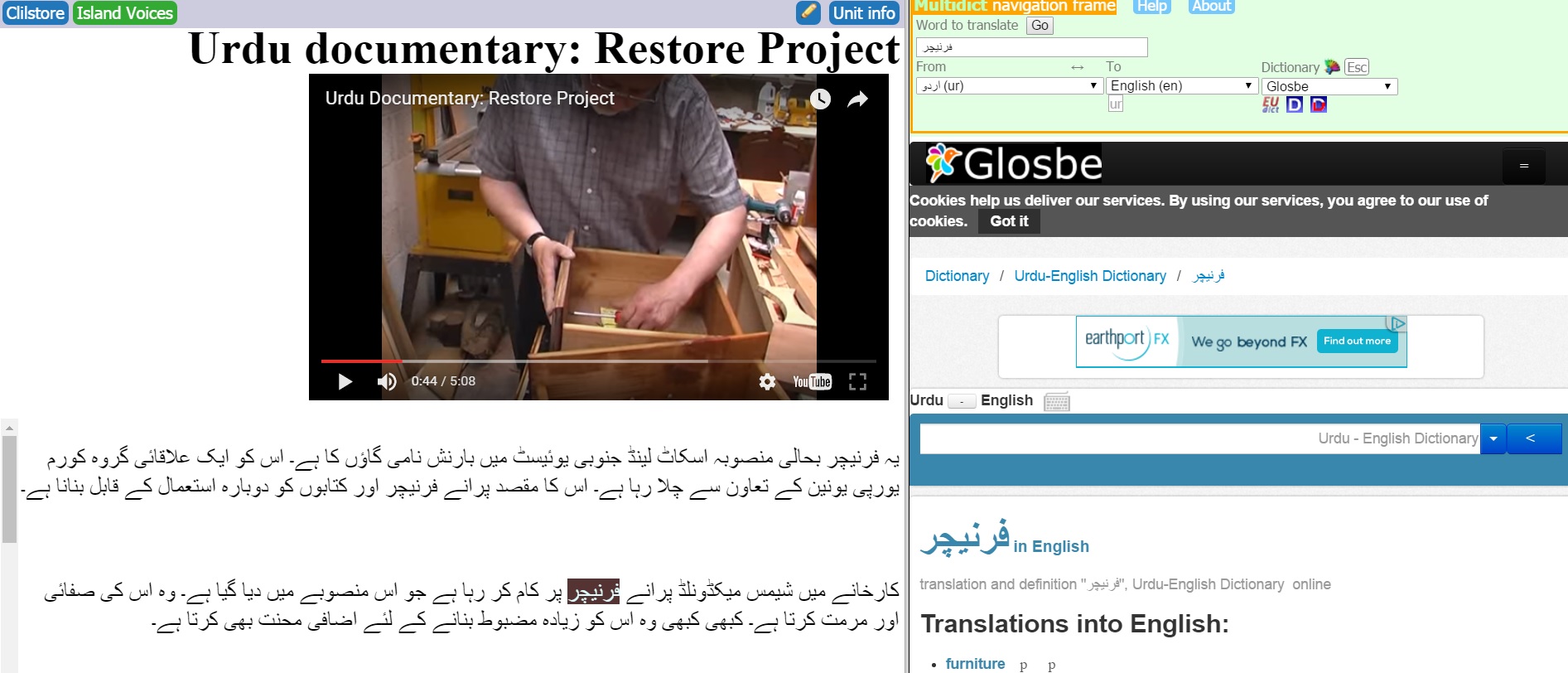
What will be new, however, is this – Unit 4481, the first Clilstore unit in Urdu, proudly produced by Island Voices! This gives a full transcript of the Urdu voiceover. Just click on a word to get its translation.

Gaeliar Bidaia: Benbeculatik Ranafastera

postcardsEskoziar Uharteetako Ahotsak Proiektuak (Guthan nan Eilean) Irlandari bisita egiten dio. Dokumentalaren moldaera hau euskaraz dago. Irlandako eta Eskoziako gaelikoz zenbait elkarrizketa ere entzun daitezke, euskarazko azpitituluekin.

Tha ùidh aig na Basgaich ann an cànan (no cànain?) nan Gàidheal! Seo film eile aig Guthan nan Eilean air a bheil tionndadh Bascais a-nis. Chaidh “Lursail alferrak” a dhèanamh mar-thà.

The Basque interest in Gaelic continues to grow – in both Irish and Scottish kinds. Here’s a new version of “A Gaelic journey” – also available on Clilstore here.

Birlinn bilingually

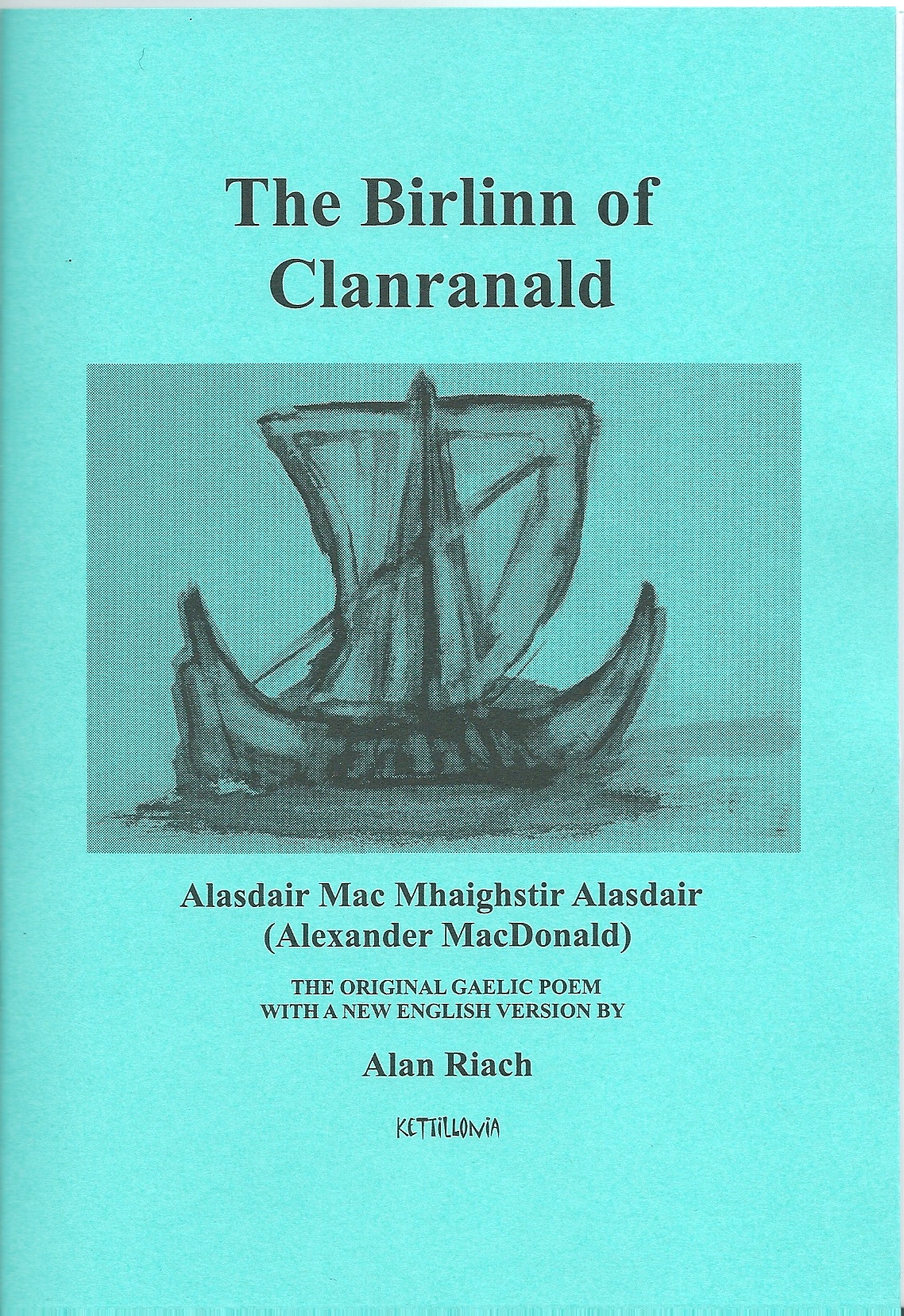
AlanRiach1Island Voices contributor Catherine Eunson crossed paths with Professor Alan Riach at this year’s StAnza poetry festival in Saint Andrews, where Alan was giving a reading of his newly published, and highly acclaimed, English version of the classic Gaelic poem ‘Birlinn Chlann Raghnaill’ (‘The Birlinn of Clanranald’) by Alasdair Mac Mhaighstir Alasdair.

In the poem the birlinn in question sets sail from Loch Eynort, South Uist.

9781902944326“How would you like to do a reading in South Uist?” said Catherine.

“Let’s do it”, said Alan.

With these difficult negotiations completed, and financial assistance from Stòras Uibhist, an attractive and bilingual evening programme of poetry and music took place at Kildonan Museum on July 19th, with Alan’s readings complemented by various contributions from local residents and other visiting musicians.

Prior to the event Alan was also able to visit the shores of Loch Eynort where he gave an appetising foretaste of the feast to come:

(Follow this link if you would like to read while you listen.)

Later, at the Kildonan evening event, Alan enlisted the help of Bill Innes. Alan read from his new English version and Bill from the original Gaelic.

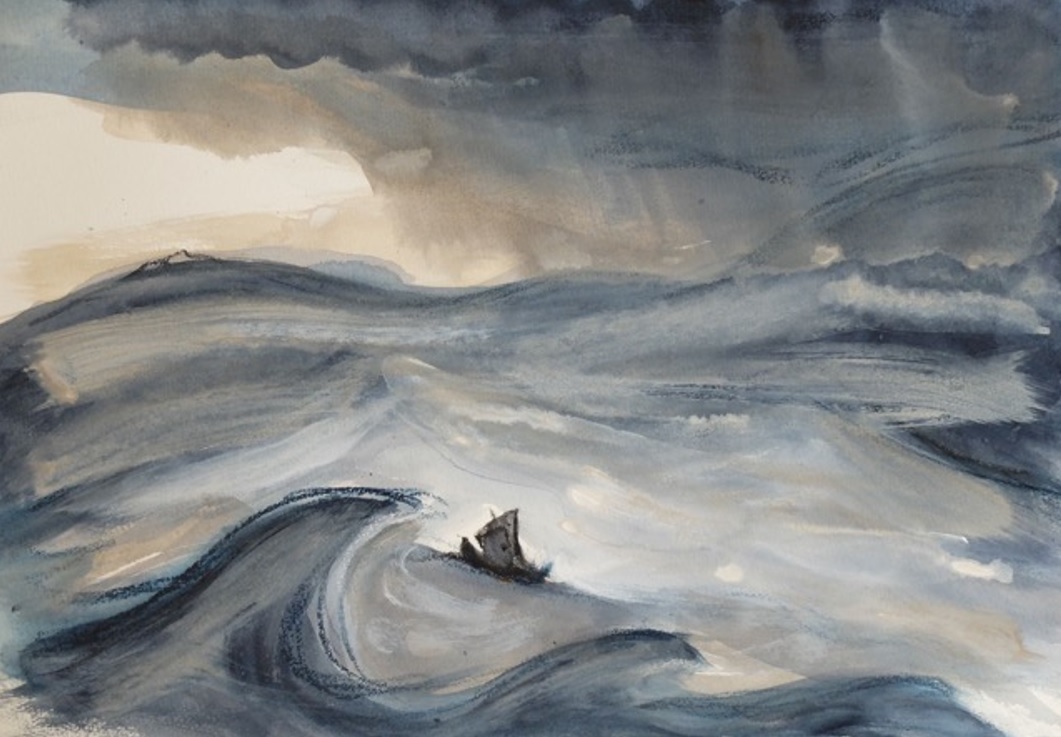
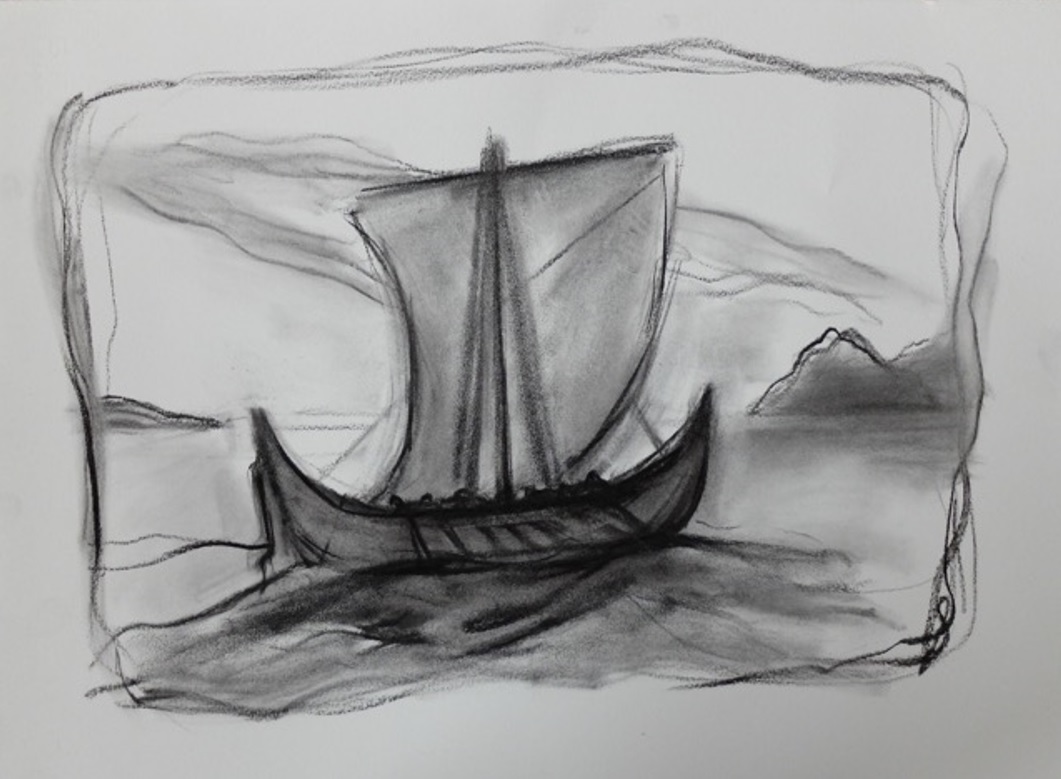
The following longer clip shows the final part of the evening, as the birlinn weathers a fierce storm and safely reaches Carrickfergus.

(Follow this link if you would like to read the Gaelic verses that Bill presents.)

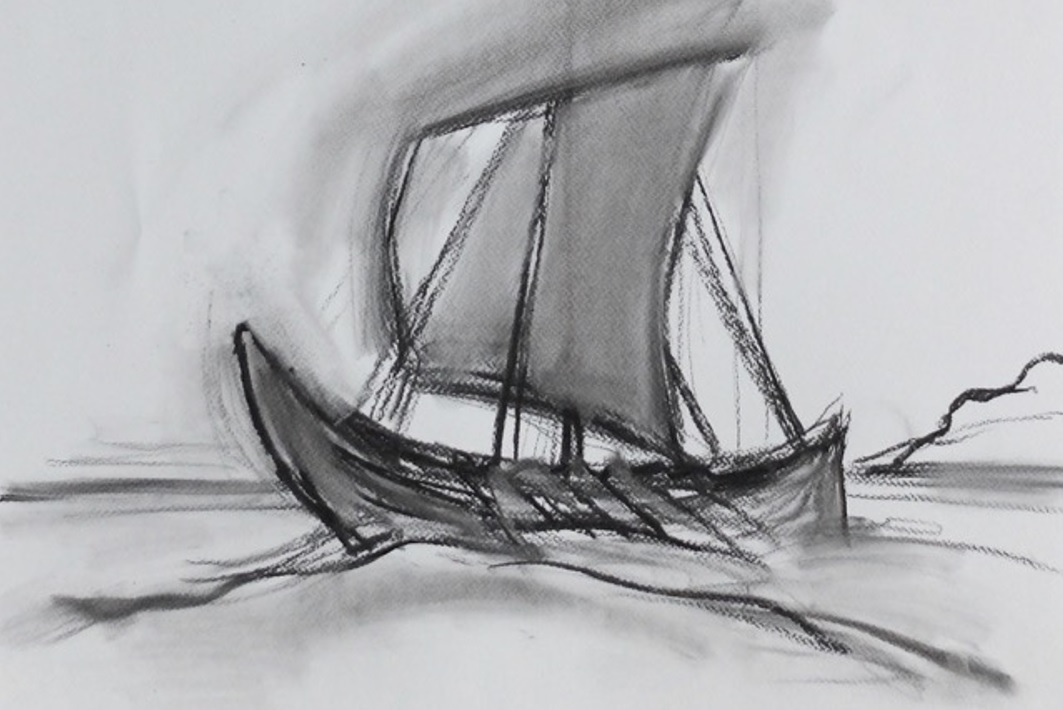
The readings were further enhanced with the illustrations that Alexander Moffat had provided for the book. A selection is reproduced here, with his kind permission. (Click to enlarge.)

Rowing out       The storm          Safe harbour

It’s probably not that often that South Uist plays host to an eminent professor of Scottish Literature, but as Alan pointed out at the end of the evening, its success was owed in no small part to the contributions of other performers. So thanks are also due to Anndra MacIsaac, Marion Morrison, Catherine Eunson, Fiona Mackenzie, Bill Innes, Morag Wells, Alasdair MacIntyre, Rosie Mapplebeck, and Pauline Prior-Pitt.