Posted from Facebook. Double click the title if contents not visible.
There’s a very Irish theme to Guthan nan Eilean this week as the project played host to a short but very sweet return visit from partners there. This followed the project’s own “Trilingual Trip” to Ireland last year. Among the visiting party was the talented photograper, Máirtín Mac Crábhagáin, who put together this photo album on Facebook in no time at all. Island Voices is delighted to be able to share the album on its own Facebook page. There will be videos to come…
Island Voices was born out of the involvement of Sabhal Mòr Ostaig in the original 2005-2007 POOLS project. SMO has continued to maintain an outward-looking European perspective ever since, and is now leading the POOLS-3 “Transfer of Innovation” project which sees POOLS outputs and ways of working being taken forward in three new languages – Irish, Catalan, and Czech.
But it’s a two-way process, in which new partners also bring fresh skills and knowledge to the table for sharing. The Pelican School in Brno has introduced “green screen” techniques into its video-making repertoire, and describes the process in this POOLS-3 blog post.
For anyone interested in “endangered languages” Czech offers an interesting historical contrast to the usual pessimistic trajectory. Wikipedia supplies this basic introduction to the language and its history. Our colleagues may have more to teach Gaelic enthusiasts than video techniques!
In any event, they clearly enjoyed the video-making process! Here’s an example:
You can find the full set of POOLS-3 Czech videos via this link.
The latest addition to the “An fheadhainn tha laighe sàmhach” project is a song, courtesy of Isa MacKillop, well-known throughout the community for her longstanding commitment to, and support for, the passing on of local Gaelic traditions and music. As she explains in her words of introduction, the song – “Companaich m’ òige” (companions of my youth) – was composed by her paternal uncle Iain Archie MacAskill, the “Bard of Berneray”. He returned from the war, while many of his comrades did not. He later moved to Australia, and composed this song there.
The song can be found in the collection “An ribheid chiùil”, edited by Alick Morrison, published in 1961. Copies are hard to come by these days – though here’s an interesting story from another Island Voices contributor on how at least one special copy found its way back to Berneray…
Seo pìos a chaidh a chlàradh leis a’ phròiseict “An fheadhainn tha laighe sàmhach”, a tha air a ruith le Comann Eachdraidh Uibhist a Tuath.
An seo cluinnibh sibh Cathie Laing a’ bruidhinn mu na cuimhneachan a th’ aice air a seanair.
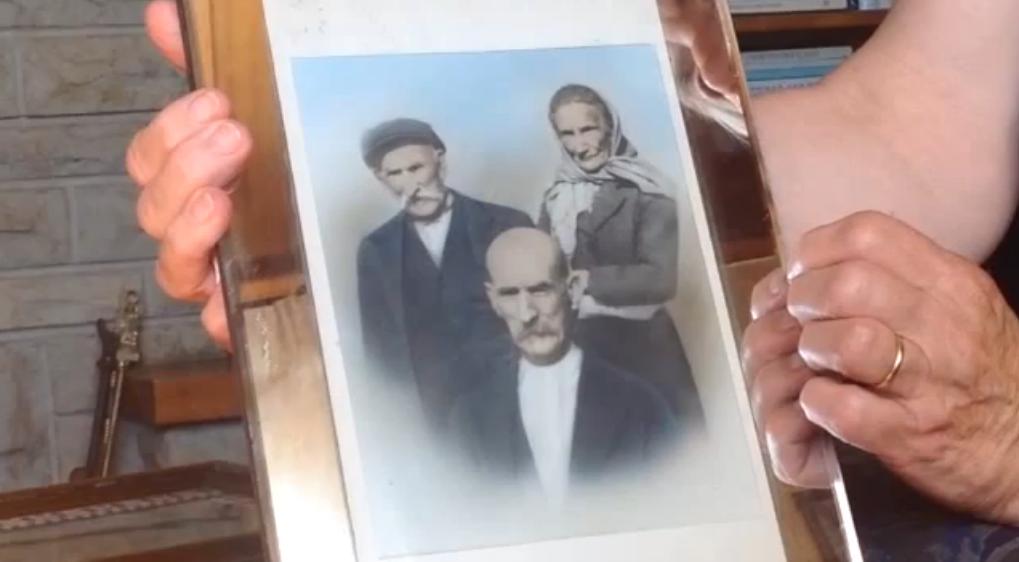
Tha dealbh aice dheth, agus tha i ag innse dhuinn mar a dh’fhuiling e sa chogadh, agus mu na buaidh a bh’ aig na thachair dha air a bheatha agus air a theaghlach.
Clilstore programmer Caoimhín Ó Donnaíle (SMO) attended the recent POOLS-3 meeting in Brno to present the multiple functionalities of the platform and associated programs. It was a fascinating session, and over the course of the meeting all participants had the chance to experiment with the software.
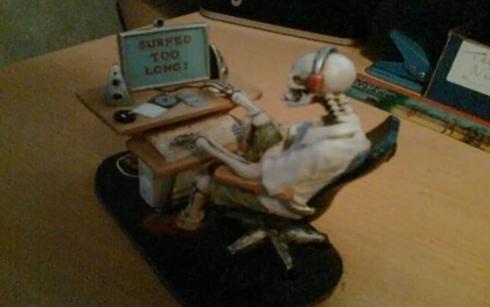
Caoimhín was also able to talk participants through the latest developments, including the file upload facility, which means that unit creators can now add Hot Potatoes exercises to their Clilstore units. Caoimhín produced a new unit himself, based on a poem by Skye-based Nìall Gordon – “Ro fhad’ air fairg’ an Eadarlìn”, which highlights the one drawback of the new possibilities offered by Internet technologies – their potentially addictive properties!
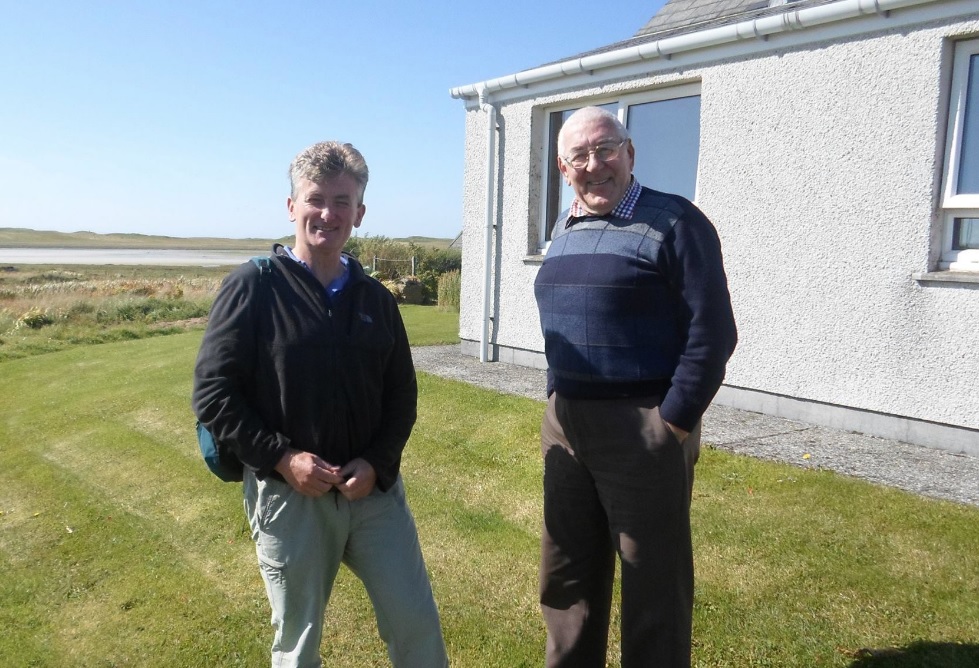
Retired policeman Alec Macaulay talks in Gaelic to Archie Campbell about the land raids on the west side of North Uist that took place after the First World War, in which his own father was involved.
A serious business, but not without some lighter moments, as Alec relates…
Alec was recorded for the project “An fheadhainn tha laighe sàmhach“, run by Comann Eachdraidh Uibhist a Tuath with support from the Heritage Lottery Fund.
Today, 4th August 2014, marks 100 years since Great Britain entered the First World War – An Cogadh Mòr.
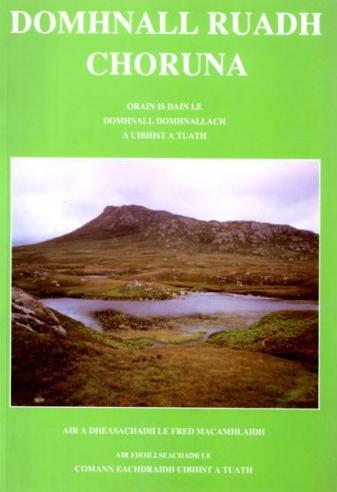
Here, retired headteacher Willie Macdonald reads out extracts from the emotionally intense poetry of the North Uist bard Dòmhnall Ruadh Chorùna, and discusses them in Gaelic and English. The conversation moves on to focus on the impact on families, including Willie’s own, of the losses suffered in the First World War, and the land raids undertaken by returning soldiers hardened by conflict, and willing to face imprisonment in pursuit of their claims to decent crofting land.
Willie was recorded by Mary Morrison and Laura Donkers for the project “An fheadhainn tha laighe sàmhach“, run by Comunn Eachdraidh Uibhist a Tuath. You can find the book of Dòmhnall Ruadh’s poetry, with full parallel English translations, via this link to the Gaelic Books Council.
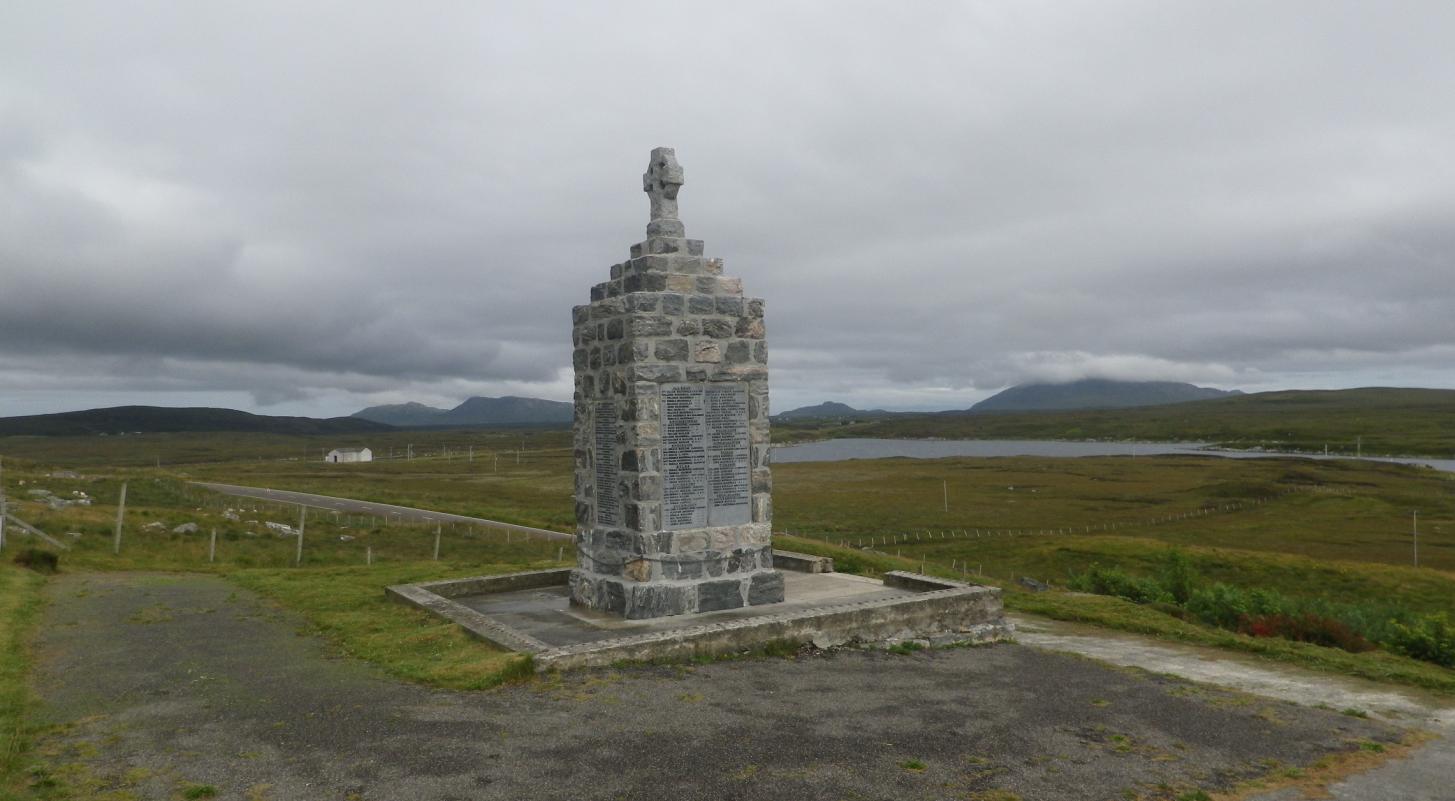
As part of the “An fheadhainn tha laighe sàmhach” project Mary Morrison and Laura Donkers recorded the Reverend John Smith of North Uist as he describes the 1923 dedication of the North Uist war memorial.
This is followed by two of his own compositions. The first, in Gaelic, starts with the striking and memorable line “Cha charaid, ach nàmhaid, cogadh”, and was written in response to losses in his own family. His second poem, in English, reflects on the courageous sacrifices that were made by many, and finishes as strongly as the first one started: “We will remember them”.
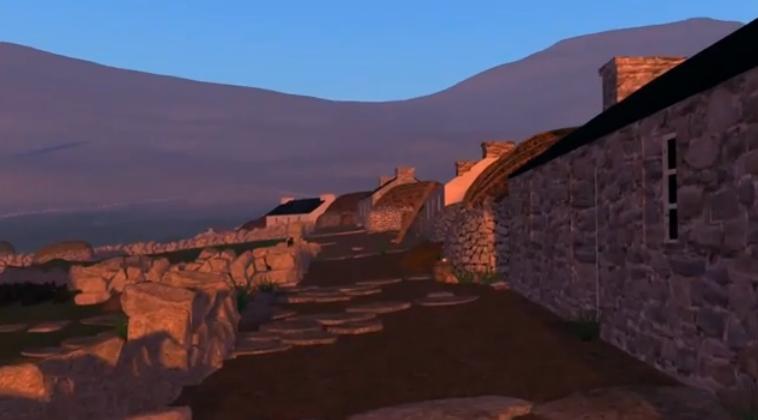
The Virtual St Kilda exhibition is up and running at Taigh Chearsabhagh, and the “mystery voice” is now revealed as that of regular Island Voices contributor, Archie Campbell, who also prepared the Gaelic version of the bilingual introduction. The project is headed up by the St Andrews University Open Virtual Worlds research group, working closely with local groups in Uist.
The exhibition gives you hands-on interaction, via an Xbox controller, with a digital re-creation of the St Kilda of the 1880s. You can walk around Village Bay (or fly over it!), exploring inside and outside various buildings. Clicking on various objects will take you to additional information, and the project is further enhanced by additional video work with island children offering imaginative interpretations of scenes and stories, ably facilitated by Mary Morrison – to whom Island Voices followers need no further introduction…
The film below was edited together by the St Andrews team. It integrates their own digital reconstruction and video work with stunning natural footage from UistFilm, as well as, flatteringly, some re-purposed shots from Island Voices’ own St Kilda documentaries in English and Gaelic. Archie’s voiceover is truly bilingual, alternating regularly and consistently from Gaelic to English. It’s a very interesting and still experimental format, so comments and suggestions are most welcome.
More sample videos are available on the Open Virtual Worlds group’s Vimeo channel, and you can read more about the group’s work here.
‘S fhada bho nach cuala sinn bho Loriana Pauli! Ach tha i air ais, le agallamh fìor inntinneach sa Bheurla le Sìne Stiùbhart agus Norma Neill aig Caraidean Uibhist.
Tha pròiseact ùr aig a’ bhuidheann, air a bheil an t-ainm “Telephone Befriending”.
Cluinnear barrachd mu dheidhinn le bhith a’ putadh air an dealbh shìos air neo an seo, no ma thathas airson barrachd fhaighinn a-mach mu dheidhinn faodar fòn a chur gu 01870 603233.
(Read about this in English on the Am Pàipear Voices page here.)

 As part of the