Virtual St Kilda

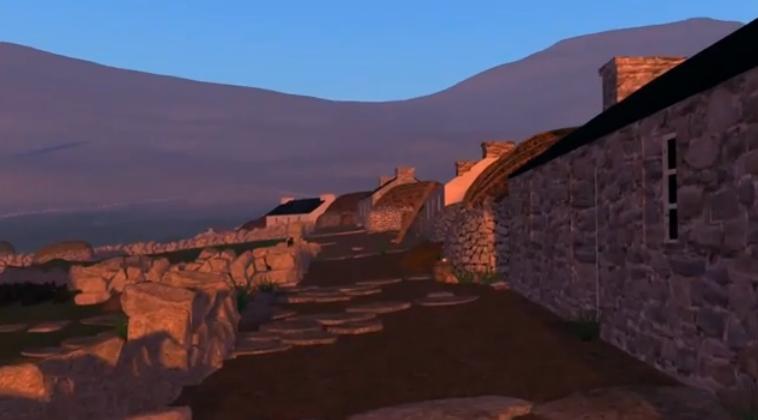
St Andrews Virtual St Kilda ExperienceThe Virtual St Kilda exhibition is up and running at Taigh Chearsabhagh, and the “mystery voice” is now revealed as that of regular Island Voices contributor, Archie Campbell, who also prepared the Gaelic version of the bilingual introduction. The project is headed up by the St Andrews University Open Virtual Worlds research group, working closely with local groups in Uist.

The exhibition gives you hands-on interaction, via an Xbox controller, with a digital re-creation of the St Kilda of the 1880s. You can walk around Village Bay (or fly over it!), exploring inside and outside various buildings. Clicking on various objects will take you to additional information, and the project is further enhanced by additional video work with island children offering imaginative interpretations of scenes and stories, ably facilitated by Mary Morrison – to whom Island Voices followers need no further introduction…

The film below was edited together by the St Andrews team.  It integrates their own digital reconstruction and video work with stunning natural footage from UistFilm, as well as, flatteringly, some re-purposed shots from Island Voices’ own St Kilda documentaries in English and Gaelic. Archie’s voiceover is truly bilingual, alternating regularly and consistently from Gaelic to English. It’s a very interesting and still experimental format, so comments and suggestions are most welcome.

More sample videos are available on the Open Virtual Worlds group’s Vimeo channel, and you can read more about the group’s work here.
New Speakers Research Links

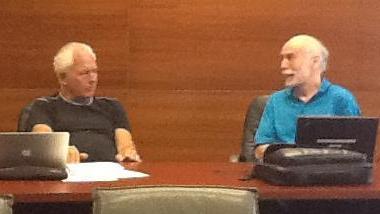
Gordon Wells, Island Voices co-ordinator, has been attending the first round of Working Group Meetings of the “New Speakers” network at Heriot-Watt University in Edinburgh on 6-7 March. The “New Speakers” network is an EU-funded initiative (COST Action IS1306) aimed at fostering collaboration amongst researchers, facilitating the sharing of findings, and identifying key issues in research on multilingualism. The term “new speakers” refers to multilingual individuals and groups who adopt and use a language variety different from their native language.  Gordon’s Powerpoint presentation introducing the Island Voices project and associated research interests can be viewed here.

An fheadhainn tha laighe sàmhach

Tha pròiseact ùr air tòiseachadh le Comann Eachdraidh Uibhist a Tuath, a bhios a’ coimhead air ais 100 bliadhna gu 1914, nuair a thòisich an Cogadh Mòr. Tha Taigh Chearsabhagh an sàs ann cuideachd, le taisbeanadh gu bhith ann, a dh’fhosglas air 11/11/2014.

Am measg rudan eile ’s ann a bhios am pròiseact a’ cruinneachadh stòraidhean agus cuimhneachan aig muinntir Uibhist a Tuath. Agus, cuide ri Caraidean Uibhist agus Tagsa, tha Guthan nan Eilean gu math toilichte a bhith a’ toirt taic dhan phròiseict seo.

Tha iad air blog a thòiseachadh mar-thà, far am faighear fiosrachadh a bharrachd mu dheidhinn.

Watch this space!

Kick-off meeting Pools-3 Brussels

Island Voices/Guthan nan Eilean was born out of the original POOLS project – and the outward-looking European relationship continues… Gordon Wells has recently returned from Brussels where he was chairing the first meeting of “POOLS-3” in which new partners will be transferring POOLS innovations to the Catalan, Czech, and Irish languages. Do you want to see speakers of Czech and Catalan talking Irish? Watch this video
Gàidhlig “Ùr”

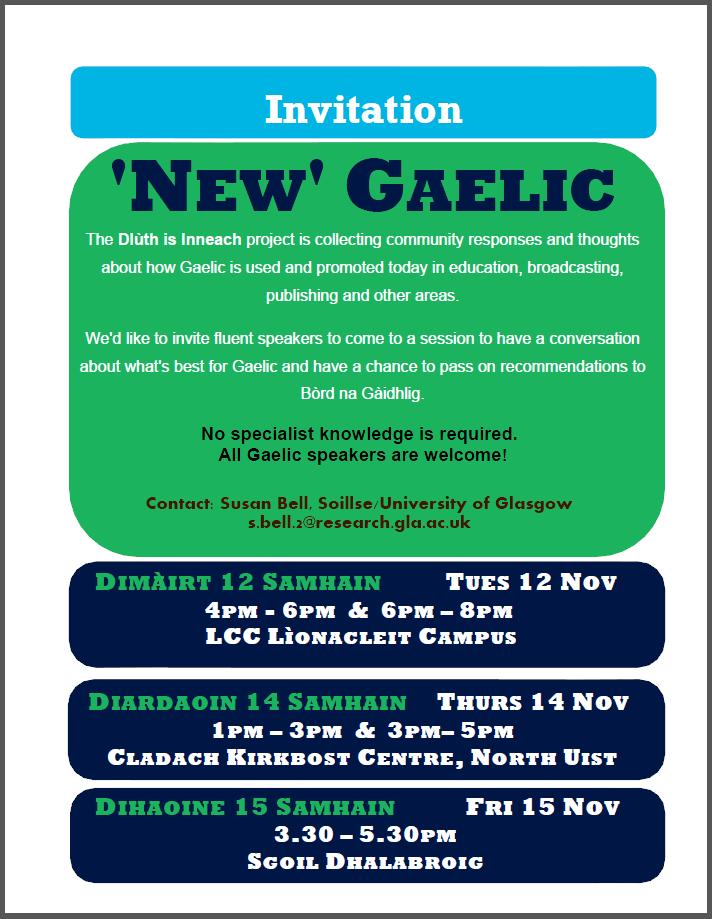
Tha Susan Bell aig Oilthigh Glaschu ag iarraidh beachdan nam fileantach a’ chluinntinn air a’ Ghàidhlig “ùr”.

Tha sreath de choinneamhan gu bhith ann an ath-sheachdain eadar Uibhist a Tuath, Beinn na Faoghla, agus Uibhist a Deas.

Tuilleadh fiosrachaidh air an t-sanas.

Susan Bell from Glasgow University is seeking the opinions of fluent Gaelic speakers on “new” Gaelic.

A series of sessions has been arranged for next week between North Uist, Benbecula, and South Uist.

More information on the poster.

(Click to enlarge.)

Second Soillse Summary

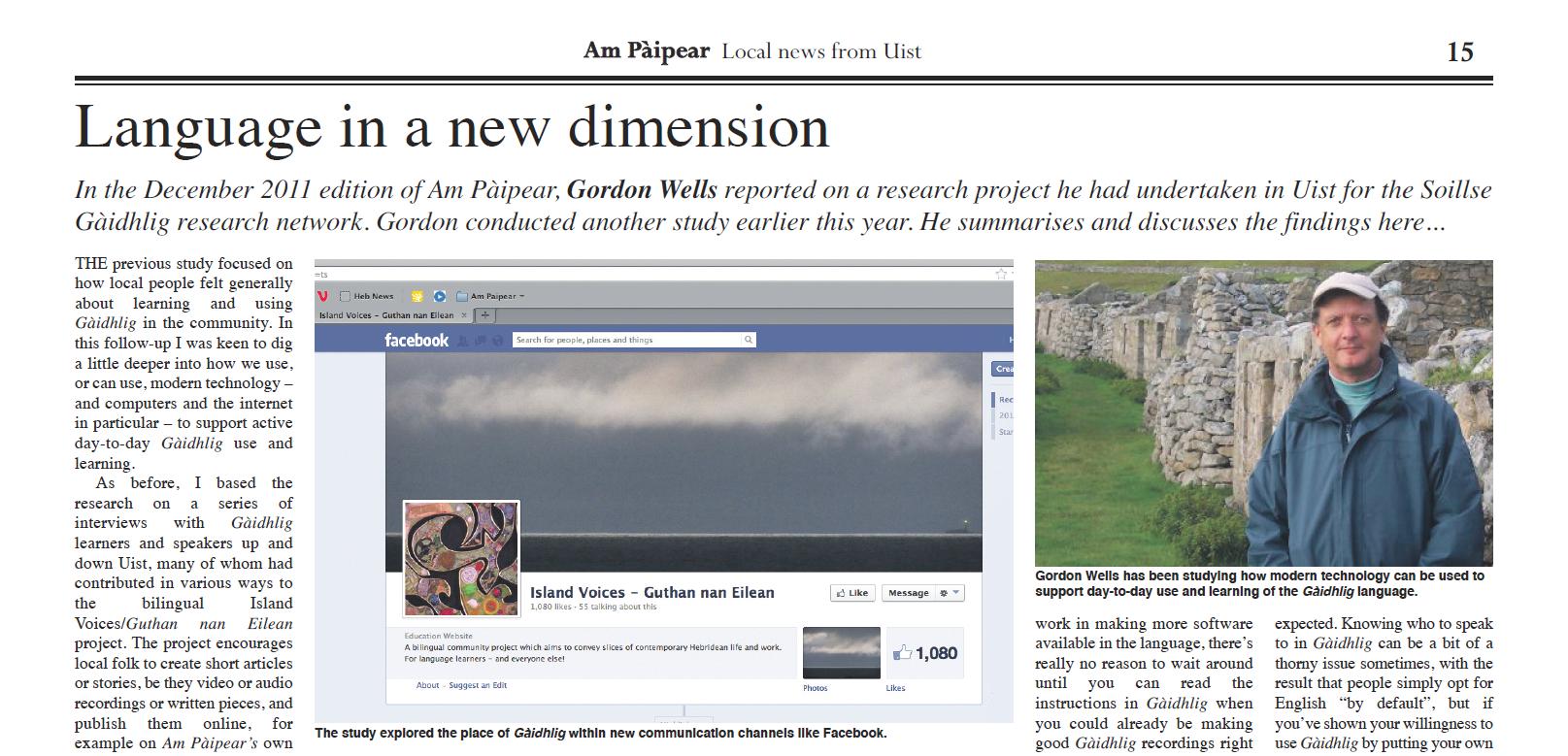
The second Uist-based research project supported by the Soillse Small Research Fund was completed earlier this year, and published online. It was concerned with the use of technology to support everyday use and learning of Gaelic, and many local participants in Guthan nan Eilean activities made very useful and informative contributions.

Gordon Wells has also written a short summary of the project, which may be of interest to community members. It has just been published in the November edition of Am Pàipear. You can read it here. The full report on “Gaelic Digital Literacies” can be found on the Island Voices Research/Reports page.

Catching up with Clilstore

The fourth meeting of the European TOOLS project has taken place in Evora, Portugal, following on directly from the 2013 Eurocall conference. At the heart of the project is the development of the innovative “Clilstore” software package.  In these short conversations Gordon Wells invited the project co-ordinator, Kent Andersen, and the program developer, Caoimhìn Ò Donnaile, to outline briefly how the project has developed and explain how it can help language learners and teachers. Kent speaks in English, and Caoimhìn in Gaelic.

Here’s Kent:

Here’s Caoimhìn:

The idea for Clilstore itself developed out of discussions and developments initiated in the “POOLS-T” project. You can hear Kent and Caoimhìn talking about that project three years ago in this Island Voices post.

“Flesh on academic bones”

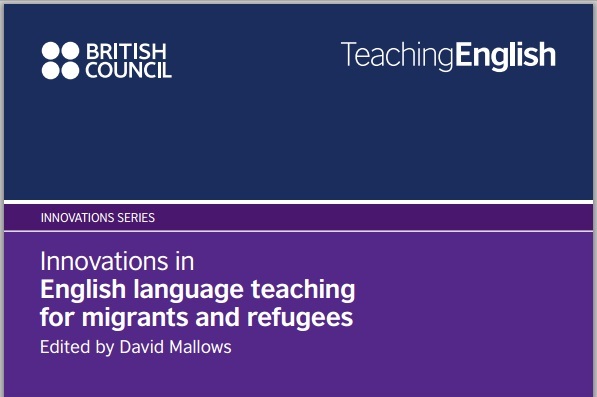
Jenny Pugsley, formerly head of TESOL at Trinity College, London, has reviewed the British Council’s book, Innovations in English language teaching for migrants and refugees, edited by David Mallows, and wholly recommends it. The book contains a chapter on Island Voices (chapter 12, page 153) among many other fascinating case studies that are judged “heartwarming, albeit unsentimental”. You can find the review online here. And the book is also free to download.

British Council bookThe review notes the book’s overall stance on the positive aspects of multilingualism, and poses a provocative thought, perhaps particularly challenging for those raised speaking English only. “The reader could infer that those who are monolingual and determined to remain so may be the losers in the battle for a sense of strong personal identity and communal comfort in the UK of the moment.”

Seadh, deagh adhbhar dhuinn an dà chànan a th’ againn an seo sna h-eileanan a chumail a’ dol – agus ’s dòcha feadhainn a bharrachd ionnsachadh?

“… a very positive collection to be shared with practitioners and worldwide…”

Gaelic in Uist and New Media: Research Report

Seo Gordon Wells a’ bruidhinn mu dheidhinn pròiseact rannsachaidh a chaidh a dhèanamh ann an Uibhist

The second Soillse Small Research Fund project conducted in Uist is now complete. The title is “Gaelic Digital Literacies in a Bilingual Community: a Sampling of Practices and Preferences”. The report is now freely available online either through this link or on the Soillse site. The link has also been added to the Guthan nan Eilean Research page, where the preceding report can also be found. It has been written with online “readers” in mind, and includes live links to samples of community members’ work in the footnotes. It can, of course, be printed off for reading on paper, but this will not afford the same “multimodal” opportunities for sampling video and audio work.