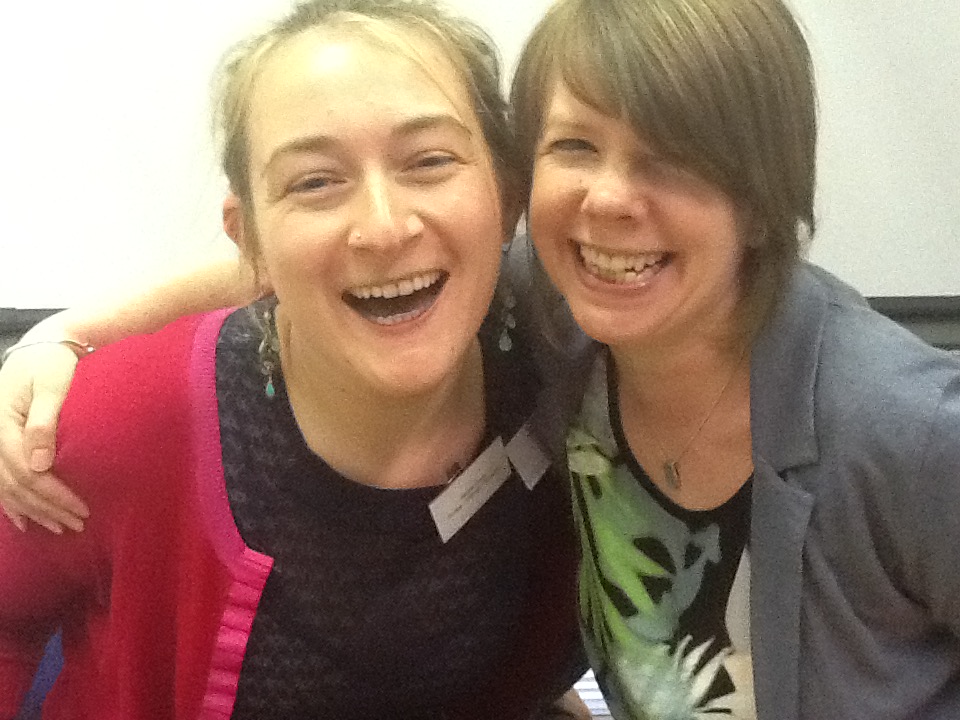
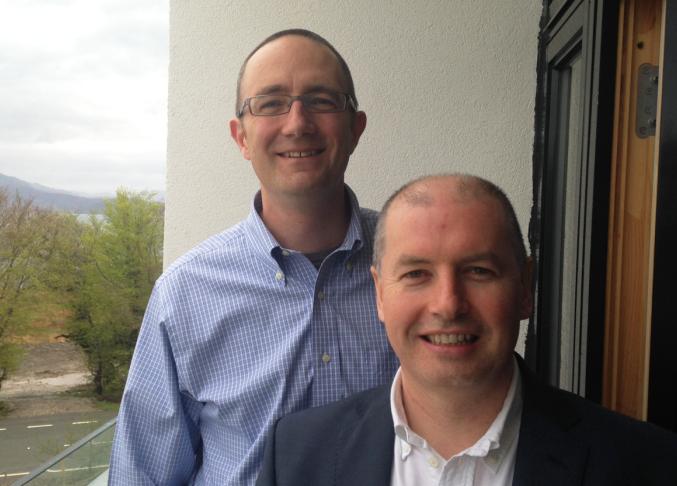
Chaidh a’ cho-labhairt aig Soillse ann an Sabhal Mòr Ostaig a chur air dòigh leis an Sgioba Rannsachaidh fo stiùir Tim Armstrong. Tha tòrr dhaoine òga sa bhuidheann seo, agus tha iad gu math beothail agus gu math comasach.
Tha iad air a bhith stèidhte ann an Oilthigh Ghlaschu, Oilthigh Dhùn Èideann, Oilthigh Obar Dheathainn, agus Oilthigh na Gàidhealtachd agus nan Eilean, ach uile ag obair còmhla airson rannsachadh air staid na Gàidhlig a thoirt air adhart.
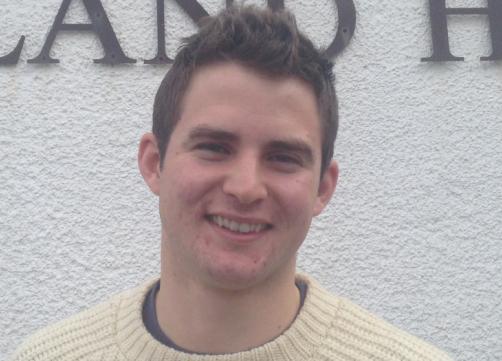
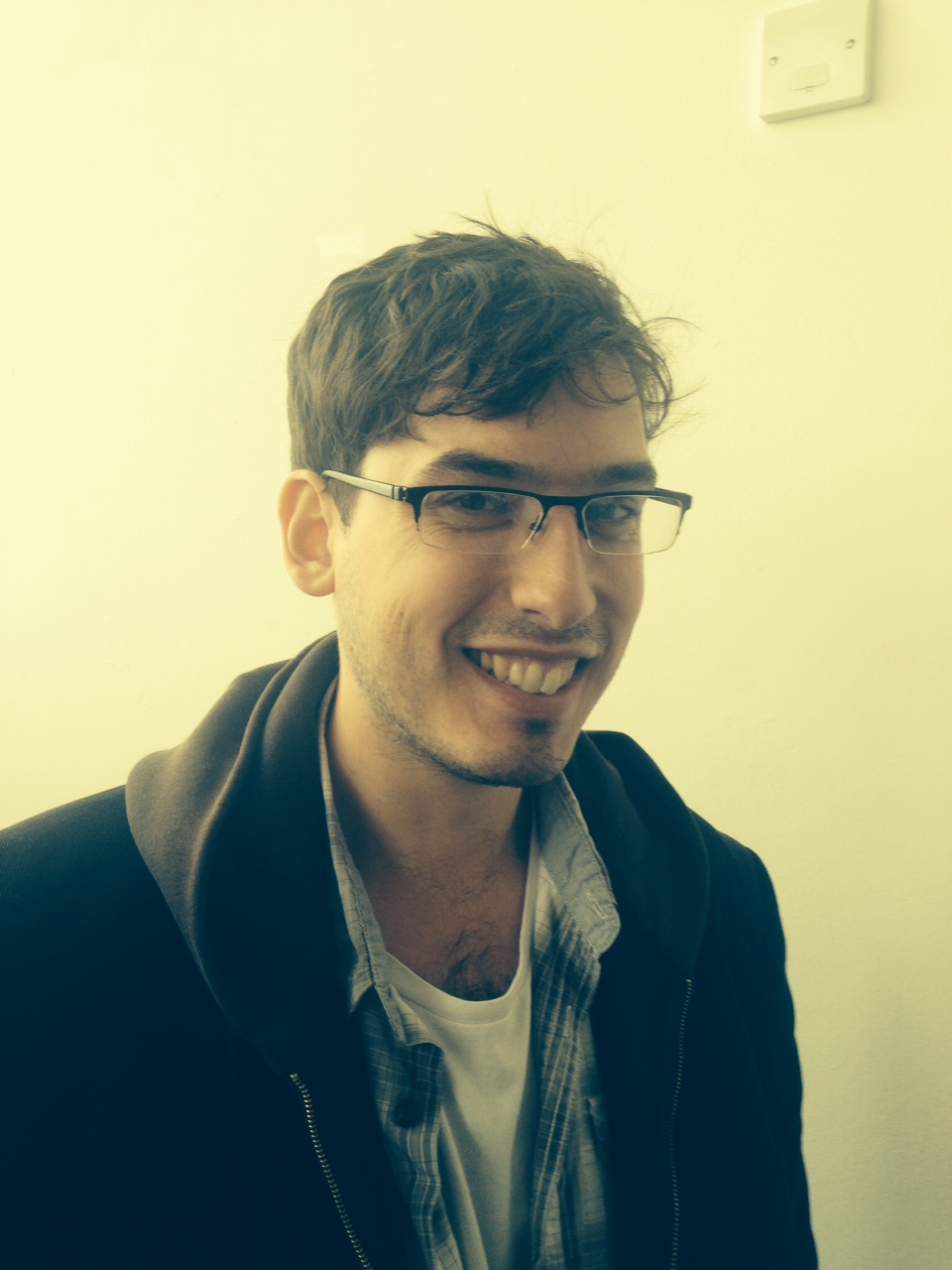
Seo ball eile – Stuart Dunmore – a’ bruidhinn mu dheidhinn na seiseanan san robh e fhèin an sàs air a’ chiad latha.
Tha a’ cho-labhairt air tòiseachadh aig Sabhal Mòr Ostaig air an Eilean Sgitheanach. ‘S e cuspair na co-labhairt “Foghlam dà-chànanach agus ath-bheothachadh cànain – bho Theòiridh gu Gnìomh”.
Seo agaibh guthan òga ùra ag innse dhuinn mu dheidhinn bùth-obrach a chuir iad air dòigh air a’ chiad latha. Bha deagh dheasbad ann, agus bha cothrom aig a h-uile duine a bha ann na beachdan agus na ceistean aca fhèin a thogail.
Seo agaibh fiosrachadh air co-labhairt aig Sabhal Mòr Ostaig air a cur air dòigh le Soillse, agus cuireadh airson a dhol ann… ‘S cinnteach gum bi na cuspairean inntinneach. Deagh dheasbad ann an àite brèagha!
Professor Conchúr Ó Giollagáin and Dr Timothy Currie Armstrong deliver a bilingual introduction to the May 2015 conference on Bilingual Education and Language Revitalisation at Sabhal Mòr Ostaig on the Isle of Skye, and an invitation to attend!
Today, April 20th, Gordon Wells moved on from his Projects Officer role with Sabhal Mòr Ostaig. This means that he will be withdrawing from his active co-ordinating function with the Guthan nan Eilean project and website. This does NOT mean that the project comes to an end. Rather, it means that the project moves even further along the route, mapped out for it some time ago, towards being a grassroots “bottom up” affair to which any and all community members are welcome to contribute their own materials.
Over the past few years it has been very encouraging to see many individuals trying out their hand with the “new media”, creating blogs, making their own audio and video recordings and so on. There have also been some interesting collaborations, with local groups like Stòras Uibhist and Comann Eachdraidh Uibhist a Tuath tackling bigger projects with some help from Island Voices where and when it was needed. Now that it has started, this kind of work will surely continue in one form or another, even without the active engagement of Sabhal Mòr Ostaig’s Projects Officer.
Although Gordon will no longer have the time for actively assisting with the creation of new materials, the intention is to keep the website “open for business” for other community members who have produced something they would like to share. If you feel you have a contribution to make and want to find out how, just phone or text 07879 644984, or e-mail gne@smo.uhi.ac.uk.
One thing the project has always tried to do is to build a stronger connection between the ordinarily bilingual people of these island communities and those with a professional interest in language teaching and/or research. Over the years we’ve been pleased to place occasional contributions from academics such as Professor Richard Johnstone, Professor Rob Dunbar, Dr Emily McEwan-Fujita, and others, alongside those of local community members. And we have maintained a dedicated page for research and reports, with summaries for Am Pàipear readers where possible. Gordon is now moving on to work with Soillse, the inter-university Gaelic research project, but will keep a keen interest in the Guthan nan Eilean website. Perhaps we can look forward to the research interest continuing to complement and support the ongoing creative outputs of “ordinary” Island Voices!
Liam Alastair Crouse has recently arrived in Uist to take up employment with Ceòlas as Gaelic Development Officer. Here he talks to Gordon Wells in Gaelic about his Rhode Island background and his interests in Gaelic and Archaeology. He then goes on to explain a bit about his job and what his hopes are for it.
He is keen to meet and talk to anyone in the community with an interest in Gaelic. He gives his e-mail contact details at the end of the interview.
You can also read more about his posting on the Ceòlas website here.
Mar a chluinneas sibh, tha Gàidhlig mhath aige. Gur math a thèid leis!
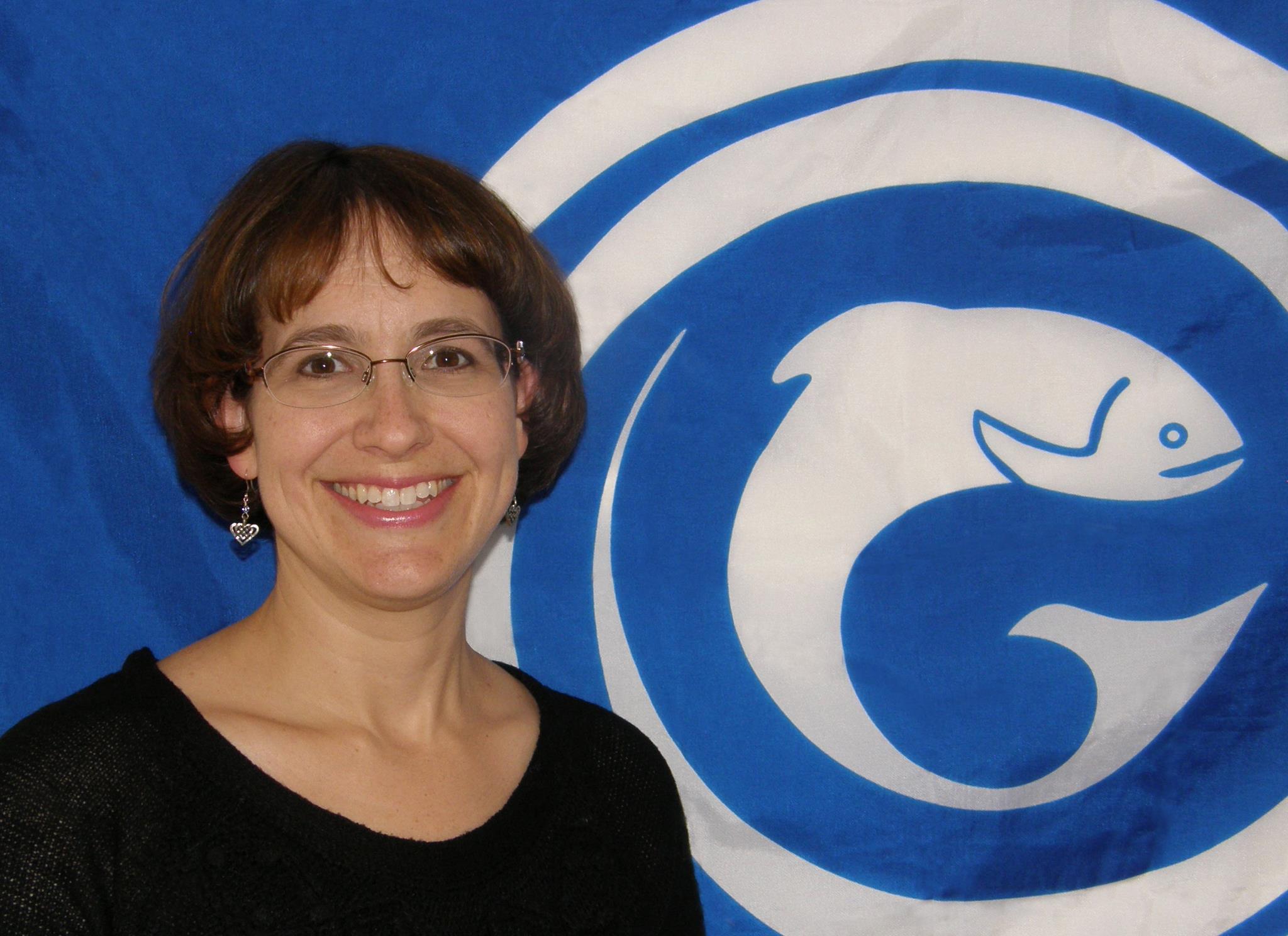
Dr Emily McEwan-Fujita conducted a large part of her PhD fieldwork in Uist in 1999/2000, and went on to complete her doctorate in Anthropology with the University of Chicago.
Since then she has published numerous articles on the subject of Gaelic and its revitalisation both in Scotland and Nova Scotia, where she now lives. Most recently she has become an active blogger. She wrote an interesting piece last month on Gaelic revitalisation and rocket science.
Here Emily talks (in Gaelic) about some of her observations on learning Gaelic in Uist, and how she came to write her piece:
Good to hear a new voice on Guthan nan Eilean!
And, with her kind permission, here’s the piece itself, “re-blogged”:
Saving Gaelic – Is It Rocket Science?
A few years ago, someone criticized my work, saying that Gaelic language revitalization wasn’t rocket science. I didn’t know whether to laugh or cry, because she was right. Language revitalization isn’t rocket science — it’s far more difficult.
Rocket science, or any type of engineering, formulates and solves problems. Get the math right, solve the problem. On to the next problem. Something breaks or goes wrong? Find the math or programming mistake and fix it. Human error is a factor, but the math is reliable.
Language revitalization, on the other hand, is not so simple.
A formal definition of language revitalization is: “the attempt to add new linguistic forms or social functions to a language which is threatened with language loss or death, with the aim of increasing its uses and users” (Kendall King 2001, p. 4). Basically, it’s the effort to save a language that is gradually going out of daily use.
Why is it so difficult to save a language? Because it involves a deliberate effort to change people’s opinions, ideas, feelings, and behaviors… Read more…
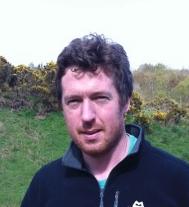
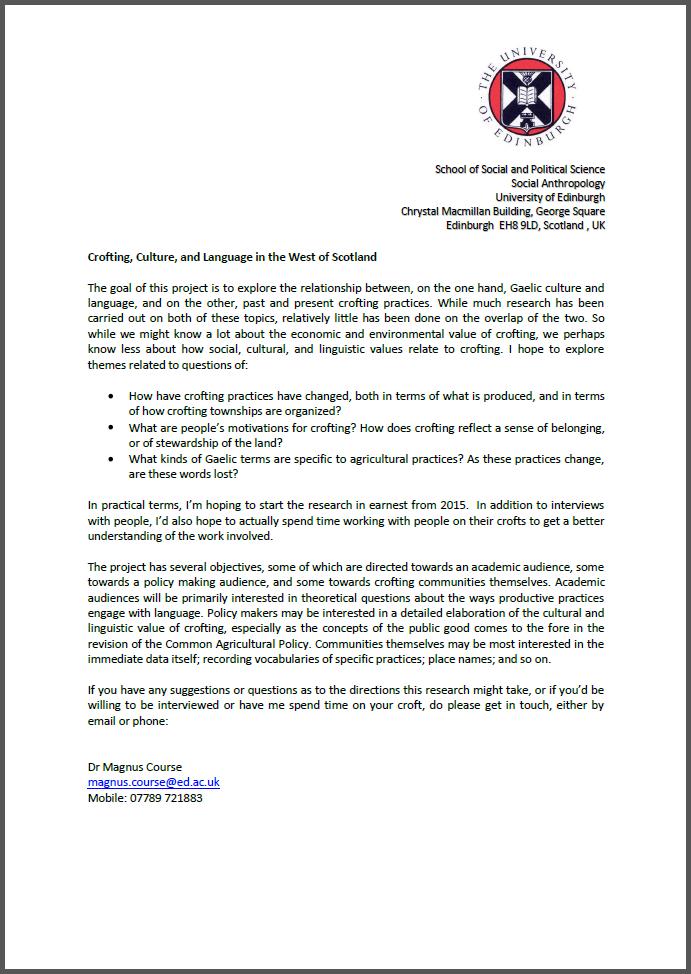
Dr Magnus Course, a social anthropologist at the University of Edinburgh, is starting a new long-term research project looking at the relationship between Gaelic culture, crofting, and landscape in the Outer Hebrides.
Magnus and his family will be moving to South Uist for four months from April. In addition to interviews, he’s also hoping to spend time working with people on their crofts to get a better understanding of the work involved.
If you or someone you know would be willing to chat, or if you’d appreciate some free labour on your croft, please check out the details here and get in touch with Magnus.
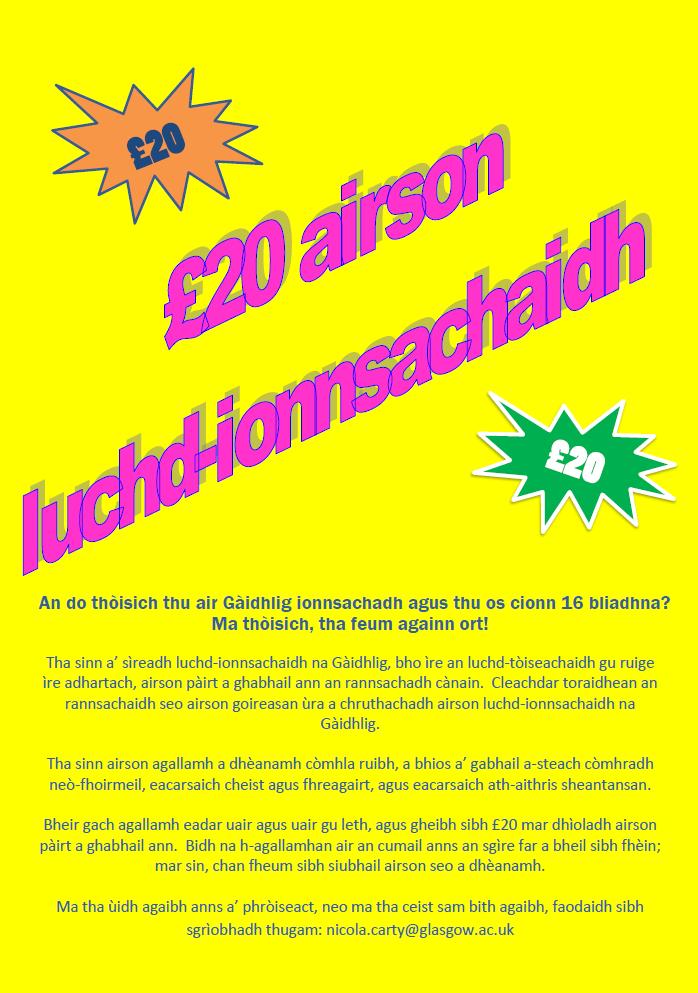
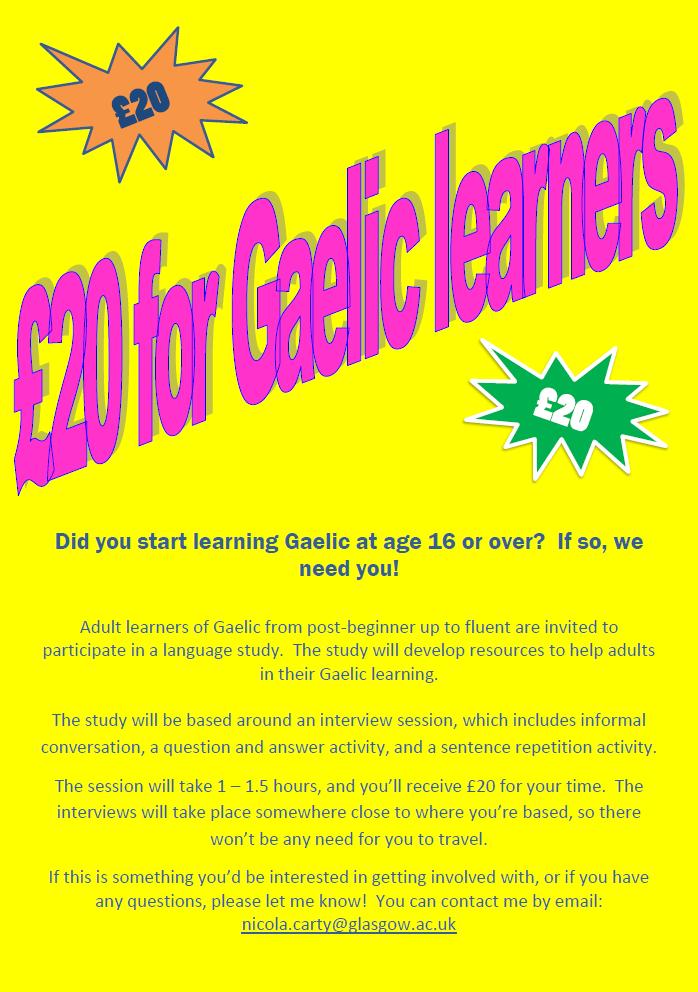
Dr Nicola Carty at Glasgow University has put out a call for adult learners of Gaelic to take part in a new research project. It’s intended to help develop resources for learners.
You don’t have to go to her. She will come to you. And you get paid for your time!
Click on either of the images (English or Gaelic) to find out more.
Entering the New Year naturally offers an opportunity for reflection on progress in the year just passed as well. And there’s no doubt that the centenary since the outbreak of the First World War added special poignancy to the annual marking of time on this occasion. An fheadhainn tha laige sàmhach is an ongoing community project which has already yielded some wonderful recordings. More will no doubt be forthcoming in 2015.
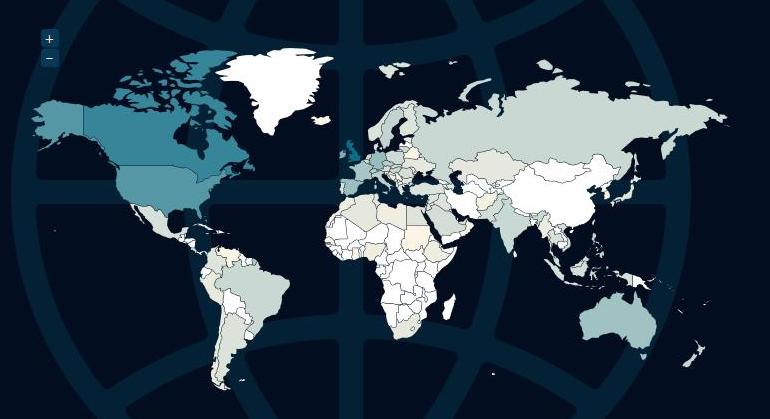
Some 2014 online statistics for Island Voices underline the levels of interconnectedness between what we do here and the interests and language learning aspirations of people right across the globe. The number of visits to this WordPress site continues to grow year on year, as does the number of countries from which those visits come – 99 in 2014 (compared with 87 in 2013).
As usual, the YouTube channel outscores even the WordPress site – 154 different countries again. The UK, USA, and Canada are the “big three” as before, but it’s interesting to note new entries in the “top ten” this year, with both Brazil and the Philippines now making a significant showing for the first time.
Readers who are particularly interested in statistics may also wish to compare these 2014 snapshots with the more detailed figures up to mid-2013 in the “Digital Literacies” report on the project’s research page. While one can speculate endlessly over the reasons, it is any event encouraging to note that the growing local interest in the work of Island Voices appears to be matched at international level. Happy New Year!
Sabhal Mòr Ostaig, Scotland’s Gaelic College, and Ulster University have been working together on community-based recording and computer-assisted language learning (CALL) for three years now, starting with the European TOOLS project – which itself grew out of earlier POOLS projects in which Sabhal Mòr Ostaig had already been involved, and out of which Island Voices/Guthan nan Eilean developed. So the recent Irish visit to Benbecula can be seen as part of a wider collaborative venture, in which similarities (and differences) between Irish and Scottish Gaelic are explored, with the aim of developing practical solutions to common problems.
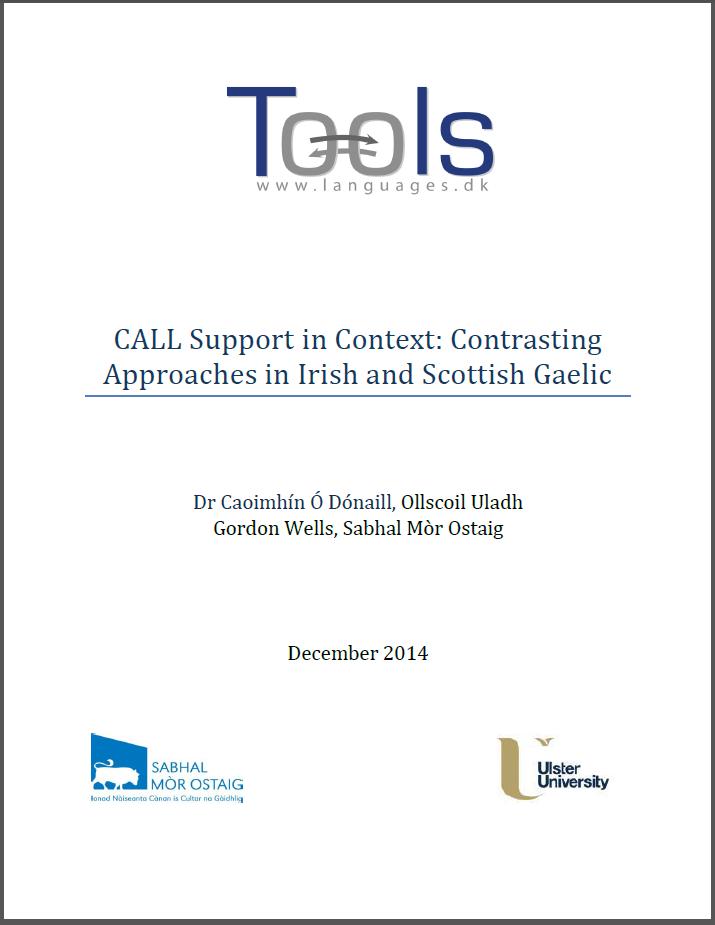
Another side to this work can be seen in the online publication of a joint paper – “CALL Support in Context: Contrasting Approaches in Irish and Scottish Gaelic” – written by Gordon Wells and Caoimhín Ó Dónaill. In the Scottish section the paper draws substantially on community-level work and research that has been conducted in parallel with Island Voices over the past few years. It is available online in the Research/Reports section of this site, or by clicking on this link.
 Chaidh a’ cho-labhairt aig Soillse ann an Sabhal Mòr Ostaig a chur air dòigh leis an Sgioba Rannsachaidh fo stiùir Tim Armstrong. Tha tòrr dhaoine òga sa bhuidheann seo, agus tha iad gu math beothail agus gu math comasach.