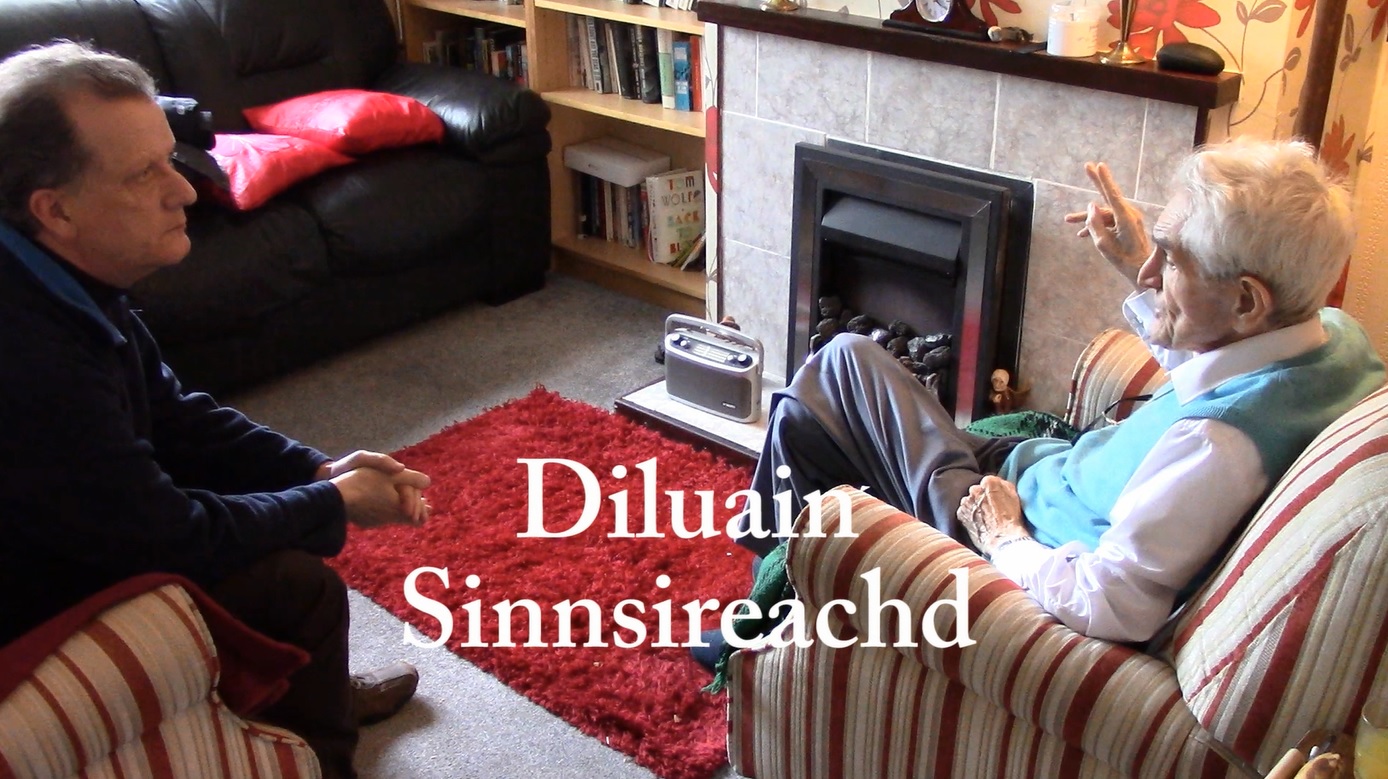
Saoghal Thormoid: Diluain – Sinnsireachd

diluain“Tha fhios aig a h-uile Gàidheal cò e.” Tha Tormod a’ bruidhinn air a shinnsireachd fhèin, air taobh athar agus air taobh a mhàthar, agus ciamar a bha na ceanglaichean seo cudromach is e na ghille òg ann an Glaschu, Loch Abar agus Beinn na Faoghla. Tha cuimhne aige air a sheanair taobh athar, fear a ghlèidh duais seinn aig Cruinneachadh na h-Eaglaise Brice ann an 1878, is e a’ teagasg òrain dha. ‘S ann às Uibhist a Tuath a bha a sheanmhair taobh a mhàthar a chaidh a dh’fhuireach ann an Glaschu, far nach do thog i a-riamh a’ Bheurla, agus i beò ann an coimhearsnachd Gàidhlig baile mòr Ghlaschu. Tha Tormod a’ meòrachadh air cò ris a bha ceanglaichean eadar na coimhearsnachdan coltach bho dhiofar thaobhan nuair a bha e òg.

“Every Gael knows who he is.” Norman talks about his genealogy, on both sides of the family, and how these family networks played an important part in his early upbringing in Glasgow, Lochaber, and Benbecula. He has clear memories of his paternal grandfather teaching him songs, a man who himself won a prize for Gaelic singing at the Falkirk Tryst of 1878. His maternal grandmother, meanwhile, migrated to Glasgow from North Uist and never learned to speak English, functioning socially just within the Gaelic-speaking community of Glasgow of that time. Norman reflects on how community relations were experienced from different perspectives in his childhood.

A full transcript of this conversation is available here on Clilstore. (The Unit Info tab also enables access to Google Translate.)

The “Saoghal Thormoid” project is a collaboration between Soillse, the inter-university research partnership which funded the recordings through its Small Research Fund, and Guthan nan Eilean (Island Voices).

Update: All recordings in both the “Saoghal Thormoid” and “Sgeulachdan Thormoid” collections are now available on the “Norman Maclean” page.
Chan eil na beachdan aig com-pàirtichean ann an rannsachadh Shoillse a’ comharrachadh beachd oifigeil sam bith aig Soillse fhèin.
Views expressed by participants in Soillse research do not reflect any official opinion of the Soillse partnership. 

Norman Maclean’s World in a Week

norman

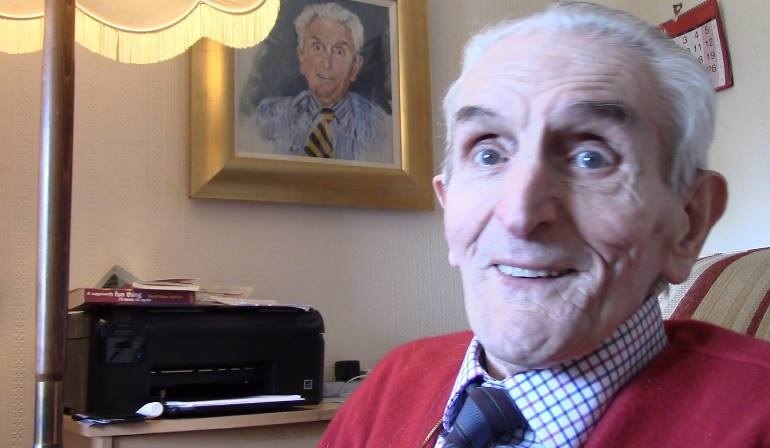
On consecutive days in the last week of April Gordon Wells recorded a series of Gaelic conversations with famed writer and entertainer Norman Maclean, in which Norman spoke reflectively of his memories and impressions of Gaelic life in Glasgow and the Hebrides from the middle of the Twentieth Century up to the present day.

The five videos, ranging between 35 and 55 minutes in length, will soon be posted online starting on Monday, 7th November. Word for word transcriptions will be made available simultaneously on Clilstore, enabling instant one-click vocabulary checking for Gaelic learners*. All in all there are 27,000 words and over three and a half hours of listening material in this collection, forming a unique new resource for serious study by learners and researchers. But Norman is a master raconteur, and there are plenty songs, jokes, and stories along the way. So, while it’s certainly an education, entertainment galore is also guaranteed for the more casual listener!

Over the week the conversations ranged over a wide variety of topics. In broad terms, however, each day had a different central focus:

Monday Sinnsireachd
Tuesday Foghlam
Wednesday Coimhearsnachdan
Thursday Cruthachalachd
Friday Gàidhlig

For the latest information on the release dates for these videos you can subscribe for e-mail notifications in the side panel, or try following Island Voices on Facebook.

The “Saoghal Thormoid” project is a collaboration between Soillse, the inter-university research partnership which supported the recordings through its Small Research Fund, and Guthan nan Eilean (Island Voices). All recordings are free to access.

Update: All recordings in both the “Saoghal Thormoid” and “Sgeulachdan Thormoid” collections are now available on the “Norman Maclean” page.
*Clilstore also provides links to automatic Google Translate versions via the “unit info” tab. While machine translation from Gaelic to English is still at a very rudimentary stage, these versions can give at least an impression of the gist of the conversations for those viewers who have yet to start learning the language of Eden…

Sharing Gaelic Voices

Language Issues Title

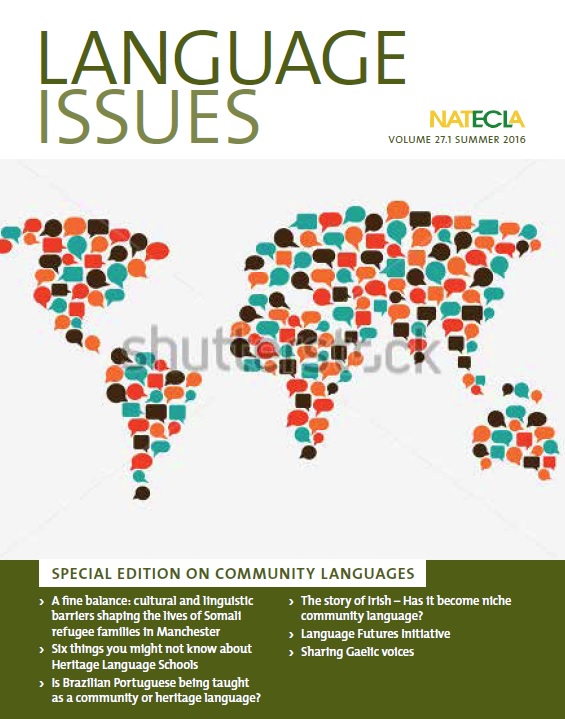
The summer issue of NATECLA’s journal “Language Issues” takes a look at Community Languages, and features an article on Guthan nan Eilean/Island Voices by Gordon Wells. “Sharing Gaelic Voices: Peatcutting in Polish or Surfing in Sindhi?” can be viewed as a Gaelic-focussed companion to, and update of, the 2012 project description (written from an ESOL point of view) in the British Council’s “Innovations in ELT for Migrants and Refugees”.

LangIssuesCoverProfessor Conchúr Ó Giollagáin of the University of the Highlands and Islands, and the Soillse inter-university research network, adds another perspective: “Guthan nan Eilean may also be seen as creative initial steps in an emerging agenda of documentation of natural language… The project demonstrates how the community of speakers can take a pro-active and productive role… in this vital task.”

Regular readers will have noticed that a “Peatcutting in Polish” video already exists, as an example of the potential for “re-purposing” that is among the issues discussed in the article.

Perhaps more examples will be forthcoming in the months ahead?

A copy of the article has been added to the Island Voices Research/Reports page, with the kind agreement of NATECLA.

It can also be accessed here.

2018 Update: The number of languages featured in Island Voices films is now into double figures! Check our Other Tongues page.

Island Voices in Europe

Hitzargiak

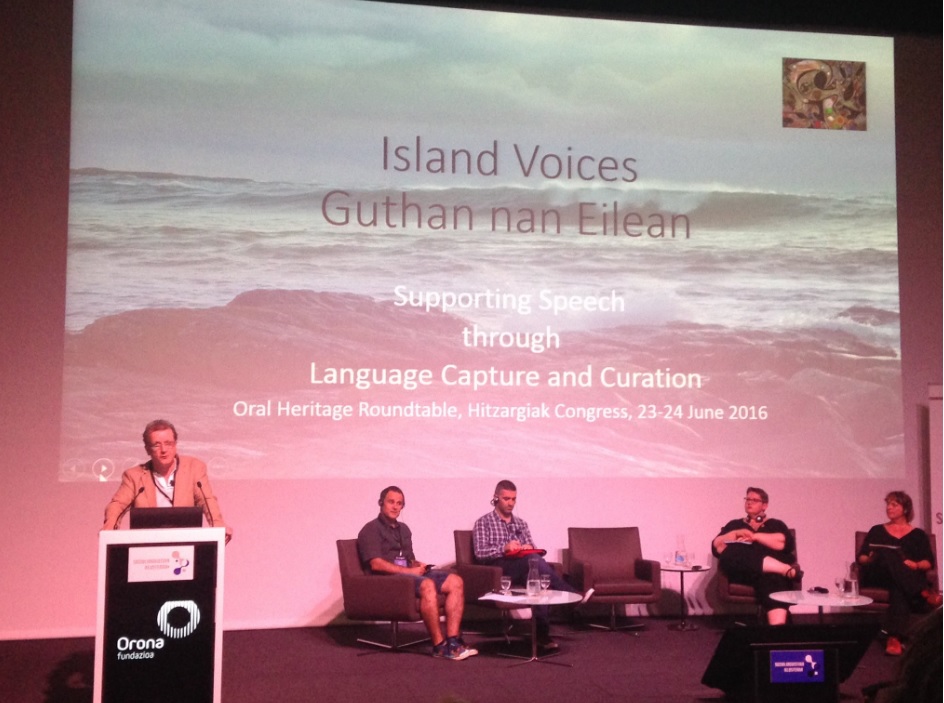
Gordon Wells was delighted to give a short presentation on Island Voices to the Hitzargiak Congress, held in the Basque Country on June 23rd and 24th. There was a very full programme over the two days of the congress, with the first full roundtable discussion focussing on Oral Heritage. Always happy to assert the “Primacy of Speech”, Gordon was also pleased to learn of broadly similar projects working in Alsatian, Basque, and Galician.

HitzarPres1“Writing is, of course, a very important skill and an intriguing facet of linguistic behaviour”, he said, in his opening remarks (simultaneously interpreted in three other languages!). “But it is still, nonetheless, a kind of accoutrement to the essence of language, which is realised in its most elemental form through speech. And in the context of language endangerment, I suggest we must take care to continue supporting ordinary talk, because if we lose recognisable speech we lose the essential medium through which to maintain language.”

You can see Gordon’s presentation, “Supporting Speech through Language Capture and Curation”, here. The Hitzargiak entry on Island Voices, as an example of Best Practice, can be found here.

Gordon Cameron: Soillse Fieldworker

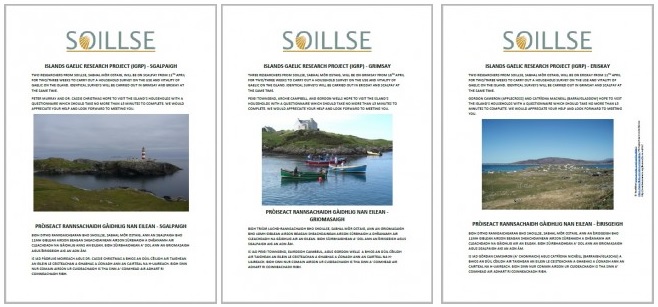
GordonCameronTha Gordon Wells a’ bruidhinn ri Gòrdan eile an seo – Gòrdan Camshron, a tha na neach-rannsachaidh aig Soillse agus a tha ag obair airson Pròiseact Rannsachaidh Gàidhlig nan Eilean.
An toiseach tha iad a’ bruidhinn sa Bheurla le Gòrdan Camshron a’ mìneachadh na tha san amharc aig a’ phròiseact san fharsaingeachd. As dèidh sin tha e a’ bruidhinn sa Ghàidhlig mu na tha e air a bhith ris ann an Èirisgeigh.

Gordon Cameron talks to Gordon Wells here about Soillse‘s Islands Gaelic Research Project.

He first explains in English what the plan is for the whole project, and then goes on in Gaelic to talk about the work he’s been doing in Eriskay.

Conference on Small Languages

conference banner

Soillse, the inter-university Gaelic research network, is running a conference with the Foundation for Endangered Languages, in Glasgow in June.  The theme is “Small Language Planning: Communities in Crisis”. The list of plenary speakers is impressive:

François Grin (University of Geneva)

Leena Huss (Uppsala University)

Brian Ó Curnáin (Dublin Institute for Advanced Studies)

With other presenters and participants coming from around the world, this will provide a stimulating opportunity for anyone with an interest in Gaelic to share with and learn about other languages in a similar situation.

The conference dates are 6th-8th June. Registration closes at the end of April.

Please check this link if you want to find out more and register.

Интервью с Гордоном Уэлсом: Island Voices & Ukraine

Island Voices recently received an interesting request from Anastasia Grishko of “TV Union” in the Ukraine. They’re setting up a School of Hyperlocal Community Media Creation and were interested in our experiences. Gordon Wells was more than happy to answer Anastasia’s questions about the way the project works, and the various media and languages we use. The interview is now online, in English here and Russian here.

TVUnion

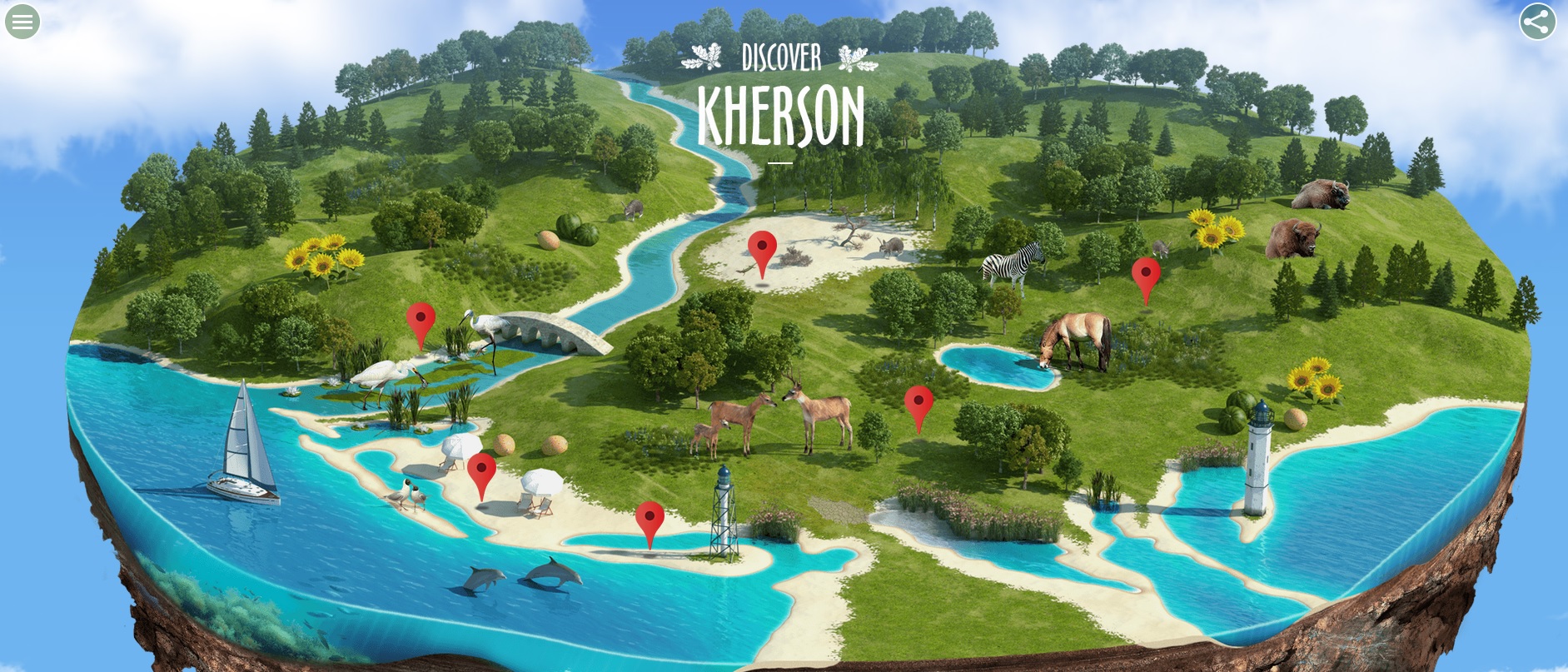
Anastasia also sent through this link for anyone who may be interested in finding out more about Kherson in South Ukraine, where her organisation is based.

KhersonTVUnion

Certainly it’s gratifying to hear that our work here in the Hebrides might be considered as some kind of model for other projects on mainland Europe. As Gordon explains in the interview, the first pieces of work from which Island Voices sprang were begun nearly ten years ago now. The project has grown and developed since then in ways that could not have been predicted. Who knows what’s in store for the next decade? That is very much dependent on what community members want to do next…

є ідеї? Beachd sam bith?

Gaelic Fieldworkers

jobad2crop
Soillse, in collaboration with Sabhal Mòr Ostaig, is inviting applications for a two-year research contract from suitably qualified fieldworkers with proven capacities for research into Gaelic in the Outer Hebrides and other island communities. The fieldworkers will have key roles in a major network project investigating the current state of the language in a key geographical area of its traditional use.

These positions will be supported and supervised via the Soillse Research Network for the Maintenance and Revitalisation of Gaelic Language and Culture, working out of Sabhal Mòr Ostaig, the University of the Highlands and Islands. Candidates will need to be mobile, have fluent Gaelic, and demonstrate excellent research skills. The successful candidates will be remunerated according to the SMO pay scale, within the range of £29,574 – £32,250, for a period of two years.

More information is available here, and an application form here.

Islands Research Overview

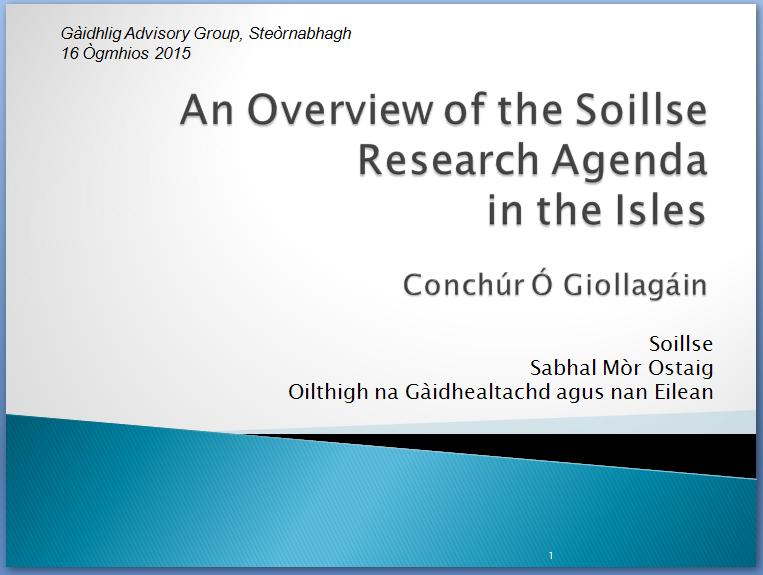
The Soillse research network is gearing up to conduct a major research project on Gaelic in the Western Isles and some neighbouring islands. At a recent meeting in Stornoway of the Gaelic Advisory Group of Comhairle nan Eilean Siar’s Department of Education and Children’s Services, the Soillse Director, Professor Conchúr Ó Giollagáin, gave a presentation on the plans as they stand, together with an explanation of the background to the project. Also in attendance was Gordon Wells, Soillse Project Manager, who reinforced the importance that Soillse attaches to working in close consultation and collaboration with the community. The project, as described, was welcomed by group members, with positive additional suggestions forthcoming. You can view Professor Ó Giollagáin’s presentation, on which he based his talk, here:


Research Overview