Video learning group opens up

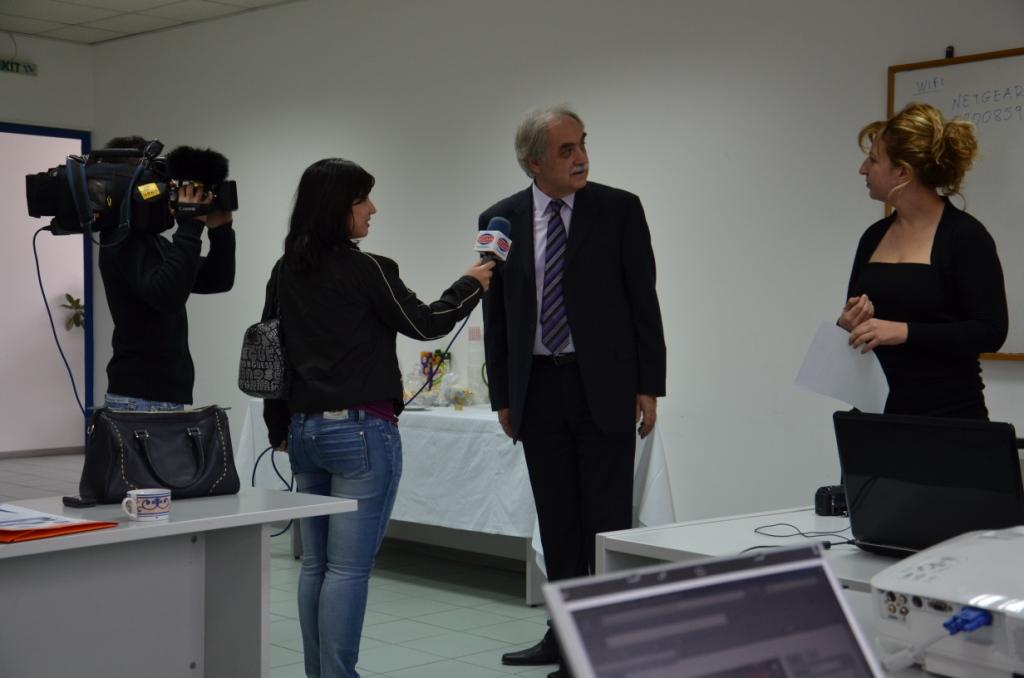
Greek television interviews Konstantinou Bliatsios of the Georgiki Anaptixi Vocational Training Centre about the POOLS-CX workshop being hosted in Larisa

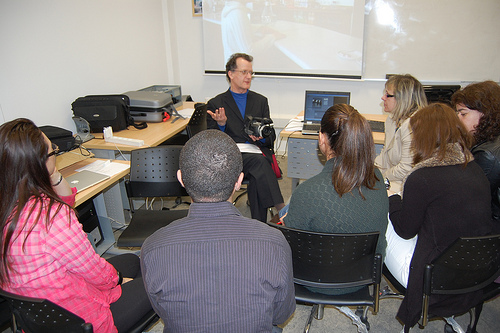
The POOLS-CX group has been meeting in Larisa, Greece, this week. This is a Transfer of Innovation project led by the University of Pitesti in Romania, building on the outputs of the original 2005-2007 POOLS project, out of which the Island Voices project was also born. Island Voices co-ordinator Gordon Wells has been helping group members from Italy, Greece, and Turkey to develop video-making techniques for language learning and teaching.

The group has been using Vimeo to upload their first drafts of videos, and comment on their progress. Up until this point this has been a closed group so that comments could be made in confidence. At this week’s meeting it was agreed to open the group to anyone who is interested in learning video skills, so that they can view how the team members have progressed over the past few months. The group can be viewed via this link, where participants’ first videos and discussions can be seen.
Wordlink With WordPress

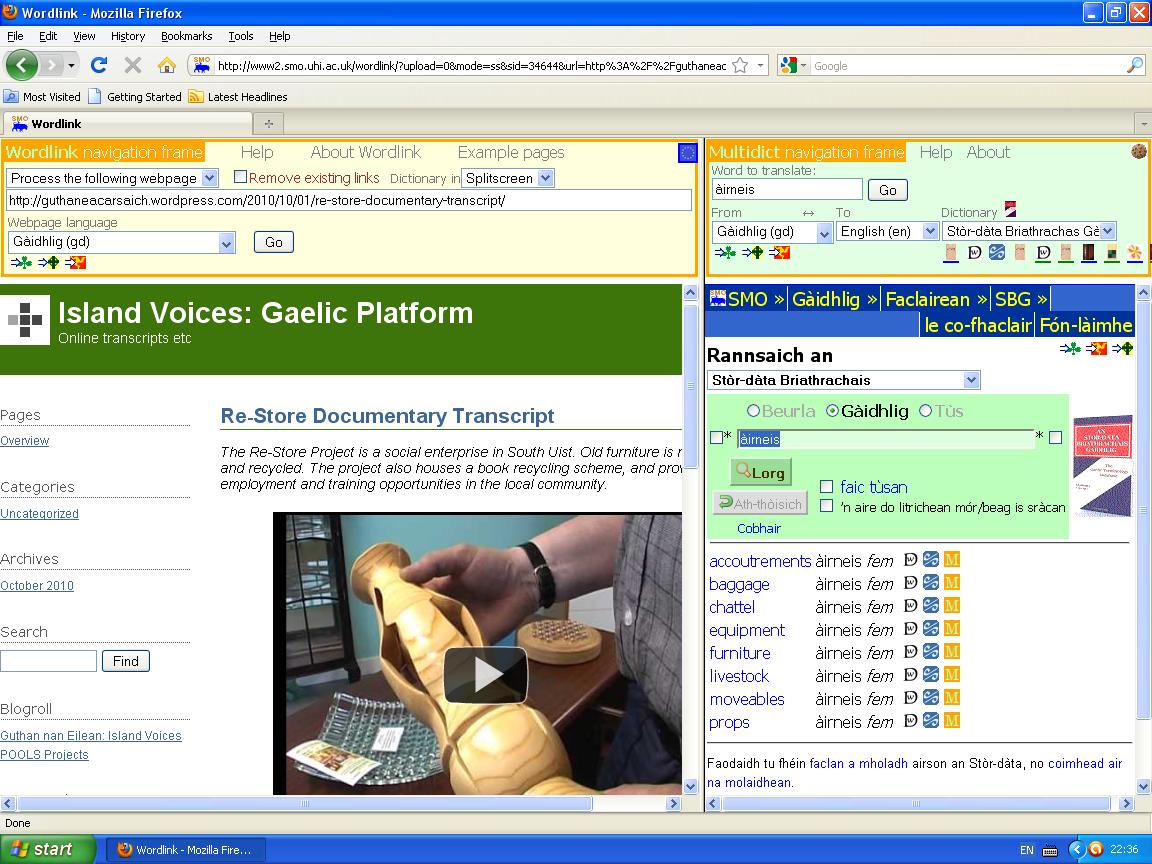
The POOLS-T project has now reached the end of its funded period. During the course of the project the basic concept of a tool that enables the checking of any unknown words in a text in an online dictionary has been developed substantially. The original “Webpage Textblender”, invented by Kent Andersen, is now complemented by Caoimhín Ó Donnaíle’s Wordlink and Multidict tools, and the range of languages supported has been massively expanded.

To mark the completion of the project Gordon Wells has placed all 40 texts from Series One of Island Voices (20 English and 20 Gaelic) on WordPress platforms linked to Wordlink/Multidict. Although the funded period of the project is now over further refinements of the tools will continue, as more languages are incorporated and in response to comments from users. Interested readers are invited to take a look at the Wordlinked Island Voices materials. Please note that, while the default display is “Split Screen”, there are alternative options, such as “New Tab” and “Pop-up”. A choice of dictionaries is also available, depending on the language in question.

Of course, dictionaries are by no means the answer to every language learning problem – and some dictionaries are better than others. But the facility to present online text with this added dictionary access function may be attractive to both teachers and learners. Comments are welcome here, and will be relayed to the developers.

Sample online development exercises

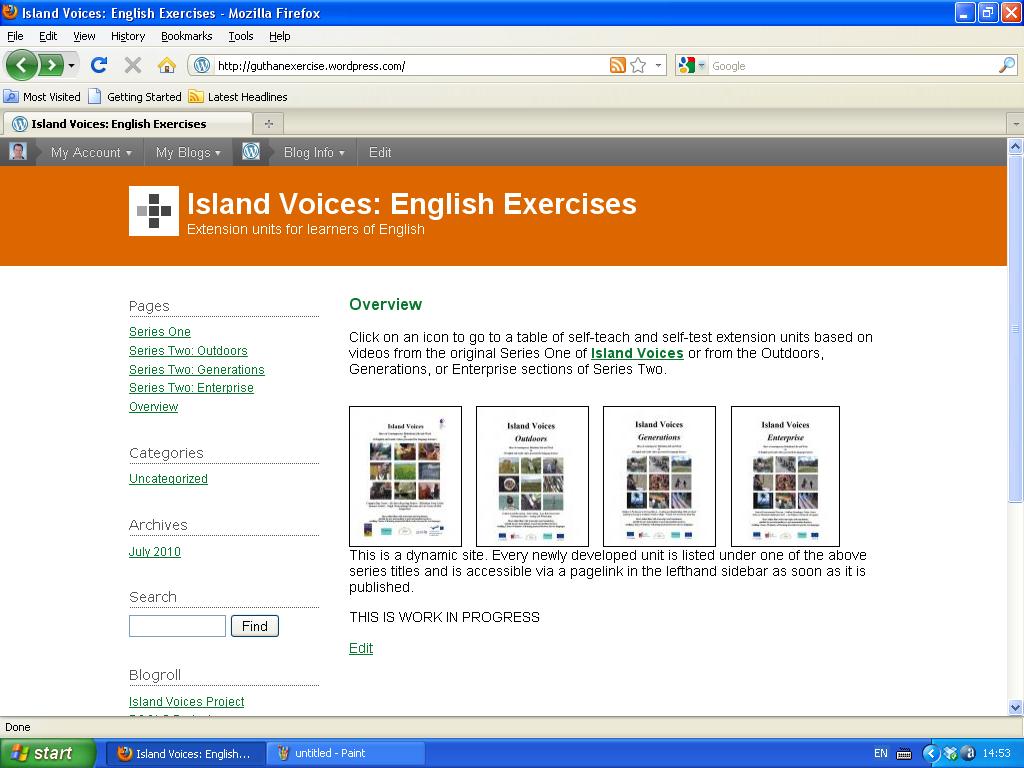
WordPress is used as the platform for the exercises. This gives the creator lots of choices of appearance.

Project developer Gordon Wells has been working over the summer on creating some sample English online exercises based on source material from Guthan nan Eilean/Island Voices. Using a combination of free “off the shelf” WordPress, Dropbox, and Hot Potatoes software he constructed an “Island Voices: English Exercises” platform, including linkage to the Wordlink and Multidict programs developed under the Leonardo POOLS-T project.

What can a language teacher do, using this approach?

1. Create a stock of separate online pages with different sets of teaching units on each.
2. Create individual teaching units that include embedded video (or audio), transcripts with optional linkage to online dictionaries, interactive self-test language exercises, and suggestions for writing or further discussion in class or online.

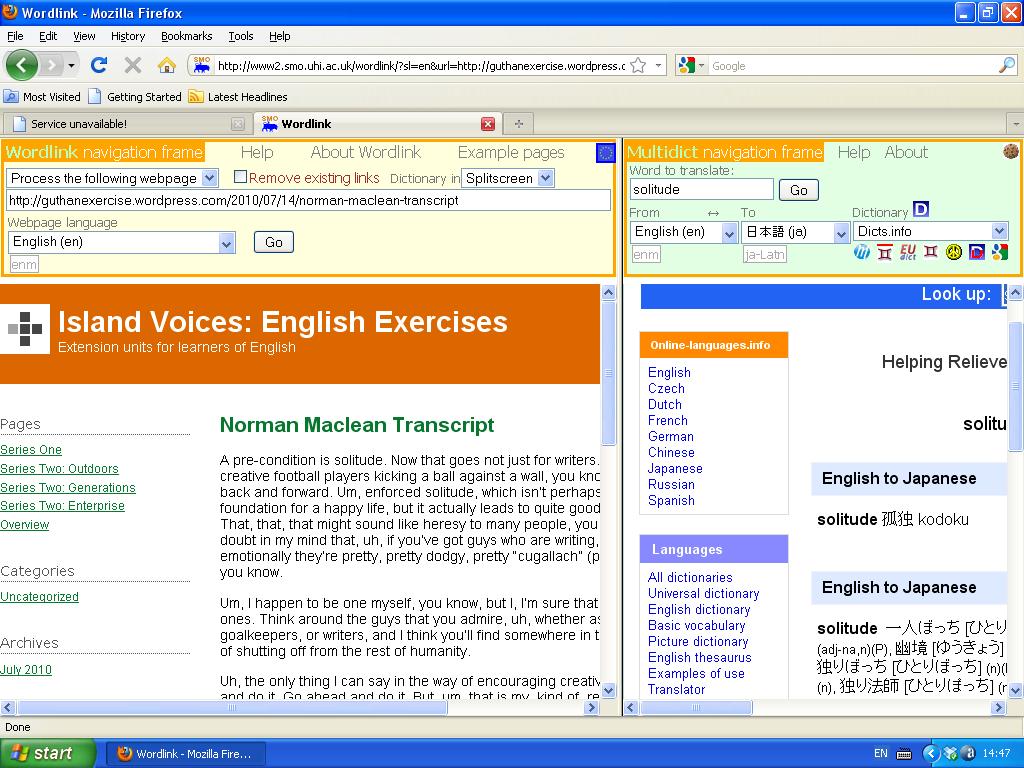
Wordlink takes you straight to an online dictionary for translation of an unknown word.

A sample unit for advanced students can be found here, based on the Am Pàipear interview with Norman Maclean for the Series Two Enterprise collection. (Some older units previously produced for Cothrom are also included for illustrative purposes on the Series One Page – though POOLS-T has seen significant development of the online dictionary access tool since their creation.)

This is developmental “work in progress”, and not an integral part of the current project, though it may point a way forward for more work in English and/or Gaelic that will add further educational value to the materials produced here.

As always, comments from language teachers and language learners are most welcome.

Same Language Subtitles?

Nìall Beag on Fòram na Gàidhlig has commented as follows on the Hebridean Surfing preview:
“Math fhéin.

Anyway, have you considered this time including optional same-language-subtitles (SLS) on the DVD as well as the transcripts? I find them quite useful in filling gaps in my aural understanding.”

The full post is here.

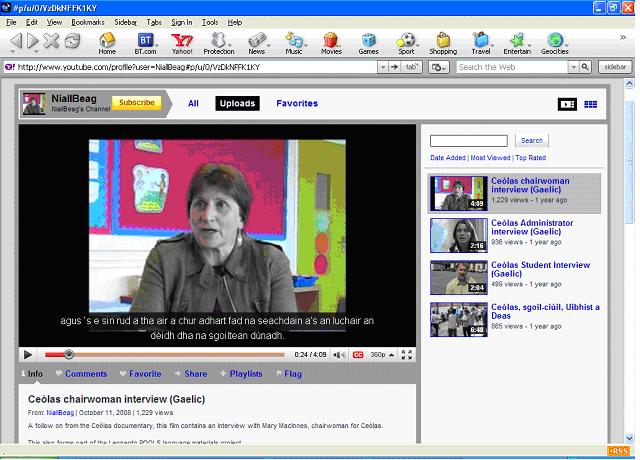
The current phase of the project will see all video materials placed online. A DVD package would be extra, but if there is evidence of demand it should be possible to include an SLS option. Examples can be found on YouTube via this link.

Opinions from learners and teachers are welcomed! Just leave a comment below.

Online Dictionary Project

This week Gordon Wells is attending a POOLS-T Project meeting in Brussels. Here he talks to Kent Andersen, the project co-ordinator who has also developed the Webpage Text Blender tool. Kent explains how the tool works for language learners.

Gordon also talks to Caoimhín Ó Donnaíle who has been responsible for developing the online programs Wordlink and Multidict, which perform a similar function.

Listen to the English conversation with Kent here:

Listen to the Gaelic conversation with Caoimhín here:

The tools are available via this link.

Nicosia Workshop – POOLS-2 Project Link

The Island Voices project is being used as a model for community-based video production for language learners in another European project – POOLS-2. Co-ordinator Gordon Wells was in Cyprus last week leading a workshop for participants representing Cyprus, Malta, Portugal, and Switzerland, with Kent Andersen from Denmark also assisting. Gordon’s demonstration videos and some of the participants’ first productions can be viewed via this link.

Brussels Workshop – POOLS-T project link

Island Voices project co-ordinator Gordon Wells is attending a transnational meeting September 29th-30th to discuss progress with the POOLS-T project. This project aims to develop learner-friendly access to online dictionaries across a range of different languages. Sample extension materials based on Island Voices videos are already available here. These use an early version of the Web Page Text Blender, developed by Kent Andersen in Denmark. There has since been further development of this program, as well as the online “Wordlink” program, developed by Caoimhín Ó Donnaíle at Sabhal Mòr Ostaig, which can now link over 50 different languages.