Gaelic Shorts

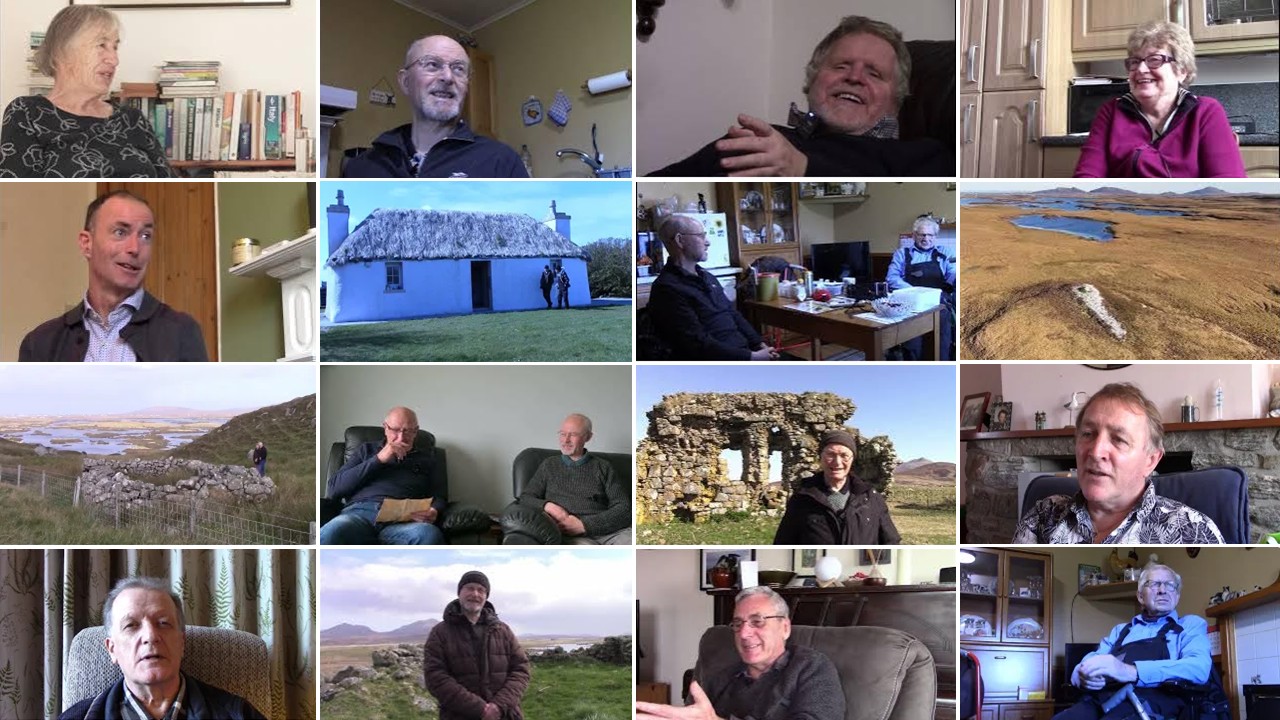
While recording natural conversational speech of fluent Gaelic speakers over the past couple of years, we have taken to also “scaffolding” these clips for the benefit of any Gaelic learners or non-speakers who wish to follow them as well. We now have a new “Shortcuts” page where these clips are collected together for ease of access!

How and why have we done this?

There is obviously a lot of talk about AI (Artificial Intelligence) these days, with plenty of excitement as well as concern over what the future holds for computer-assisted construction and deployment of “Large Language Models” (LLMs) etc, and where they might leave lesser-used languages like Gaelic. That said, the term “AI” itself lacks clear definition, and we have certainly been happy to use new technology to help capture and curate Gaelic and other languages since the very beginning of Island Voices, back in 2005!

Perhaps the most obvious example of this is our default construction of Clilstore transcripts for most of the recordings we make. Originally designed as a language learning aid (principally through its built-in dictionary look-up facility), Clilstore has proved equally valuable simply as an online platform for combining video recordings of authentic speech with verbatim transcripts. On our new “Shortcuts” page all the clips presented on YouTube are also made available on Clilstore. This will enable learners of Gaelic to match up the spoken and written word as they listen and read, and quickly check any unfamiliar vocabulary for translated meaning in an online dictionary. (Learners who find the real-time speed of fluent Gaelic speech challenging should also note the YouTube facility to slow video playback down without altering the pitch of the voice.)

Whether or not you consider Clilstore to be an example of AI, there is no doubting its place in automatic translation tools such as Google Translate. And we’ve been happy to incorporate that facility for the benefit of non-speakers of Gaelic when taking advantage of the Closed Caption (CC subtitling) option that YouTube offers. You can choose to either activate the CC button on our videos or leave it off. If you do use it, the subtitles will appear in Gaelic by default – a handy aid in itself for some – but you can also choose to get them auto-translated into other languages, including English. The results are not perfect – the software still has difficulty distinguishing between crofts and harps! – but it will give a pretty decent overall impression of the content of discussion.

As we know, there are plenty of non-speakers of Gaelic resident in the remaining Gaelic communities who are still interested in knowing what their neighbours, friends, or indeed other family members like to talk about. This kind of technology hints at new open access paths to community knowledge and local history without the need for Gaelic speakers to switch to their other language in order to pass on their own thoughts and feelings.

There’s a mix of speakers in the featured recordings. A good half have spoken Gaelic as their first language all their lives. Others learnt it after arriving in the Hebrides as young children, whether returning with family or being adopted into the community. And a couple of others, while also having a close family connection to the language, have taken the harder route to fluency, through active study as second language learners. In all cases we hope you will find they have interesting stories to tell!

You can find this shortcuts material here. Take a look and share with like-minded friends!

We are indebted to the UHI Language Sciences Institute’s CIALL project for its support over the last couple of years in enabling its production.
Caibeal agus Cladh

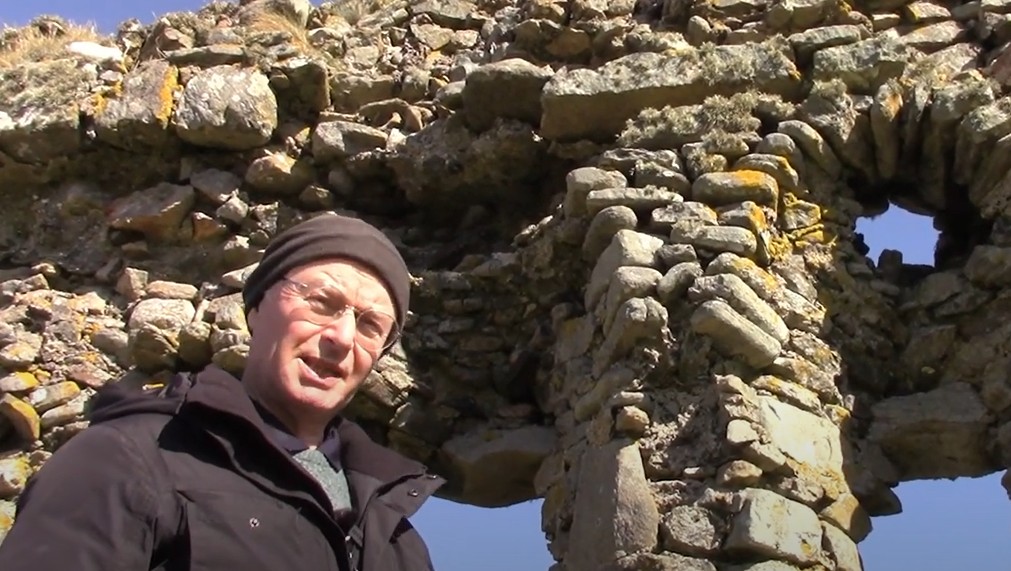
Tommy Macdonald of Howmore in South Uist delivers a Gaelic guided tour of the old chapels and graveyard, dating at least as far back as the 9th Century, and shares some stories about the burial practices which continued into living memory.

As a well-known and respected local historian Tommy has been the central linking figure over the last couple of years in creating a series of clips looking at local “taighean is tobhtaichean” (houses and ruins), recording stories associated with them, and talking to some of the people with experience of living in taighean-tughaidh (thatched houses) in particular. These have been gathered together in our special “Taighean-tughaidh Uibhist” YouTube playlist, to which this latest recording has also been added.

This recording, like the others, has been made in Tommy’s good South Uist Gaelic. But it’s definitely not an exercise in the exclusion of learners or non-speakers of the language. Same language Closed Caption (CC) subtitles are available at the click of a YouTube button, and viewers on a laptop or desktop computer will also be able to access automatic translation into English and other languages through the settings wheel.

You can also choose to slow down the video without altering the pitch of his voice through the same mechanism. And learners may further choose to follow the wordlinked transcript with the video embedded on the Clilstore platform: https://multidict.net/cs/12419.

Jamaikèn nan Wales

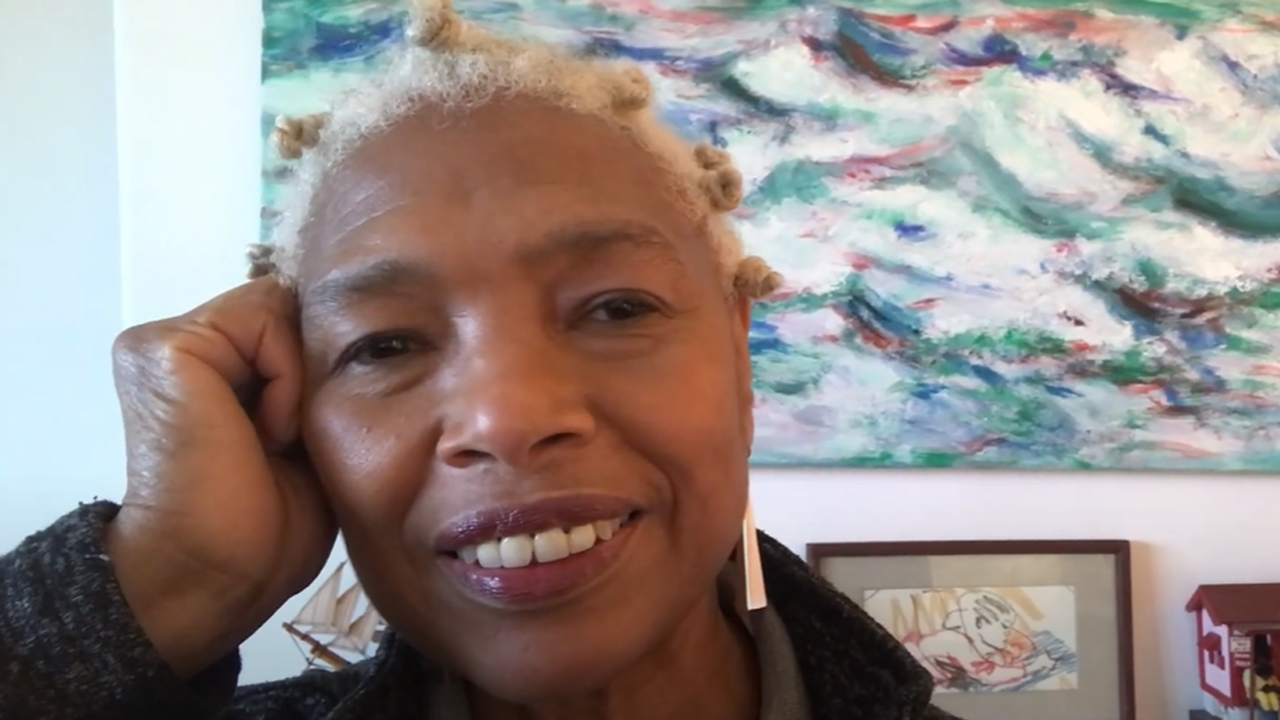
“Men Audrey West, e men lakay li.” (This is Audrey West, and this is her home.)

So begins the new Haitian Creole (Kreyòl Ayisyen) version of our Jamaican in Wales/Jamiekan ina Wielz documentary.

We’re delighted to add another island language to our growing list of Other Tongues, building still further on our Extensions initiative. In addition to Jamaican and English, this film is also already available in Welsh and Portuguese – as well as Gaelic, of course!

Mavreen Masere of Creole Translations has done a great job of translating and narrating the original documentary text to a really high professional standard. Many thanks Mavreen!

Thanks also to Caoimhín Ó Donnaíle for adding Kreyòl Ayisyen to the Clilstore list of languages, so enabling us to also create the online wordlinked transcript with embedded video on that platform too.

Our Hebridean-Caribbean linguistic linkage started with our engagement with the University of the West Indies Jamaican Language Unit through the international Mediating Multilingualism project. Common island geographies were an obvious initial point of contact. In more recent developments other shared experiences were touched on while exploring some of the factors uniting UK community languages other than English as part of the Multilingual Memories: Birmingham 1984 project.

Nearer to home and looking forward, we might wonder if those with a Gaelic linguistic, planning, or educational interest could have more still to learn from the developmental process which has resulted in the establishment of Caribbean creoles like Jamiekan and Kreyòl Ayisyen. When we consider that the deprecation of formulations such as “Tha mi oileanach” may now be counted as “just an aesthetic judgement” in some Gaelic teaching circles, and that “Tha mi tidsear” may indeed be heard on the lips of some Gaelic Medium Education practitioners, then we might begin to wonder if this kind of language change is in some way akin to well-studied processes of pidginisation and creolisation in other contexts, with the significant caveat that in the case of Jamaican or Haitian the claim is explicitly and successfully made for the recognition of a distinct new language, rather than an uninterrupted continuation or “revitalisation” of a pre-existing one.

Food for thought?

Produced with support from the University of the Highlands and Islands Language Sciences Institute CIALL project.