Scottish Studies goes fully online

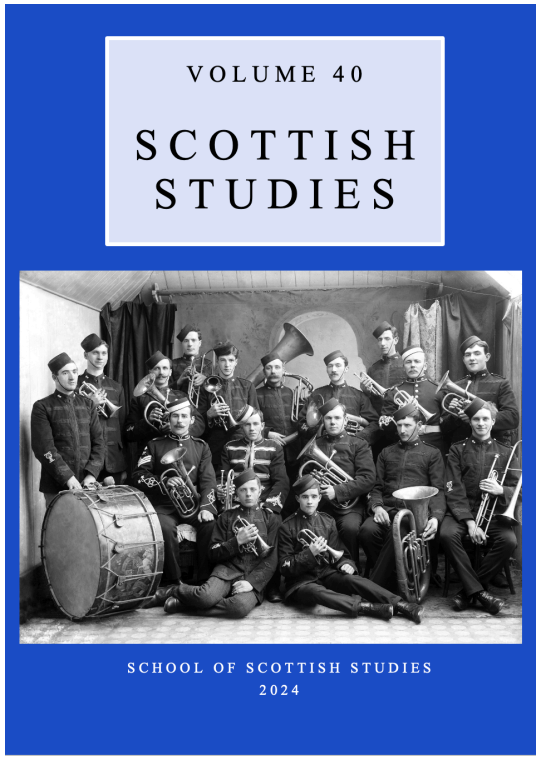
Scottish Studies coverThere are numerous points of interest in the newly published Volume 40 – the 2024 issue – of “Scottish Studies”. Notably, this open access journal of the School of Scottish Studies at the University of Edinburgh has now gone fully online. Virginia Blankenhorn, the editor, gives a good account of the various reasons why this makes sense: 

“In addition to saving trees, there are considerable advantages to online publication which we believe more than compensate for the lack of a printed volume. First and foremost, reduced costs will make it possible to publish more frequently – at least once every eighteen months to start with. Second, digital publication will allow easy access from the content of an article to other online resources. An author writing about song, for example, will be able to supply hyperlinks to sung performances available online, thereby allowing readers to hear the songs themselves – a gift to readers unable to read musical notation, and an added benefit to those who do, but who understand how much information such notation typically leaves out. Finally – and, as editor, I deeply appreciate this feature – digital publication will allow errors to be easily and silently corrected as soon as eagle-eyed readers point them out.”

From the Island Voices standpoint, the point about the multimedia affordances of online publication makes particularly good sense, supporting our consistent stance on the primacy of speech. The notation of language, as with music, is an often inadequate and only approximate substitute for the real thing!

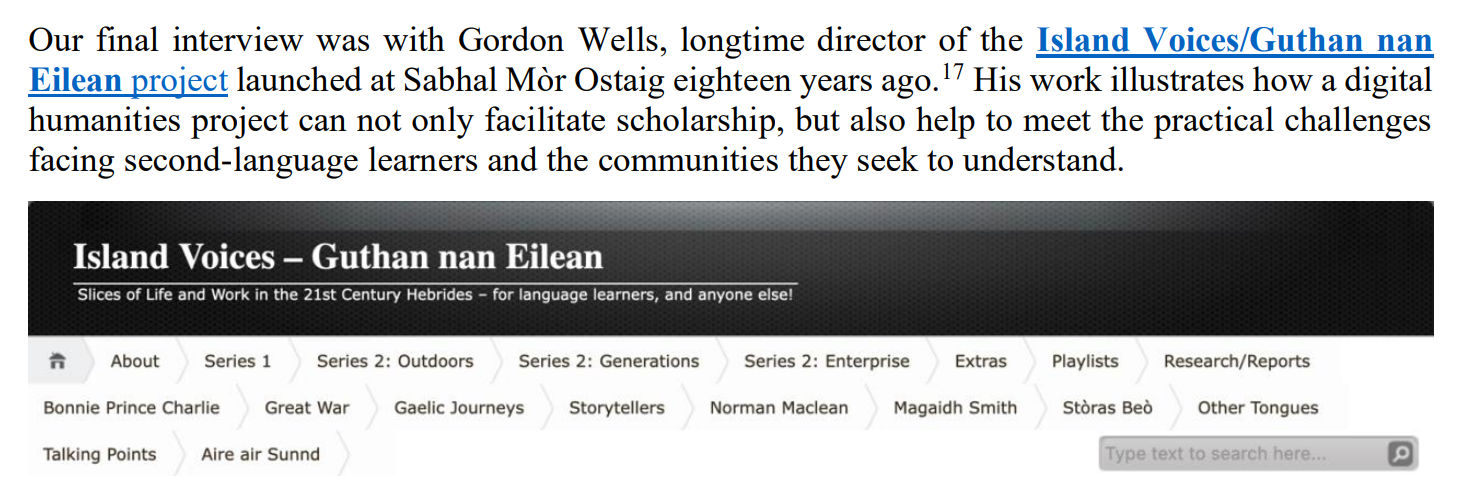
So we are, of course, doubly delighted that Virginia also found space for an interview with Gordon Wells about the Island Voices project in a piece on “Digital Developments in Scottish Studies“, alongside parallel contributions from Will Lamb (Edinburgh) and Natasha Sumner (Harvard). Okay, it’s presented here in written format – but with plenty of live links and URLs in the footnotes. Ceum air cheum…!
Scottish Studies Intro shot 2

Our hearty thanks are due to the journal and its editor for finding a space for Guthan nan Eilean in the world of Scottish Studies!
Talk on Minority Language Protection

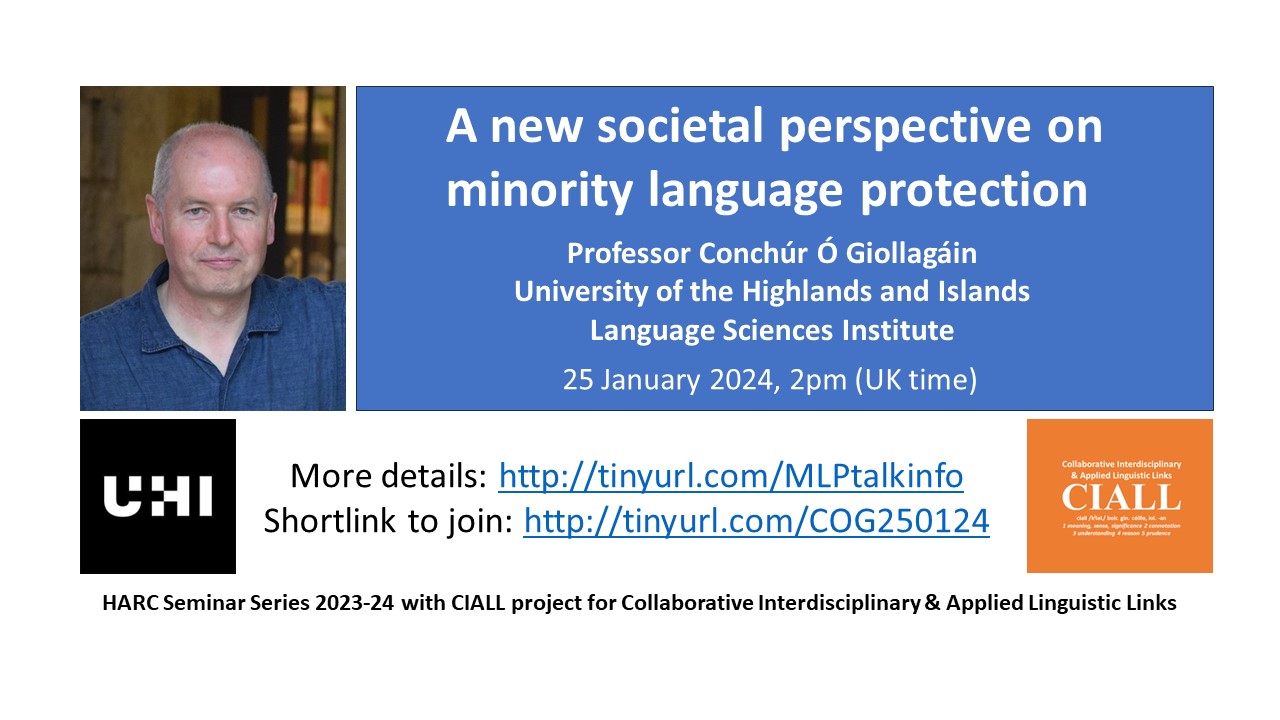
Poster for CÓG talk for HARC and CIALL“Coherent language protection and promotion initiatives are of vital relevance to minority-language survival. Whilst economic, geographic, demographic, and socio-political factors are crucial to successful language protection and promotion at a macro level, positive factors influencing the primary aspects of language vitality, i.e., acquisition, socialisation, ethnolinguistic identity, and praxis, are crucial at a micro level.

This paper aims to present a new conceptual framework by which we can interpret the various social elements contributing to minority-language social dynamics. Four phases of socialisation (primary, secondary, civic reinforcement, and processes of collective coherence) are indicated in the social dynamic, and the influence and interaction of key groups of social participants (identified as minority; majoritarian; tangential and neo-cultures) on the outplay of the dynamic in society are demonstrated. The analysis underlying this new conceptualisation examines: a) the implications of minority-language promotion with insufficient language protection, and b) the influence of the minority-language policy and planning framework on the social dynamics of the minority group. It is contended in the paper that minority language protection is more likely to be successful when it adequately aligns and addresses the core aspects of the actual reality of minority social dynamics.”

You can click on the poster above to find live links for this talk by the Director of the UHI Language Sciences institute, or join here.

UPDATE: The recording of the talk is now available via the news page of the Language Sciences Institute: Talk on Minority Language Protection.

Retro Retrieval

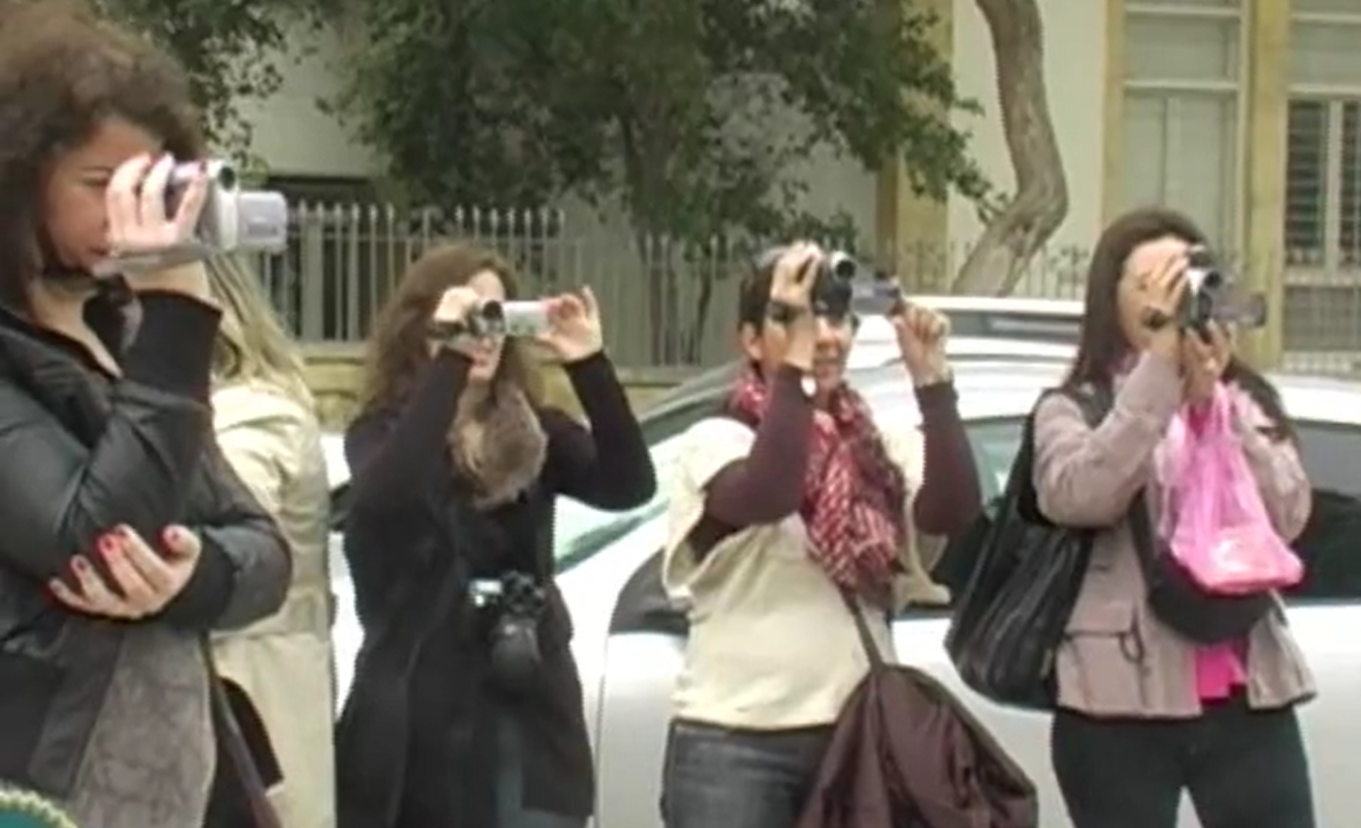
Nicosia video makers

We’ll continue our review of previous Gaelic recordings into the winter months, given the popularity of our autumn social media season. But we’re going to start the New Year with something a little bit different – and warmer – while sticking with the Gaelic unifying theme. We’ll kick off with some earlier films made “in the style of” or “about” Island Voices, before returning to more classics from the original series.

Island Voices in fact owes its inception to the stimulus provided by the EU’s Leonardo funded POOLS project of 2005-2007. It was through that successful partnership that the Guthan nan Eilean idea came into being – and won the 2007 European Language Label. POOLS turned out to be just the first of many follow-up projects that built on the original theme, with Island Voices linked to many of them.

POOLS-2 (2009-2011) was an early example, again with a video production element included, which enabled us to link with other European islands like Cyprus and Malta. In these demo clips from a 2010 video workshop in Nicosia, the fundamental learning point is made that serviceable video-making need not be the exclusive preserve of industry professionals. And in language teaching terms, it can be a highly productive process, with multilingual knock-on benefits potentially within reach in return for the initial creative input.

These videos were put together as a demo for language teachers interested in the use of ICT in language teaching. Participants spent a morning taking pictures. The following day, after pooling their resources, they each edited together their own short film, using this demo as an exemplar.

They were recently “rediscovered”, and the Gaelic version has now been additionally equipped with the learning assisting enhancements that have since become available – including the now standard Clilstore transcript (Unit 11794), plus optional YouTube subtitles (that can further be auto-translated through the Settings Wheel).

A bheil Portagailis agad, neo am bu toil leat beagan ionnsachadh?!

Tionndadh Gàidhlig:

English version:

We’ll place direct YouTube links to more Gaelic films on a similar outward-looking and multilingual theme on Facebook and Twitter in days to come…